
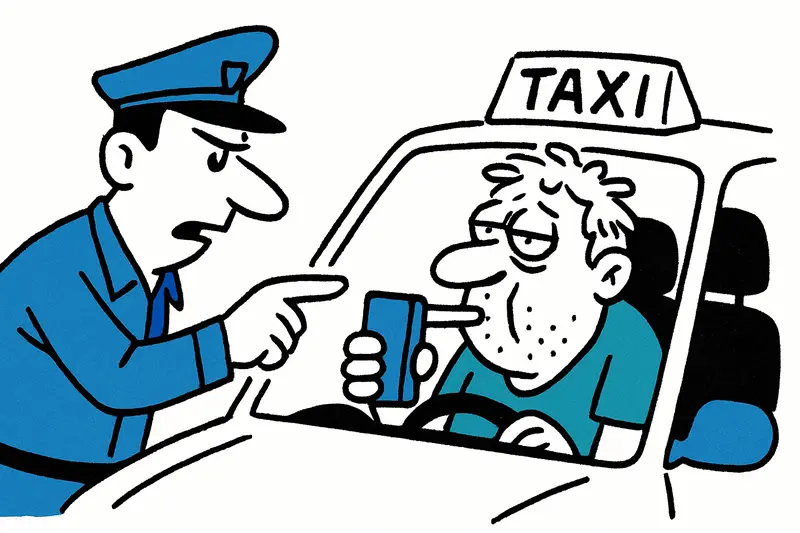
Eivissa on alert: Five taxi drivers stopped under the influence of alcohol or drugs
Checks in Eivissa have revealed five taxi drivers with alcohol or drugs in their system. An accident in Sant Josep makes the danger visible. What consequences and solutions does the island need?
Eivissa on alert: More than isolated cases
At the port, when the ferries' grinding engines still hang in the air and the old town bells ring behind the palms, people rarely talk about the darker sides of the night scene. But recent checks in Eivissa have uncovered five taxi drivers who were behind the wheel under the influence of alcohol or drugs. Three positive drug tests, two cases of alcohol in the blood – and one of them had already been flagged before. This raises a central question: Are spot checks enough or does the island need a structural response? Similar episodes have been reported on Mallorca, where Palma's Paseo Marítimo taxi drivers stopped a drunk driver.
The Sant Josep accident as a wake-up call
A few kilometers southwest, in Sant Josep, the abstract danger suddenly became concrete: a cyclist was hit by a taxi. The injured person was taken to hospital with bruises and cuts but is not in life-threatening condition. The incident is alarming because it highlights the typical island layout – narrow roads, dense tourist traffic, cyclists between buses and delivery vans. Anyone who is not fully alert here quickly risks the lives and health of others, as noted by the World Health Organization on road traffic injuries.
What consequences do drivers face? Those caught under the influence of alcohol or drugs risk not only fines of up to €6,000 and the loss of their driving license. For taxi operators, the issue is also the taxi license: repeat offenders can be permanently removed from service. This occurs in a broader context, as over 350 drivers were stopped without a valid driving licence in the Balearic Islands. That is appropriate – but is it enough as a deterrent?
Causes: More than personal misconduct
An old acquaintance from the port summed it up succinctly: shifts that run into the early morning, high fixed costs for the license and vehicle, plus the seasonal rollercoaster of income. That does not excuse the misconduct, but it suggests that economic pressure plays a role. Less discussed are fatigue, lack of sleep and psychological strain – factors that can be as dangerous as alcohol or drugs.
There is also a practical problem: many drivers work in shifts, often without stable social protection. Those with risky consumption patterns find it easier to access substances on the island – not least because night shifts and the party economy create the environment. It's not limited to taxis: a Palma TIB line 104 bus driver was stopped after passengers reported erratic driving and suspected drug use. Brokers, unofficial networks and the informal market also play a role here, and they hardly show up in statistics.
What works in the checks – and what doesn't?
Police and municipal authorities emphasize increased spot tests. More visible controls have an effect, as the statistics already show: without regular presence there is a risk that problem cases "disappear" in the low season. There also remains the question of whether checks only treat symptoms. If only drivers are punished, the structural drivers – poor working conditions, lack of health care, missing training – remain untouched.
Short-term measures could include mandatory breath and drug tests before night shifts, visible checkpoints at the port and airport exits, and a central reporting point for passengers. It is important that such measures do not only impose penalties but also activate support offers – counseling, addiction treatment, and employment law support.
Long-term solutions: workplace safety, transparency, participation
In the long run, the discussion about taxis on Ibiza must be thought through further. Suggestions:
- Regular health checks and mandatory training on driver safety and stress management.
- Mandatory real-time passenger feedback systems linked to sanctions for repeatedly negative reports.
- Financial incentives for taxi dispatch centers that can demonstrate investment in driver care and prevention.
- Cooperation with health services and unions so that affected workers are not left facing job loss alone.
Such steps would not only increase safety but also create a more normal, stable working environment: less stress, more oversight – and ultimately better service for residents and visitors.
What can passengers do?
If a driver seems unsteady, it helps to note the taxi number or take a photo (without provoking the driver). When in doubt, call another vehicle or contact the police. Many companies now have emergency numbers that tourists can also use. Care pays off – especially at night, when streets are filled with music and conversations and the distance between party mood and danger can be disturbingly small.
The cases on Ibiza are a clear wake-up call: checks are necessary but not sufficient. Visible prevention, better working conditions and a system that protects drivers while ensuring the safety of residents and visitors are needed. Otherwise isolated incidents risk becoming an unpleasant habit – and no one here at the port wants to hear that.
Frequently asked questions
Are taxi drivers in Mallorca and Ibiza checked for alcohol or drugs?
What happens if a taxi driver in Mallorca is caught driving under the influence?
Is it safe to take a taxi late at night in Mallorca?
What should I do if my taxi driver in Mallorca seems drunk or high?
Why are taxi problems linked to nightlife in Eivissa and Mallorca?
What caused the taxi accident with a cyclist in Sant Josep, Ibiza?
Are there more driver checks at Palma port and airport because of safety concerns?
What can Mallorca passengers do to choose a safer taxi?
Similar News
Found dead in Son Gotleu: Dog walk ends fatally — what is missing in the investigation?
A 68-year-old man was found dead on Sunday morning on Tomás Rullàn street in Son Gotleu. According to his partner, he ha...
Theft at Playa de Palma: How safe are tourists at night?
At Playa de Palma street vendors snatched a gold chain worth around €5,000 from a tourist. The National Police intervene...
Smoking Weed at the Ballermann: Why a Ten-Euro Joint at Playa de Palma Ends in Handcuffs
A street purchase for 10 euros at Playa de Palma led to an arrest. Why a simple joint on holiday can have serious conseq...
Push-ups on the Sea: Why Prone Paddlesurf is Taking Off in Mallorca
Those who crawl belly-down across the water aren't signaling for an ambulance but curiosity: prone paddlesurf — long, na...
When Bouncers Run Amok: Emmy Russ and the Question of Safety at the Ballermann
An incident at the Megapark involving reality TV figure Emmy Russ raises broader questions about the oversight of securi...
More to explore
Discover more interesting content

Boat Tour with BBQ along Es Trenc Beach

Private transfer from Mallorca Airport (PMI) to Pollensa
