
Reality Check: Why the Seabed around Mallorca Is Still Full of Trash After the Season
Reality Check: Why the Seabed around Mallorca Is Still Full of Trash After the Season
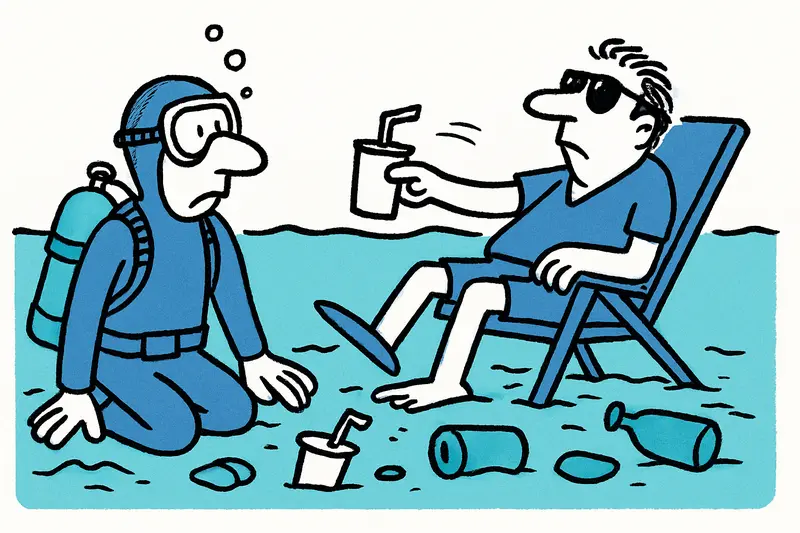
A study by the Preservation foundations shows: there are far more items on the seabed around Mallorca than assumed. Who is responsible, what is missing in the debate and what practical steps can be taken locally?
Reality Check: Why the Seabed around Mallorca Is Still Full of Trash
New figures from the 'Tejiendo Futuro' project show: debris on the seabed does not simply disappear after summer — and the causes are more complex than just "tourist litter".
The figures are bone-dry yet hard to digest: in 136 dives teams from the Preservation foundations catalogued hundreds of items on the seabed around the Balearic Islands. Mallorca tops the list: 3.29 items per 100 square meters in spring, 3.17 in autumn. That not only means a lot of waste enters the sea — as removal efforts such as More than 6.7 tonnes of waste from the sea: Why the cleanup on Mallorca is only the beginning show — it also means that a large portion remains there permanently.
Key question: Why does so much remain on the seabed instead of disappearing after the season?
Brief analysis: The study points with a probabilistic method to activities around tourism, commerce, hospitality and shipping as likely main sources; fishing plays a larger role depending on the season, wastewater appeared only locally near outlets. Particular observation: prevailing are hard plastic pieces, fiberglass debris and everyday items like spectacles or drinking glasses — materials that do not simply rot away.
Critical view of the method: the applied Matrix Scoring Technique provides estimates, not definitive attributions. 136 samples are a good start but not a comprehensive inventory. Even more important: only seabed litter was recorded. Suspended or microplastics, near-shore deposits and waste in coves were left out. That skews the picture of sources and transport pathways.
What is missing in public discourse: concrete lines of responsibility. It is not enough to blame "tourism" in general. Boats of all kinds, local restaurants, maritime trade and the fishing fleet contribute differently — and require different countermeasures. Also rarely discussed: the role of missing disposal facilities in marinas and at popular moorings, an issue highlighted in 6.5 Tons of Waste in July: Why Mallorca's Coasts Keep Struggling as well as insufficient control of large passing vessels.
An everyday scene from Palma: on an early morning on the Passeig Marítim the smell of oils from fishing boats drifts by, delivery vans manoeuvre, beach bars open their refrigerators. Between the berths you often see loose ropes and pieces of cushions — this is not an abstract statistic, these are the things divers later find on the seabed, as in What Lies Beneath Mallorca's Coast: Trash Slipping Out of Sight.
Concrete solutions that could work locally:
- Clear disposal infrastructure in harbours: compulsory stations for boat waste and special acceptance for fibre-bearing materials such as fiberglass and composite residues.
- Mandatory waste plans for charter and tour boats: inclusion in licenses, coupled with inspections in the high season.
- Retrieval programmes for lost fishing lines: incentives for returning old nets; exchange programmes for damage-prone equipment.
- Expand underwater monitoring: regular, standardised sampling (including suspended matter) along shipping routes and in front of tourist hotspots.
- Citizen science and diver networks: systematically record volunteer dive actions so that local clean-ups feed into real data, as documented by volunteer efforts in Who cleans up the sea? Almost eight tons of waste off the Balearic Islands — and the uncomfortable answers.
- Circular economy for specialist waste: create recycling pathways for boat materials and spare parts instead of letting them disappear into containers.
These measures are practical — they do not require a new ministry, but better rules, controls and incentives. And they require bringing local actors from marinas to beach stalls to charter companies on board.
Punchy conclusion: The study provides a first, reliable map of the problem on the seabed. It tells us: this is not just a seasonal phenomenon, but a structural one. Anyone who wants a clean seabed must act at the source, hold harbours and boats accountable and treat the post-season as an opportunity, not as the calm before the storm.
Frequently asked questions
Why is the seabed around Mallorca still full of rubbish after summer?
When is the best time to dive or swim in Mallorca if you want clearer water?
What kind of rubbish is usually found on the seabed around Mallorca?
Is tourist litter the main reason Mallorca’s sea has so much waste?
Why does Palma’s Passeig Marítim matter in the discussion about sea pollution?
Do marinas in Mallorca need better waste disposal facilities?
What can charter boats in Mallorca do to reduce sea waste?
Can volunteers and divers help track waste in Mallorca’s sea?
Similar News

More water than last year: Mallorca's reservoirs breathe easier
September rain refilled the Tramuntana's reserves: overall fill around 35 percent, Cúber at 40.42 percent, Gorg Blau at ...

Three Luxury Hotels in Banyalbufar: Lots of Money, Many Questions
A Danish investor plans three exclusive accommodations in Banyalbufar — including the historic Son Valentí. The announce...
2.1 tonnes of cocaine on sailing yacht off Spain's coast – a reality check for the coastguard
A 14-metre yacht was seized with 2.1 tonnes of cocaine. Who monitors the ports, how does the international hunt succeed ...

Heat Bonus in Mallorca: 100 Euros Extra for Outdoor Staff at MarSenses
MarSenses pays employees who worked outdoors in August an extra €100 as recognition. Lighter uniforms, reduced hours for...

Renovating in Mallorca: What You Really Can Do Without Neighbour Consent
Many think they can do whatever they want in their apartment. That's partly true — but only as long as structural elemen...
More to explore
Discover more interesting content

Can Cap de Bou

Townhouse Lleo 72
