
Car wrecks, construction debris, weeds: Who will clean up the Ses Veles industrial park in Bunyola?
Car wrecks, construction debris, weeds: Who will clean up the Ses Veles industrial park in Bunyola?
The Ses Veles industrial park near Bunyola is sinking under rubbish, construction debris and abandoned cars. The municipality and property owners demand protection — but the roots run deeper: responsibility, funding and enforcement are missing.
Car wrecks, construction debris, weeds: Who will clean up the Ses Veles industrial park in Bunyola?
Key question: Can a municipality alone keep an area clean that was built for waste management companies — but has been turned into a dumping ground by everyone?
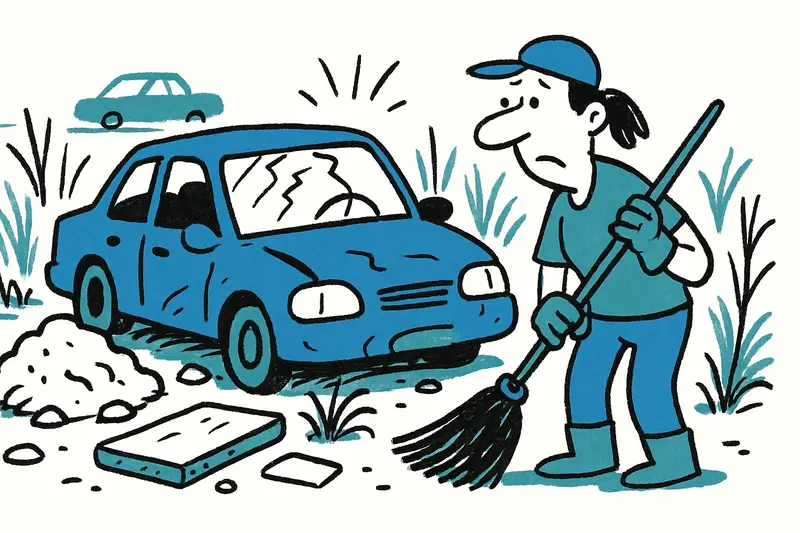
Ses Veles, the industrial estate north of Palma near Bunyola, does not look good. Weeds push through cracks, the asphalt is heavily damaged, and on the parking areas there are construction wastes, leftover furniture and repeatedly old vehicles. The mayor of the municipality, Marian Serralta, and the chair of the owners' association, Jerónima Ferragut, have jointly sounded the alarm and are calling for institutional protection for the site.
What it is specifically about: The site was created in 2006 to accommodate waste management companies — names like Tirme, Adalmo or Reciclajes Pérez are among the sectors for which the plots were originally intended. For years, however, the communal property has been misused: private individuals and individual businesses deposit rubble or leave decommissioned vehicles, as happened with the illegal dump in Son Reus. In addition there are occasional clean-ups, fines and warning signs — measures that work temporarily but do not solve the problem.
The municipality has announced that next month it will carry out a general cleaning with an external company. That is important, but Ferragut and the administration consider it an interim solution: without lasting rules the condition will soon be the same again. What is astonishing is the scale: the green areas of the industrial estate add up to over 70,000 square meters — clearly more area than a small municipality can sensibly manage alone.
Critical analysis: The problem is not a single pile of rubble, but a systemic failure. First, there is a lack of clear responsibilities: Are roads, green areas, lighting and enforcement the responsibility of the municipality, the owners' association or the individual plot holders? Second, the enforcement instruments are limited. Fines exist, but their effectiveness depends on regular monitoring and — not least — the political willingness to impose sanctions. Third, there is a financial bottleneck: the ongoing costs for cleaning and maintenance exceed the municipality's capacity.
What is often missing in public debate: a binding perspective for such industrial estates. People talk about cleaning actions, but hardly about prevention, contractual regulations when reassigning plots, or how waste companies located close together can be effectively monitored. Also rarely on the table are coordinated solutions at island or regional level, such as a central landfill logistics or a fund for the maintenance of industrial areas that are strategically important for the common good.
An everyday scene that makes the problem tangible: on a windy morning in Bunyola you can hear the rumble of trucks, it smells of diesel, and at the edge of the industrial park a neighbor wearing rubber gloves collects old shards of glass because the sharp edges could injure her dogs. No one remains indifferent, but the question remains: who will take on the work permanently?
Concrete proposals that should be addressed now:
1. Clear rules of responsibility: The owners' association and the municipality must set down in writing who is liable for which parts. This can be done by amending the community contracts or through municipal statutes.
2. Long-term management contract: A contract with a company for regular cleaning, greenery maintenance and basic asphalt repairs, financed through a maintenance fund into which all property owners pay.
3. More effective enforcement and sanctions: Cameras at access points, more controls at varying times and consistent punishment of repeat offenders — coupled with transparent publications on fines and measures.
4. Preventive infrastructure: Barriers, designated collection points for construction waste, containers for bulky waste and cooperation with regional waste handlers so that illegal dumping becomes rarer and more costly for perpetrators.
5. Regional cooperation: Bunyola should coordinate the issue with neighboring municipalities and the island administration. Industrial parks that host waste operators affect the entire island logistics and need a coordinated strategy; similar debates over responsibility have emerged in cases like Binissalem Suffocates in Waste.
6. Local involvement: Support programs for owners, such as subsidies for renewing asphalt sections, as well as regular clean-up days supported by municipal logistics.
Conclusion: The upcoming general cleaning is necessary and will help in the short term. In the long run, however, Ses Veles needs a legal and organizational framework: clear liability rules, reliable funding for upkeep and enforcement that is not merely symbolic. Otherwise the industrial park will remain a patchwork of signs, fines and recurring rubbish — and the neighborhood will be the one that clears away the dirt each morning. The question of who bears responsibility is one that has come up in other contexts around the island, including the issue of wrecks in the Bay of Pollenca.
The question remains open: do the municipality, the owners and the island administration want to develop a model that works in the long term, or will Ses Veles continue to serve as a catchment for problems?
Frequently asked questions
Why is the Ses Veles industrial park in Bunyola so messy?
Who is responsible for cleaning industrial estates in Mallorca like Ses Veles?
Will Ses Veles in Bunyola be cleaned soon?
Can fines stop illegal dumping in Mallorca industrial parks?
What kind of waste is usually left at Ses Veles in Bunyola?
Why is Ses Veles hard for a small municipality to maintain?
What long-term solutions are being discussed for industrial parks like Ses Veles in Mallorca?
Is Ses Veles in Bunyola only a local problem or a wider Mallorca issue?
Similar News

Ancient Piece Brought to Light: Guardia Civil Recovers Roman Anchor Fragment off North Coast of Mallorca
Divers from the Guardia Civil recovered a massive iron piece from Roman times off Mallorca's north coast. The roughly 35...

Who Benefits from the Half‑Hourly Flight on the Edge? Aena, Investments and the Island's Interests
Almost one billion euros is flowing into Son Sant Joan. The figures show the scale of investment and expected beneficiar...

Are the Balearic Islands the Southern Border of Europe? A Reality Check on Immigration
The Balearic Islands are again calling for EU aid after a sharp rise in arrivals by sea. Conflicting priorities between ...

"Expensive chaos" and many open questions: What clients can do when a lawyer suddenly stops responding
Several clients complain that a well-known German lawyer in Mallorca has been unreachable for months. Key question: What...

TV tip: 'The Last Problem' — Mallorca as the setting of a classic crime
A classic whodunit on Mallorca: A new miniseries set in spring 1959 brings storm, an isolated hotel and a dense web of s...
More to explore
Discover more interesting content

Can Cap de Bou

Townhouse Lleo 72
