
Interpol manhunt in Mallorca: 66-year-old wanted in Plus Ultra scandal
Interpol manhunt in Mallorca: 66-year-old wanted in Plus Ultra scandal
Interpol is searching in Mallorca for a 66-year-old resident of Santa Maria. Authorities accuse him of money laundering, fake invoices and membership in a criminal organization; the case is linked to €53 million in COVID aid for Plus Ultra.
Interpol manhunt in Mallorca: 66-year-old wanted in the Plus Ultra scandal
Key question: What do we really know about this man's role — and what gaps does the case reveal in the oversight of relief funds?
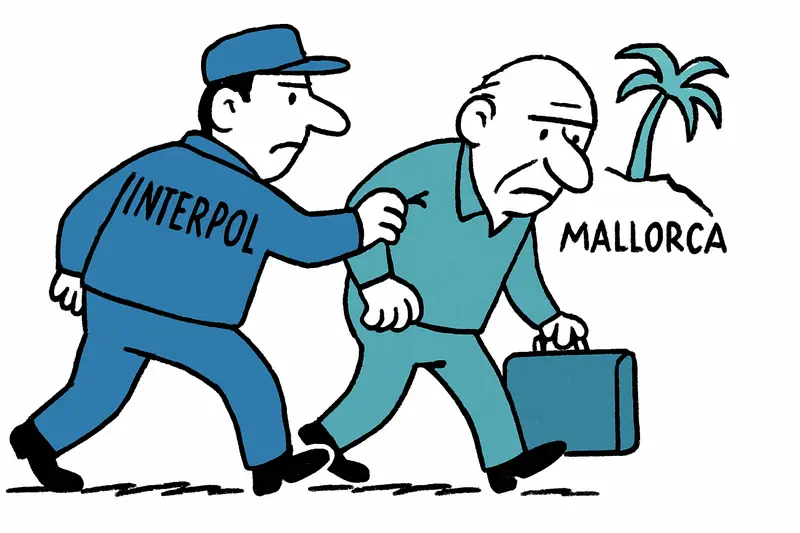
On Tuesday we received a brief report: Interpol is searching for a 66-year-old man who lives in Mallorca. According to investigators from Spain, he is said to have played a key role in a network linked to state coronavirus aid for the airline Plus Ultra. Specifically, the allegations include money laundering, the issuing of fake invoices and membership in a criminal organization. The amount of aid in question has been estimated at €53 million.
At the core is a problem we know well on the island: cash flows and nested business relationships that are difficult to disentangle. That Interpol has been involved highlights the cross-border nature of such investigations, as in Mallorca's Most Wanted: The Trail to Sami Bekal — How a Case from Palma Became an International Manhunt. Similar cases where national police acted on European arrest warrants can be seen in Arrest in Mallorca after European arrest warrants: How safe is the island as a hideout?. But investigative files alone do not fix structural weaknesses. What do we know about controls, account movements or the role of financial intermediaries? It is here that information gaps appear.
A critical view: The accusation against an individual makes him the focal point of public debate. That is understandable — people want a face to attach to a scandal. Legally, however, much remains open: allegations are allegations, not convictions. Drawing a quick conclusion of collective guilt would be wrong. At the same time, the possible scale of the wrongdoing must not be downplayed. €53 million in state aid is not pocket change, and its misuse affects the general public, as shown in Drugs, Millions and Suspected Abuse of Office: What the Major Operation in Mallorca Reveals.
What has been missing so far from the public discussion is a clear inquiry into procedures. Who authorized the payments? What controls were applied to the recipient? How exactly did funds end up in questionable intermediary companies? Investigations into how funds move through intermediary companies have led to arrests before, for example Three arrests in Mallorca: What lies behind the alleged international bank fraud. Such questions are not directed at individual investigators but at the system: transparency in the use of public funds, traceability of transactions, and uniform audit standards within the administration.
A small everyday snapshot from Santa Maria: On the Plaça long-time residents sit in the café, listen to the church bells and exchange concerned looks when an unmarked Guardia Civil car pulls up. People speak quietly about rumours, about "someone who lives here" and about "strange companies" that suddenly send invoices. Such scenes show: for neighbours the abstract news of international manhunts becomes a tangible worry about their familiar surroundings.
Concrete approaches we suggest here: First, a public register of recipients of large emergency aids with audit standards and clear responsibilities. Second, the establishment of specialised forensic teams in Palma that can quickly trace financial movements. Third, better interfaces between national investigators and local authorities so that tips from communities feed into forensic work. Fourth, mandatory checks of invoice issuers by independent auditors for particularly large sums. And fifth, protection for whistleblowers who want to report irregularities — without fear of reprisals in a small social environment.
These measures would not solve a single case, but they would prevent weaknesses in the system from repeatedly creating the same gaps. The island is small; economic and social networks overlap quickly. When control mechanisms fail somewhere, everyone feels it.
Conclusion: The international manhunt for a man from Santa Maria is one piece in a larger puzzle. Legally, the investigation comes first. Politically and administratively, we must now ask questions that go beyond individual perpetrators: How do we protect public funds, how do we ensure transparency, and how do local communities respond when investigations reach into their neighbourhood? The answer to these questions will decide whether a scandal remains noise or leads to real reform.
Frequently asked questions
When is the best time to visit Mallorca for warm weather and swimming?
What should I pack for a trip to Mallorca?
Is Mallorca good for a beach holiday outside summer?
Can you swim in the sea in Mallorca in spring or autumn?
What is Palma de Mallorca like for a short city break?
Is Sóller worth visiting if I only have one day in Mallorca?
What kind of holiday is Cala d'Or in Mallorca best for?
How long should I spend in Mallorca to see both beaches and inland areas?
Similar News

Deadly Tractor Accident in Bunyola: What Needs to Be Done Now
In a work accident on an estate near Bunyola, a roughly 40-year-old man lost his life. His wife and a small child were o...
Head-first dive into the shallow part of Cala Fonoll: An accident and the unresolved question of responsibility
A young tourist dove into Cala Fonoll and was seriously injured. Key question: Why are clear warning signs missing at da...
Mistaken identity with fatal consequences: Brutal assault in S'Aranjassa — what's missing in the follow-up?
At S'Aranjassa a visitor to a finca was tied up, beaten and thrown out of a van. Three men have been arrested, including...

High heel slips, car accelerates: accident on Camí de Son Hugo
A woman lost a high-heeled shoe on the forecourt of the sports facility at Camí de Son Hugo. The car accelerated, mounte...

Phone Scam: How Two Hotel Employees at Playa de Palma Lost Thousands of Euros
One morning in September, two reception employees at Playa de Palma were pressured by alleged alarm-company staff — in t...
More to explore
Discover more interesting content

Can Cap de Bou

Townhouse Lleo 72
