
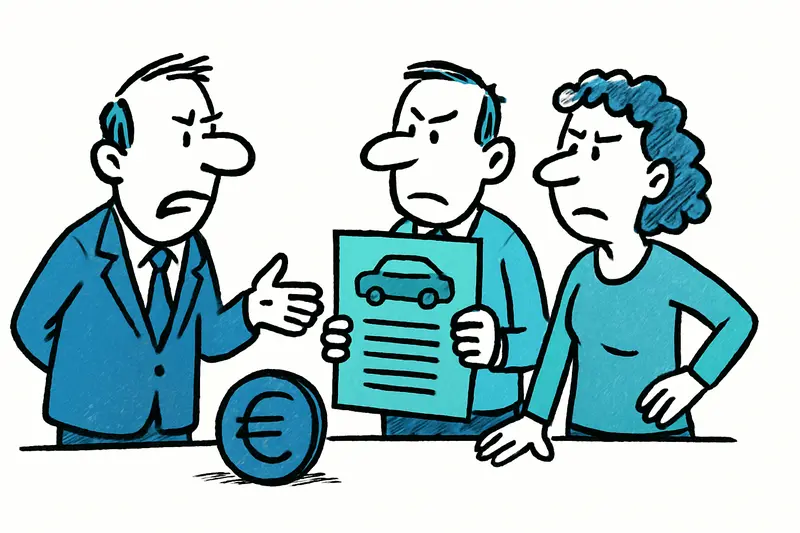
Ready to go quickly — but at whose expense? Island council prepares vehicle fee
The island council is already working on the fee schedule for the planned traffic-limiting model — even before the parliament has passed the law. A reality check: Who pays, who benefits, and what gaps remain?
Ready to go quickly — but at whose expense? Island council prepares vehicle fee
Reality check: Can Mallorca introduce the charge fairly, legally and practically?
Key question: How can a fee for incoming vehicles be designed so that it not only takes effect quickly, but is also legally secure, socially balanced and actually effective? This question lies behind the island council's hurried work: the administration is already drawing up a fee schedule and a cost analysis so that the system can function immediately once the Balearic parliament provides a legal basis.
In short: Finance councillor Rafael Bosch is having the expenses of the regulation examined; transport councillor Fernando Rubio wants the technology and procedures to be able to start without delay. The plans include staff hours for permits and sanctions, road wear and tear, and the acquisition and operation of a camera system for monitoring. Legally clear: the charge must not exceed the actual costs incurred. The model of Ibiza and Formentera serves as an example, where a one-euro daily fee has applied since June, daily limits have been set and digital permits must be obtained in advance.
Critical analysis: Good intentions are one thing, detailed implementation another. From experience with similar measures we know: the balance sheet can quickly become confusing if revenues, administrative costs and technical infrastructure are not clearly separated. A fee can easily become a hidden source of revenue if it is not transparently reported what the amounts are used for. The announced cost limitation is a legal rule of thumb — in practice the term "actual costs" can be interpreted broadly. Who decides which items are included? Who audits the accounts?
What has so far been missing in the public debate: a clear explanation of how the burdens will be distributed. Does the charge affect only holidaymakers with their own cars, or also customers affected by a rental car cap? Is it charged per person, per vehicle, per ferry crossing? How are short-term visitors (day trippers) dealt with? And: how will professional drivers, delivery services, tradespeople and people with reduced mobility be taken into account? Also still open: data protection questions around cameras, appeal and objection procedures, and the legal consequences of data collection errors.
An everyday scene makes the urgency clear: Sunday morning on the Paseig Marítim in Palma, taxis and VTCs honk, landlords carry suitcases from rental car parks to the port, and a woman sells filled rolls at the roadside. The lines of cars move in surges, residents open windows against the noise. There the charge would be immediately noticeable — for those who cause the traffic as well as for those who depend on it.
Concrete approaches the island council should now examine:
- Transparency: Publication of a detailed cost breakdown (staff, technology, operation, maintenance) with independent auditing and an annual report.
- Differentiated fee structure: Tiering by vehicle type, length of stay and purpose (tourism vs. commuter traffic) instead of flat rates.
- Integrity and data protection: Use of cameras only for license plate capture, no biometric analysis, short retention periods, encrypted data storage and external oversight by the data protection authority.
- Trial phase: Pilot zones and a testing period outside the high season to identify technical weaknesses and legal gaps before the rule is applied island-wide.
- Ring-fencing of revenues: Use revenues exclusively for road maintenance, public transport and traffic safety measures — this builds trust.
- Social compensatory measures: Discounts or exemptions for long-term residents, low-income people, commuters and local businesses.
Pithy conclusion: Putting the project's clock ahead of the parliamentary decision shows determination — that's good. What will be decisive, however, is whether determination is accompanied by transparency and legal diligence. Without clearly defined cost allocation, auditing bodies and social compensation mechanisms, the measure risks becoming a bureaucratic monster or a legal stumbling block. Mallorca can learn from the experiences of neighboring islands — but copying is not enough. What is needed is a rule that works here: technically robust, legally sound and understandable for the island's people.
Frequently asked questions
What would a vehicle access fee for Mallorca involve and who would it affect?
How would costs and revenues be reported to ensure transparency?
Who would be charged and how might exemptions or discounts work?
What privacy and data-protection issues come with camera monitoring?
What is the plan for testing the system before applying island-wide?
How would revenues be used to gain public trust?
What lessons could Mallorca learn from Ibiza and Formentera?
What would the everyday impact look like on Palma’s streets if the fee starts?
Similar News

Arrest at the Port: Three Suspected Pickpockets Left Mallorca After Series of Thefts
The National Police stopped three men at Palma harbour who are accused of several thefts at the airport. How could the g...

Palma's Rental Bike Boom: More Bikes, More People, More City Life
Since Bicipalma was opened to non-residents, the system has noticeably grown. Students, residents and tourists bring lif...

Palma–Lyon in Winter: Two Weekly Flights Bring Fresh Momentum
From October Transavia France will connect Palma and Lyon in winter as well: Wednesdays and Saturdays, around 17,000 sea...

Budget holidays in Mallorca: What thriftier tourists really mean
Visitors are spending less: shorter stays, fewer restaurant visits, fewer excursions. A reality check for Mallorca's eco...

Mallorca gets winter link to Lyon: Transavia France flies from October
Transavia France will launch a winter direct connection Palma–Lyon from late October: twice weekly, around 17,000 seats ...
More to explore
Discover more interesting content

Boat Tour with BBQ along Es Trenc Beach

Private transfer from Mallorca Airport (PMI) to Pollensa
