
Pick-up overturns near Muro: One death, many questions
Pick-up overturns near Muro: One death, many questions
On a country road between Sa Pobla and Muro a 57-year-old man lost his life. His 24-year-old son was seriously injured. Time for a reality check: What went wrong, what's missing in the discourse and what should be done now?
Pick-up overturns near Muro: One death, many questions
Key question: Could load securing, training or increased controls have saved the passenger's life?
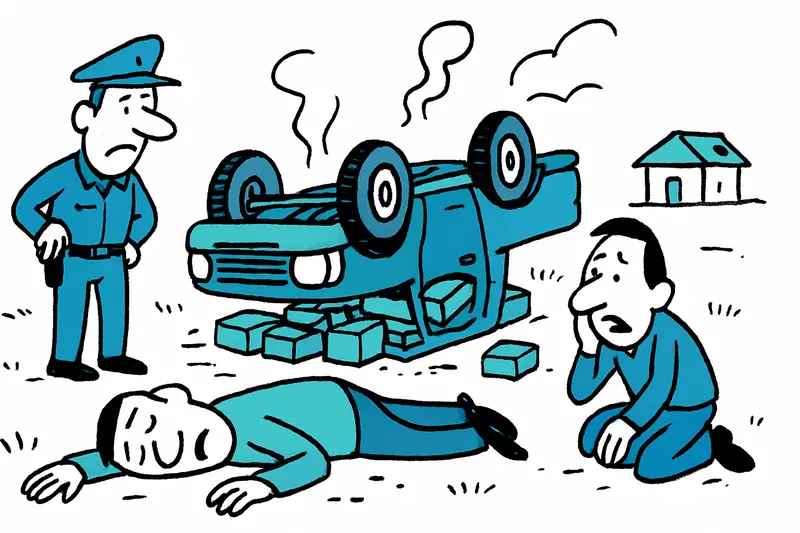
On Thursday around 1:15 p.m., a journey on the country road between Sa Pobla and Muro ended tragically for a family. An Isuzu D-Max, loaded with cement bags and roof tiles, left the roadway, rolled several times and came to rest on its roof in a neighboring field. A 57-year-old man sitting in the front passenger seat died at the scene. His 24-year-old son, apparently the driver, freed himself but was taken to Inca hospital with severe multiple injuries. SAMU 061 rescue teams and the Inca fire brigade still tried to free the trapped man and perform resuscitation. The Guardia Civil has launched an investigation into the cause of the accident; initial indications point to a possible shifting of the load, though official confirmation is still pending.
Critical analysis: On Mallorca we often see vehicles carrying building materials on narrow country roads, especially around midday when craftsmen and small businesses are on the move. A pickup like a D-Max is robust, but its driving dynamics change significantly when heavy loads are stacked high and not secured. If the load shifts, the center of gravity changes and the vehicle becomes more prone to tipping. Added to that are driver errors, road conditions and possible distractions. In this case several risk factors apparently collided: heavy loading, challenging road sections and the high demands placed on young drivers who transport such loads. Similar incidents have raised questions about responsibility, for example Fatal accident near Son Castelló: Three passengers come forward — where are the gaps in responsibility?.
What is missing from the public debate: The discussion often ends with accident figures and does not systematically address the issue of load securing on small island roads. There is a lack of concrete guidance for private builders and small contractors: How should cement bags be properly tied down? What are the maximum weights for a pickup with single tyres? How does overloading affect braking behaviour and stability in corners? The role of driver training for transporting heavy building materials is rarely mentioned; other crashes, such as After head-on crash in Palma: Fleeing and many questions – 31-year-old dies, show how post-crash factors complicate investigations. These are simple, practical issues that can save lives.
Everyday scene from the island: Picture the country road just before Muro: cicadas chirping, the air heavy with the scent of freshly cut hay, a tractor slowly parked at the roadside. A tapas bar in Muro fills for siesta, glasses clink and voices rise. Then the wail of emergency vehicles, neighbours peering from open doors, conversations falling silent. Such dramatic interruptions to daily life here are not just headlines but leave a long mark on village communities.
Concrete solutions: First: public awareness campaigns on load securing, targeted at building materials and aimed at craft businesses, private builders and young drivers. Second: free inspection points coordinated between the island council and the Guardia Civil, where vehicles and loads can be spot-checked. Third: promotion of simple securing kits (tie-down straps, anti-slip mats) by municipalities or chambers of commerce, for example as a discounted starter pack for micro-enterprises. Fourth: adjustment of fines and penalties for dangerous loading and clearer guidance on maximum permissible loads for vehicle types such as pickups. Fifth: more training for novice drivers who regularly carry heavy loads, for example a compact module in driving schools or through employers.
Additional technical measures would include better guardrails on dangerous sections of the Sa Pobla–Muro road, reviewing speed limits and selective widening of carriageways. Last but not least, a local network of first responders helps: if neighbours or construction workers nearby complete basic first-aid courses, they can provide life-saving assistance until SAMU 061 arrives; similar road-safety concerns were raised after Head-on Crash near Manacor: Two Dead, Questions Remain.
Pointed conclusion: This death is not just a sad statistic but a wake-up call. The combination of heavy cargo, narrow country roads and possible gaps in information and enforcement led to a family tragedy. We need practical, calm measures: more visibility for load securing, simple roadside tools and checks where building materials are transported. Only then can we prevent scenes like this — sirens, onlookers, the quiet afternoon road — from becoming routine.
Frequently asked questions
What factors make loading a pickup dangerous on Mallorca’s rural roads?
How can private builders in Mallorca safely transport cement bags and roof tiles?
What steps should drivers take to keep loads secure on the Sa Pobla–Muro road?
What public measures would help prevent load-related accidents on Mallorca?
How does carrying heavy loads affect a pickup's handling and stability?
What should a driver do if a load shifts while driving?
Are there programs offering free inspections of vehicle loads in Mallorca?
What lessons can Mallorca communities draw from the incident near Muro?
Similar News

Jeckliner at Sunnesching: Cologne spirit sets sail from Palma
In September 2027 the Mein Schiff 2 briefly becomes a floating carnival stage: four days with Cologne bands, comedy and ...
Finally Home: Mike and Leyla Heiter Buy Villa with Sea View in Mallorca
The reality TV couple Mike and Leyla Heiter have bought a house in Mallorca with a roof terrace and sea view. An Instagr...

Arrest after series in Palma: Who protects apartments from repeat offenders?
The National Police arrested a man in Palma who investigators say may have broken into several apartments. In one incide...
How a Teenager Without a Driver's License Stole a Rental Car — and What It Means for El Arenal
In El Arenal a minor took advantage of an unattended rental car with its engine running. Flight, climbing over walls and...
Three-ton llaut salvaged in Puerto Portals – volunteers clear microplastics from the harbor
During the weekend operation in Puerto Portals, divers pulled an approximately three-ton llaut from the harbor. Associat...
More to explore
Discover more interesting content

Can Cap de Bou

Townhouse Lleo 72
