
Major operation in Inca: What the nursing home fire reveals about our security gaps
Major operation in Inca: What the nursing home fire reveals about our security gaps
Early morning in Inca: an electrical switchgear on the ground floor ignited and produced smoke, forcing the evacuation of about 130 people. The operation succeeded — but the incident raises questions about prevention, emergency planning and temporary accommodation.
Major operation in Inca: What the nursing home fire reveals about our security gaps
Evacuation successful, debate opened — and the clock keeps ticking
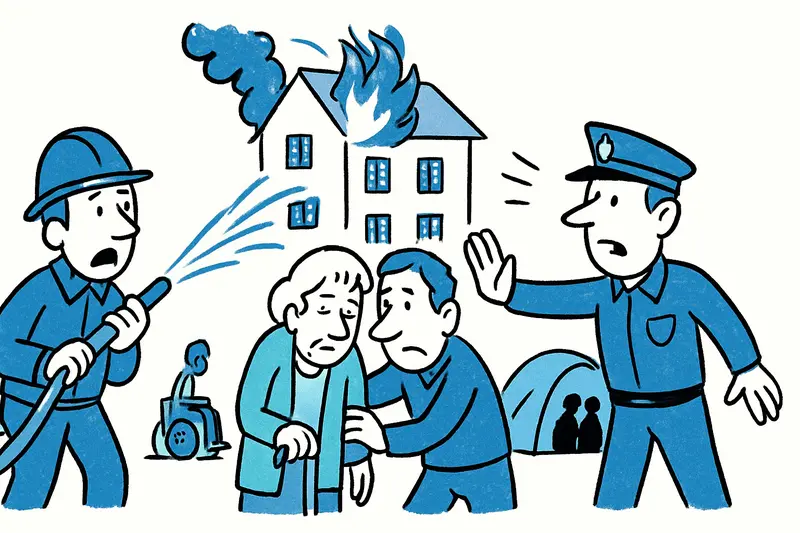
On Wednesday morning at around 9:45 a.m., a nursing home in Inca became the scene of a major alarm. An electrical switchgear on the ground floor caught fire and produced thick smoke, according to initial findings. Around 130 residents and staff had to leave the building; in total 166 people received medical attention and two were taken to hospitals with smoke inhalation. No severe injuries have been reported so far.
The images from the facility's outdoor area shaped a typical Inca morning: the clatter of fire hoses, the flashing of emergency vehicles and heat-wavy streets — on that day the heat made breathing difficult, the 34°C mark in Palma was noticeable, and the acrid smell of soot lingered in the air. Rescue teams set up a treatment tent on the grounds of the neighboring Ponent School; neighbors brought water bottles and blankets, streetlights and schoolyards were temporarily turned into improvised gathering points.
The rapid evacuation and the coordinated response by firefighters, police and emergency services prevented worse outcomes. Fire crews from several towns worked hand in hand, yet weaknesses were exposed that go beyond this single incident, as similar evacuations such as the Fire at Alcúdia Hotel: Evacuation Succeeds — What Lessons Will the Island Learn? have shown.
Key question: How well are our care facilities protected against electrical fires, power outages and large-scale smoke development — and who is responsible when prevention is lacking?
Critical assessment: A switchgear as the cause raises the routine question about the condition of electrical installations. Electrical systems are aging infrastructure; in buildings with many cables and multiple residents even small faults can become dangerous. That the building's electrics were so badly damaged that parts of the facility were left without power shows how quickly care systems can be put into a state where return is impossible. The risk is akin to incidents in other machine rooms, for example Fire in Port d'Alcúdia: Why the big scare is also a wake-up call for fire safety.
Prevention failures: Our public debate often focuses on emergency scenes and tales of heroism. What is missing is attention to regular, independent safety inspections, mandatory sprinkler systems in existing buildings or affordable plans to renew dilapidated electrical systems, as highlighted after cases like the Smoke in the waste room: brief evacuation in Palmanova — what hotels should learn now. Home operators complain about tight budgets; municipalities about staff shortages. Who will finance retrofits? Which inspections should be mandatory and which are merely recommendations?
Failures in emergency planning: Using the Ponent School as a field hospital was correct and lifesaving, but it also exposed another problem: there is no ongoing, publicly accessible register of available places for the short-term relocation of care-dependent people. Coordinating transport, care and medication supply currently works only through improvised channels and personal agreements between authorities and homes.
What is missing in the public debate: a sober discussion about responsibilities and priorities. There is a lack of clear rules for inspections, of transparent reporting after incidents and of a solidarity fund for necessary immediate measures when infrastructure is damaged — beyond political statements. Yes, politicians and authorities monitored the situation on social media channels and offered support. But reassuring words do not replace a technical diagnosis.
An everyday scene: residents of the Carrer area stood with handheld fans and small ventilators, older neighbors held hands, a school bus parked at the edge to transport affected people later. A cluster of cats sat quietly under a pine tree, as if even the animal world were disoriented. The sounds were local and human: a caregiver's quiet sobbing, an officer urging people to keep their distance, and the distant beeping of a defibrillator that was not needed at that moment.
Concrete solutions: 1) Mandatory electrical inspections in care homes every five years by certified experts; 2) financial support through a municipal or regional fund for necessary retrofits (sprinklers, fire doors, emergency generators); 3) binding evacuation plans with regular drills that include caregivers, relatives and the local neighborhood; 4) a central, digital register of available care places and emergency housing accessible to IMAS and municipalities; 5) legal requirements for minimum staffing levels during night shifts and evacuations as well as clear transport protocols for medications and resident records; 6) transparent public reports after every major incident so lessons can be learned.
These proposals are not new, but they are affordable if priorities are set. Prevention costs money; failures cost people and money — because after a fire extensive repairs or even relocations are often necessary.
Conclusion: The operation in Inca was successful in terms of damage limitation. However, that should not obscure the fact that the firefighters' intervention only removed the symptom of another problem: outdated technology, unclear responsibilities and lacking reserves. Politicians and care providers must now agree on concrete local steps; hours of press releases are not enough. The people who sat on the schoolyard that morning need more than expressions of sympathy — they need reliability. And there is a simple test for that: Would we leave our own mother in such a residence without hesitation? If the answer is no, then much remains to be done.
Frequently asked questions
What happened at the nursing home in Inca and what safety gaps did it reveal?
How safe are care facilities in Mallorca from electrical fires and power outages?
What concrete steps are proposed to prevent future incidents in Mallorca's care homes?
Why is a central register of available care places important during emergencies in Mallorca?
How can families and care staff improve evacuation planning in Mallorca's care homes?
How did the local community respond during the Inca incident and what does it show about emergency support in Mallorca?
What role should authorities play after incidents to improve safety in Mallorca?
What practical tips can Mallorca residents consider for hot days and potential smoke?
Similar News
Mini-tsunamis in Mallorca: Harmless natural phenomenon — or an underestimated danger?
Two harbor towns in Mallorca recorded unusual water level fluctuations. An analysis: How rissagas form, who is at risk —...
Stinging jellyfish in Cala Banyalbufar: Why everyone suddenly fled the water
In Cala Banyalbufar, Pelagia noctiluca washed up in droves. A personal account of why this is no coincidence, what is of...
New low-pressure trough brings rain — and the heat remains: What's missing in Mallorca?
A short, intense window of showers hit Mallorca, yet the air remained muggy and warm. Key question: Why does rain hardly...
Klaus-Michael Kühne has died: The entrepreneur who gave Mallorca a second home
He first arrived on the island at 60; later the holiday house became Castell Son Claret – a hotel, a music venue and an ...
Buying Instead of Moving Away? Why Every Fourth Property Owned by Balearic Residents Isn't Located Here
Almost a quarter of the apartments purchased by Balearic residents are located on the Spanish mainland. A concise analys...
More to explore
Discover more interesting content

Boat Tour with BBQ along Es Trenc Beach

Private transfer from Mallorca Airport (PMI) to Pollensa
