
When Jealousy Turned into Harassment: Arrest after Vandalism in Nou Llevant
When Jealousy Turned into Harassment: Arrest after Vandalism in Nou Llevant
A young woman is said to have repeatedly defaced her ex's car on Mallorca and harassed him by phone. The National Police investigated; the woman was arrested and later released with a no-contact order. A look at what remains in the dark and how the island could respond.
When Jealousy Turned into Harassment: Arrest after Vandalism in Nou Llevant
Why does a relationship suddenly end up on the street and on a house wall?
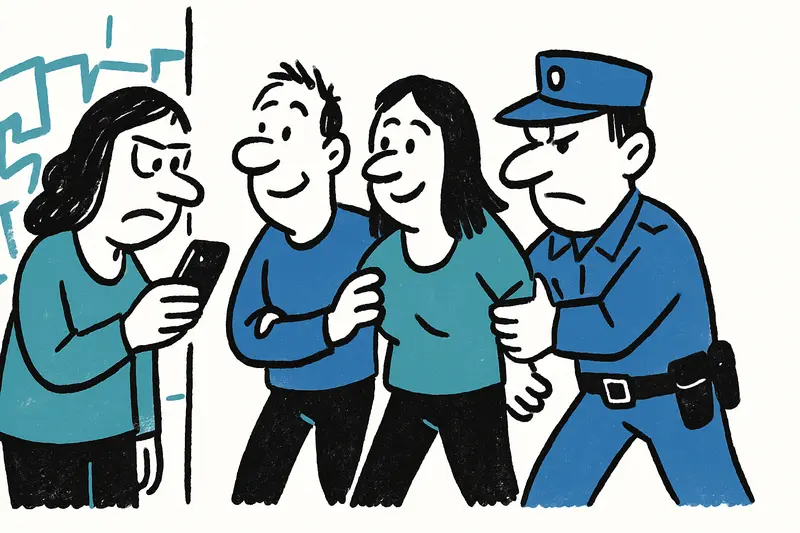
In the December evening light of Nou Llevant, when the streetlamps cast long shadows on the asphalt and voices still drift from the corner cafés, an argument escalated that might elsewhere have remained digital. A 23-year-old arranged a meeting in a park after an unknown user had told him on TikTok about alleged infidelity. There, a 19-year-old woman reportedly sat in his back seat without permission. Later she is said to have called repeatedly, waited outside his home and defaced his car with vulgar inscriptions. The National Police intervened and arrested the woman; before an examining magistrate she stated that she had made the graffiti because her ex had allegedly attacked her. The judge ordered her release, forbade any contact and set a 200-meter distance requirement.
Key question: How far do jealousy, digital provocation and personal boundaries reach — and how does our society protect victims and the accused before outbursts turn into crimes?
Critical analysis: At first glance this is a typical case of vandalism and coercion. But the story has several layers: social media messages as the spark, possible identity falsification through multiple fake accounts, and a scene in a neighborhood that is quiet in the evenings but not forgotten. Authorities had to step in, investigations took place and judicial measures followed. What is missing is a closer look at the background — how did the TikTok message come about, who created the accounts, and what role do social networks play in the escalation between young people on the island?
From a police perspective the outcome is clear: vandalism is prosecuted, as is coercion; similar incidents have led to arrests, such as Palma: Arrest After Threat Post — How Dangerous Is Online Rage in Mallorca?.
For those affected, however, the consequences are often confusing: vehicles smell of spray paint, entries remain in online timelines, and the fear of being recognized on the street persists; similar incidents have been reported, for example in Scratched Cars in Santanyí: Scratches Instead of Holiday Peace. For the accused, the intervention of the justice system ended with a condition forbidding contact — a pragmatic measure, but not an explanation for causes such as stress, group dynamics or possible provocations beforehand.
What is missing in the public discourse: We rarely speak concretely about digital stalking among teenagers and young adults on Mallorca. Fake profiles, targeted rumors and immediate confrontations in parks or at doorsteps are everyday occurrences but are often dismissed as private dramas; cases like Arrests after threats at the city beach: Why an evening stroll must become safer again show how these dynamics can spill into public safety concerns. There is also a lack of low-threshold conflict mediation services for young people in Palma's neighborhoods, prevention programs in schools and clear procedures for documenting digital evidence before it disappears.
A scene from everyday life: Picture Brotad Street — a late walk, the door of an apartment block clicks shut, lampposts hum, dogs bark in the distance. Someone leans against a wall, staring at their phone, waiting. Two hours pass. Evenings like these, where neighborhood routine meets heightened emotions and platforms spread messages of uncertain origin, can turn into incidents; similar property damage in public parking lots has been reported elsewhere, for example Why the Parking Lot in Cala Millor Can't Find Peace: Renewed Vandalism Sparks Anger in Son Servera.
Concrete solutions:
- Local prevention: Involve schools and youth centers in Palma more closely and offer workshops on conflict resolution and digital self-defense.
- Documentation support: Police and municipalities should distribute easy-to-follow guides on how to secure evidence (timestamped screenshots, reporting fake accounts to platforms, safe storage of photos of damages).
- Promote platform responsibility: Municipalities can link low-threshold reporting channels with social media companies so fake accounts are reviewed more quickly.
- Judicial accompaniment: In addition to protective orders, mandatory counseling or mediation offers for the accused could be an option to prevent repeat incidents.
Pointed conclusion: The incident in Nou Llevant is more than a nocturnal scribble. It points to how digital triggers and real-life encounters can come together — in the middle of a neighborhood, under the eyes of the community. Police and judiciary have reacted; the larger task lies in prevention, education and technical ways to stop fake profiles and targeted provocation more quickly. If we fail to do so, all that will remain of conflict resolution is the paint on the wall.
Frequently asked questions
Can jealousy and social media messages in Mallorca really lead to police action?
What should you do if your car is vandalised in Mallorca?
How do police deal with harassment and vandalism cases in Palma de Mallorca?
What is a no-contact order in a Mallorca harassment case?
How should you save evidence of online harassment in Mallorca?
Is Nou Llevant in Palma a quiet residential area?
Can fake profiles on social media be part of a harassment case in Mallorca?
How can young people in Mallorca avoid conflicts getting worse online?
Similar News
By Boat Instead of the Road: Palma's Water Bus — a Reality Check
The 'Bus Nàutic' launches in two stages — but questions remain over interim operations, fares and environmental requirem...
Several Days of Rain Approaching: How Well Is Mallorca Prepared?
Aemet says: rain from Thursday until at least Tuesday, especially heavy on Monday. Temperatures remain mild. A reality c...
Nervous Reaction at a Traffic Stop: Why Campos Is Not Just a Sniffer-Dog Problem
At a traffic stop in Campos a 37-year-old German was arrested with a bag full of drugs. Our reality check explains why s...
Cameras Against Illegal Dumping: Porto Cristo Monitors Problem Areas – a Reality Check
Manacor has installed four surveillance cameras at particularly problematic waste spots in Porto Cristo. A local check a...
Reality check: Palma's "white" torrent — harmless salt or neglected warning sign?
White crusts on the Torrent de Sa Riera are causing a stir. Emaya describes them as salt deposits. Our reality check: wh...
More to explore
Discover more interesting content

Can Cap de Bou

Townhouse Lleo 72
