
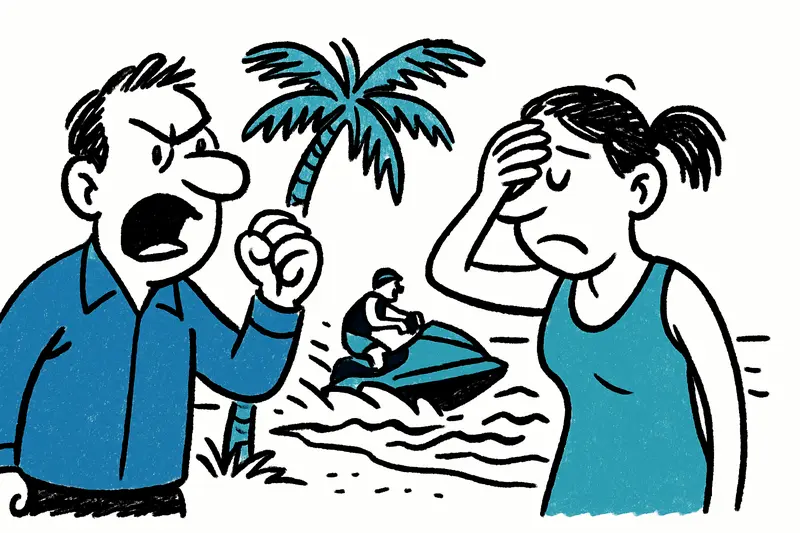
Noise, Risks and Threatened Seagrass — Jetskis Unsettle Cala Gamba
Residents and holidaymakers in Cala Gamba are fed up: loud jet skis endanger swimmers and can damage the Posidonia meadows. What does the bay need now?
Who protects Cala Gamba — the bathers, the buildings or the seagrass?
On a late Sunday afternoon, when the sun still warms the promenade and children with wet hair cling to the snack stalls, you can hear them: revving engines, sharp turns close to the bathing area and little sprays that smear the water's surface like unwelcome graffiti. Cala Gamba is not large, the promenade and Calle Punta are within shouting distance — and yet some jet ski riders seem to ignore how close people and houses are. The central question is therefore: how much holiday noise and risk can a town bay tolerate before the authorities act?
Between legal rentals, the black market and genuine concerns
The scene is familiar: legitimate rental operators with valid insurance, safety briefings and mandatory life jackets share the water with providers who operate more like shadows — fast, loud and without regard for the rules. For the reputable businesses this is not only unfair competition but also a safety problem. Bathers, snorkelers and children on inflatable mats suddenly have to get out of the way; older people on the promenade flinch when a jet zips past them. One resident sums it up: 'You can hear the engines all the way to Calle Punta — it's not just noise, it's stress.' This mirrors cases described in Cala Gamba under constant pressure: Residents demand stricter controls on jet skis.
What often gets overlooked in the public debate
The debate usually focuses on two points: noise and safety. Less attention is paid to who must bear responsibility: the renter, the person in charge of the pilot, the harbor authority or the municipality? The economic side also remains underexposed. Some residents see the illegal riders as an answer to the demand for cheap thrills — a market failure resulting from inadequate regulation. And the consequences are not only acoustic. The psychological strain on people who live here, the restriction of using quiet bays and the long-term damage to the environment receive too little attention, as explored in Drunk Boats, Battered Bays: When Private Boat Rentals Put Mallorca's Coasts at Risk.
Posidonia in focus — more than a green fringe
An often underestimated aspect is the sensitivity of the Posidonia meadows. These seagrasses are not just pretty decoration; they are habitat, coastal protection and carbon storage at the same time. Close passes, wave action and anchoring can damage these stocks — often only visible years later. Yacht club members and conservationists warn: when buoy lines are missing and jet skis approach the areas closely, the long-term health of the bay is at risk, a problem highlighted in Conflict in Banyalbufar's Cala: When Is Enough Boat Traffic Too Much?. That would not only be an ecological loss but also a hit to tourism — calm, clean beaches are, after all, part of the island's product, not a given.
Pragmatic demands from the neighbourhood
The suggestions from people on site are concrete and pragmatic: visible presence of police or harbor patrol, clear separations between bathing and watersports zones and higher penalties for rule violations. Some argue for limited start times, others for a cap on daily outings or a requirement for rental vehicles to be registered with GPS trackers. Technical solutions such as clearer buoy lines, speed limiters for jet skis and geofencing — virtual exclusion zones via GPS — come up frequently in conversations.
Concrete steps that could show quick results
A pragmatic mix of measures would cost little but yield quick results: initial visible checks around peak times (especially late afternoons), intensified controls against illegal providers, clearly visible signage on the promenade and in the water, and the establishment of a reporting platform for violations. In the longer term, technological solutions could be considered: mandatory GPS trackers for rental jet skis, noise monitoring stations and seasonal limits for motorized water sports in sensitive areas. A dialogue forum between residents, legitimate rental operators, the yacht club and the municipality could also help ease conflicts.
An appeal in a Mallorcan everyday tone
If you walk to Cala Gamba, you smell salt, diesel and often the faint scent of fish frying at the snack stand in the evening. But beneath this everyday atmosphere lies a tension: sparkling sea versus frayed nerves. It would be a shame if, in the end, beach walks and seagrass meadows paid the price. A little less noise in the late afternoon, clearer rules and a bit more enforcement — that could be enough to preserve Cala Gamba as a calm, safe place cherished by both locals and visitors.
Frequently asked questions
Why are jet skis causing problems in Cala Gamba, Mallorca?
Is Cala Gamba a safe place for swimming if jet skis are operating nearby?
What is Posidonia and why does it matter in Mallorca bays?
When are noise and water sports most likely to be a problem in Cala Gamba?
What rules or controls could reduce jet ski problems in Mallorca?
Are illegal jet ski rentals a real issue in Mallorca?
What can residents do if jet skis keep breaking the rules in Cala Gamba?
Why do quiet bays in Mallorca need more protection from motorised water sports?
Similar News

Magaluf: Watchtower Alarm – Lifeguards Pull Unconscious Beachgoer from the Water
After a drama in the late afternoon, two lifeguards at Magaluf beach rescued an unconscious 44-year-old man. He was stab...

Turquoise in the City: How dangerous is the color play of the Sa Riera?
The Sa Riera in Palma suddenly turned turquoise — a pretty motif, but behind the effect lies a discharge of saline waste...

Jeckliner at Sunnesching: Cologne spirit sets sail from Palma
In September 2027 the Mein Schiff 2 briefly becomes a floating carnival stage: four days with Cologne bands, comedy and ...
Finally Home: Mike and Leyla Heiter Buy Villa with Sea View in Mallorca
The reality TV couple Mike and Leyla Heiter have bought a house in Mallorca with a roof terrace and sea view. An Instagr...

Arrest after series in Palma: Who protects apartments from repeat offenders?
The National Police arrested a man in Palma who investigators say may have broken into several apartments. In one incide...
More to explore
Discover more interesting content

Can Cap de Bou

Townhouse Lleo 72
