
Kismet off Mallorca: Glamour, Questions and the Silent Downside of the Mega-Charter
Kismet off Mallorca: Glamour, Questions and the Silent Downside of the Mega-Charter
The 122-meter superyacht Kismet is anchored off Mallorca. Luxury is visible — but what does the island actually gain? A critical assessment with concrete, everyday proposals.
Kismet off Mallorca: Glamour, Questions and the Silent Downside of the Mega-Charter
The 122-meter superyacht brings show, technology — and open questions for the island
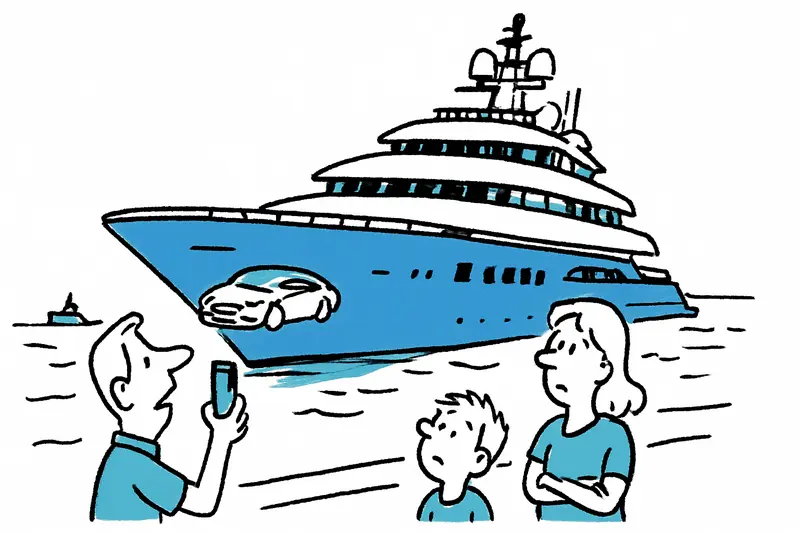
The Kismet lies conspicuously at anchor, its chrome Jaguar on the bow gleaming in the sun. Whoever strolls along the Paseo Marítimo on a hot afternoon, as happened when the 79-meter superyacht "Yasmine of the Sea" in Palma: Luxury, Noise and the Bill for the Island was berthed, hears the soft humming of service boats, sees groups of tourists photographing the superstructure with their phones, and smells the coffee from the street cafés. Here on Mallorca, glamour and everyday life are often close together.
Key question: What does the short-term appearance of a luxury yacht like the Kismet mean economically, ecologically and socially for Mallorca — and what is missing in the public discourse? Brief facts: the owner is Shahid Khan; the Kismet measures 122 meters with a beam of 17.8 meters; she was built by Lürssen; in 2025 she received the award for Superyacht of the Year. Technically the ship features hybrid propulsion, reaches up to 18 knots (more than 33 km/h), has several pools, a helicopter landing pad and a Nemo underwater cinema with a 150-inch screen. The jaguar sculpture on the bowsprit catches the eye; charter clients pay weekly rates in the range of several million dollars, while a 43‑metre example is covered in Former king's yacht between Ibiza and Mallorca: Luxury, history — and who actually pays?.
Briefly analyzed: At first glance such a visit brings income to marinas, suppliers and luxury retailers. Provisions, fuel, catering and security services — there are local revenues. On the other hand there are questions that collide with the everyday lives of many Mallorcans. Not every yacht enters a harbor; many anchor off the coast and occupy areas that fishermen, divers and swimmers want to use. The Kismet advertises modern hybrid drive and energy efficiency. Nevertheless, its operation generates emissions, noise and waste streams that must be properly managed; the risks from short-term private rentals are discussed in Drunk Boats, Battered Bays: When Private Boat Rentals Put Mallorca's Coasts at Risk.
What is often missing in public discussion: transparency. Who really benefits from charter income? How many local companies are actually permanently involved? What fees are charged by harbors and how are these funds used? Also rarely discussed are ecological consequences in sensitive sites such as Posidonia meadows. Large anchor winches and frequent mooring maneuvers can sustainably damage the seabed and local species. Public debate on transparency and regulation has intensified since the new rental rules, as noted in Between Waves and Berth: Mallorca's Problem with 'Floating Holiday Rentals'.
A small everyday scene: early in the morning fishermen head out to sea off Portixol, next to them a charter boat waits for pallets and provisions. On the same beach children play, wondering why a car on the bow of a ship shines like a work of art. Such scenes show: luxury generates curiosity, but also points of contact — and sometimes annoyance when evasive maneuvers or noise disturb the early morning fishing.
Concrete approaches can be derived from this. First: transparent levies and proof obligations for charter income. Harbor operators should keep comprehensible lists of which services were purchased locally. Second: mandatory environmental assessments before anchoring in coastal waters, combined with clear exclusion zones over Posidonia and protected areas. Third: stricter rules for waste disposal, including mandatory onshore treatment for residues and sewage before a ship sails again. Fourth: noise and speed limits at night that take into account residents and marine fauna.
Practical measures for Palma & co.: designation of anchor zones for large yachts with seabed inspections, a mandatory register for megayachts with information on fuel stops and crew changes, and a municipal surtax that flows into local infrastructure and environmental protection. Such rules would need to be developed in coordination with port operators, municipal administrations and conservation organizations — not behind closed doors.
A concrete step I often observe: local supply companies and boat mechanics offer highly qualified but flexible services. If public contracts were tied to local companies, a larger share of the funds would remain on the island. At the same time this would build expertise that benefits all vessels in the long term.
In conclusion, in one sentence: the Kismet is a technical and visual spectacle — for Mallorca it is an opportunity, but also a test of how the island deals with visibly great wealth. Those who only marvel instead of demanding rules miss the chance to clearly distribute benefits and consequences. If the municipal administration, ports and associations do not act now, there will be only interviews and photos, but little sustainable gain for the neighborhood by the sea.
Frequently asked questions
When is the best time to visit Mallorca for warm weather and fewer crowds?
What should I pack for Mallorca in spring or autumn?
Are the beaches in Mallorca suitable for swimming for first-time visitors?
Can I get around Mallorca without a car?
What family-friendly activities does Mallorca offer?
Is Palma de Mallorca a good base for exploring the island?
How warm is the sea around Mallorca during the peak season?
What should I expect weather-wise if I visit Mallorca in winter?
Similar News

Shot Down over Romania: What the Deployment of Spanish F-18s Means for Europe
Two Spanish F-18s destroyed an unidentified drone over Romania. We take a closer look at why the drone's origin remains ...

Lightning Hits the Hills: Bushfire at Es Putxet Raises Questions About Prevention
A thunderstorm lightning strike ignited a bush fire near Es Putxet on Saturday afternoon. 2.1 hectares burned; six aircr...
Cliff Jumping in Mallorca: One Jump, Many Questions
After the serious accident of a 17-year-old at Cala Varques: Why do cliff edges so often end up in hospital beds? A real...
Reality Check Sa Calobra: When Photo Stops Paralyze the Mountain Road
The narrow access to Sa Calobra gets stuck in traffic every summer day: 700–800 private vehicles face only around 300 pa...

Am I old-fashioned? Why revealing swimwear in Mallorca is a small cultural debate
A presenter is surprised by skimpy bikinis in Cala Santanyí. An opportunity to talk about gaze, respect and everyday lif...
More to explore
Discover more interesting content

Boat Tour with BBQ along Es Trenc Beach

Private transfer from Mallorca Airport (PMI) to Pollensa
