
After a Landslide During the Storm: Why Railway Lines Break in Spain — and What Mallorca Must Learn
After a Landslide During the Storm: Why Railway Lines Break in Spain — and What Mallorca Must Learn
Near Gelida a retaining wall fell onto a commuter train — a driver died and 37 people were injured. Images from storm "Harry" raise questions about the safety of rail infrastructure and riera (stream) beds. A reality check on what is missing from public debate and which measures are also needed on Mallorca.
After a Landslide During the Storm: Why Railway Lines Break in Spain — and What Mallorca Must Learn
Key question: Are our rail infrastructures and riverbeds on Mallorca sufficiently protected when storms like "Harry" approach?
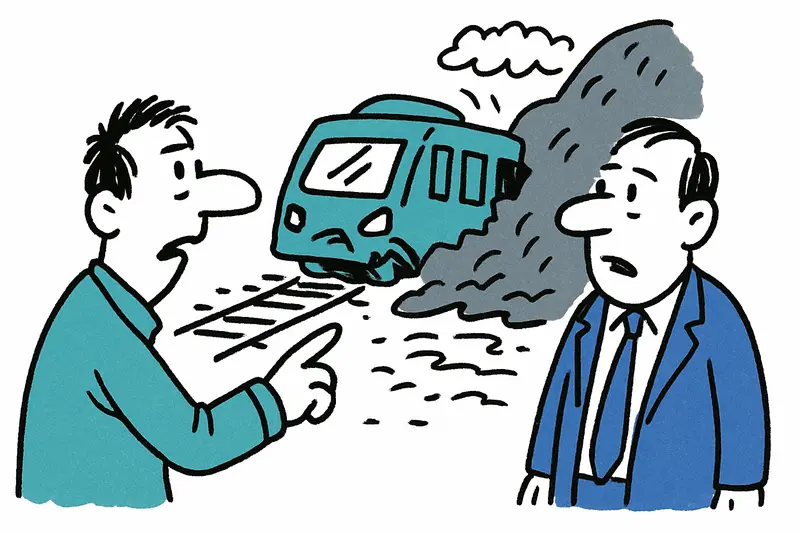
The image from near Barcelona stays in the mind: an R4 commuter train, the front machinery severely damaged, medics between tracks and mud. In Gelida a retaining wall collapsed onto the tracks during heavy rain in the evening; the driver was killed and 37 people were injured. At the same time, emergency services reported that in a riera near Palau-Sator a car was swept away by floodwaters and one person was recovered dead. Many areas in Catalonia were on the highest alert level, while Mallorca was at an orange warning according to Severe weather on Mallorca: When it really becomes critical — and what's still missing. This series of events must not be dismissed as a tragic chain of coincidences.
Critical analysis: There are several levels on which such accidents can occur. First: geology and drainage. Many rail lines follow gorges or run along artificial retaining walls — precisely where water from heavy rain can suddenly undermine slope stability. Second: construction and maintenance condition. A retaining wall that gives way during a storm raises questions about maintenance cycles, visual inspections and repair priorities. Third: operating rules during extreme weather. Do trains continue at normal speed through risky sections because clear, forward-looking procedures are lacking? Fourth: communication and early warning for commuters, many of whom travel in crowded trains with no alternatives.
What is often missing in the public debate: the local perspective and concrete responsibilities. Media reports name locations, casualty numbers and weather warning levels — but rarely how often retaining walls along rail lines are inspected, who is responsible for cleaning rieras, and how quickly protective measures can be implemented, as discussed in After the Thunderstorm: Flooded Streets, Mudslides and the Big Question About Mallorca's Preparedness. Also missing is the everyday perspective of commuters: the R4 is heavily used in the evening, many people stand. How are people supposed to react quickly in a packed carriage when dangerous masses suddenly collapse onto the tracks from outside?
An everyday scene on Mallorca makes this tangible: on Passeig Mallorca a café owner sits by the window as the rain lashes the panes and the radio issues an orange warning, echoing reports such as Sudden Storm in Palma: A Weather Shock and the Question of Protecting Mallorca. Fishermen in Portixol pull their boats closer to the quay, pedestrians avoid the puddles. No one immediately thinks of platforms and retaining walls — yet it is precisely there that life-threatening situations can occur. The gap between everyday perception and infrastructural vulnerability must be reduced.
Concrete solutions that can be checked immediately and in many cases implemented quickly: 1) Risk mapping of all rail kilometers along potentially unstable slopes and riera beds. 2) Temporary speed limits and line closures based on defined weather parameters (heavy rainfall, soil saturation, wind gusts). 3) Regular, publicly documented inspections of retaining walls and drainage systems — including a priority list for repairs. 4) Expansion of rain runoff systems in rieras so water is directed away and does not flood stations or roads uncontrollably. 5) Improved real-time communication to commuters: apps and announcements that show alternative routes or replacement buses before people board crowded trains. 6) Emergency plans for municipalities: dedicated teams that check slope security immediately during storms instead of responding hours later.
In the long term, investments in climate-resilient transport infrastructure must be on the agenda: geotechnical retrofitting, modern monitoring sensors on critical walls (soil moisture, settlements), and a clear financing plan for repairs. Even more important: a clear division of responsibilities between infrastructure operators, municipalities and regional authorities so action can be taken quickly after a storm. Transparency is a protective factor: if citizens know which sections have been inspected and which have not, pressure on decision-makers to close gaps will increase.
Pointed conclusion: Tragedies like the one in Gelida are more than accidents. They are warning signs that infrastructure, maintenance and crisis management often still operate according to yesterday's model while climate extremes are increasing. For Mallorca this means: we must not wait to react until a riera floods houses or tracks. Inspection plans, rapid-response teams and clear weather thresholds for operational measures must be introduced — otherwise the next alarm will only be a matter of time.
Frequently asked questions
Why can railway lines in Mallorca become dangerous during heavy rain?
What should commuters in Mallorca do when a storm warning is issued?
When is the risk of flooding in Mallorca highest during storms?
How can Mallorca tell which railway sections are most vulnerable in bad weather?
What weather conditions should trigger railway safety measures in Mallorca?
Why are inspections of retaining walls important near Mallorca train lines?
How should Mallorca improve drainage in rieras and storm-prone areas?
What can Mallorca residents learn from rail accidents during storms in mainland Spain?
Similar News
Are the Balearic Islands the Southern Border of Europe? A Reality Check on Immigration
The Balearic Islands are again calling for EU aid after a sharp rise in arrivals by sea. Conflicting priorities between ...

"Expensive chaos" and many open questions: What clients can do when a lawyer suddenly stops responding
Several clients complain that a well-known German lawyer in Mallorca has been unreachable for months. Key question: What...
TV tip: 'The Last Problem' — Mallorca as the setting of a classic crime
A classic whodunit on Mallorca: A new miniseries set in spring 1959 brings storm, an isolated hotel and a dense web of s...
Nipping Sea Creatures: Why Bathers in Cala Major and Elsewhere Should Be Cautious
In Cala Major, bathers have reported being nipped by small fish. What is behind it, how can problems be avoided — and wh...
Forced eviction in Santa Catalina: When a 65-year-old slept in her car and showered on the beach — a question of responsibility
The story of Pilar López from Santa Catalina represents a problem affecting many Mallorcans: How can an island with a bo...
More to explore
Discover more interesting content

Can Cap de Bou

Townhouse Lleo 72
