

Less flu — more other respiratory infections: Are the islands ready?
Less flu — more other respiratory infections: Are the islands ready?
Flu incidence on the Balearic Islands has fallen slightly, but bronchiolitis in young children and respiratory infections in older people are increasing. A reality check: what does this mean for clinics, families and everyday life in Mallorca?
Less flu — more other respiratory infections: Are the islands ready?
Key question: How robust is our healthcare system in Mallorca if the flu wave in the Balearic Islands seems to be ebbing while other respiratory infections are gaining momentum?
What the numbers say
The Balearic government reports that the flu incidence is currently around 64 cases per 100,000 inhabitants — down from 73 in the previous week. At first glance: relief. At the same time, the number of other respiratory infections is rising, especially among people over 60. And an increase in bronchiolitis cases is being observed in children between two and five years old. Hospitals remained calm last week, not least because additional beds were made available.
Critical analysis
A falling flu count is good news, but only part of the picture. Influenza testing, seasonal fluctuations and reporting behavior influence the statistics. The falling incidence can coexist with a rise in other pathogens: RSV, various parainfluenza or rhinoviruses especially affect young children and older adults. If we only stare at the flu figure, we overlook the dynamics in other age groups.
What is missing from the public discourse
There is much talk about vaccination rates and the flu vaccination campaign, but little about differentiated diagnostics at the primary level, an action plan against early flu and respiratory waves, protective measures in nursing homes and educating parents. There is a lack of clear communication about which symptoms in young children are warning signs, how general practitioners are currently testing and how rapid bed availability data can be made transparent. The question of whether the additional bed capacity will be scaled back again in the short term also plays hardly any role in discussions.
Everyday scene from Palma
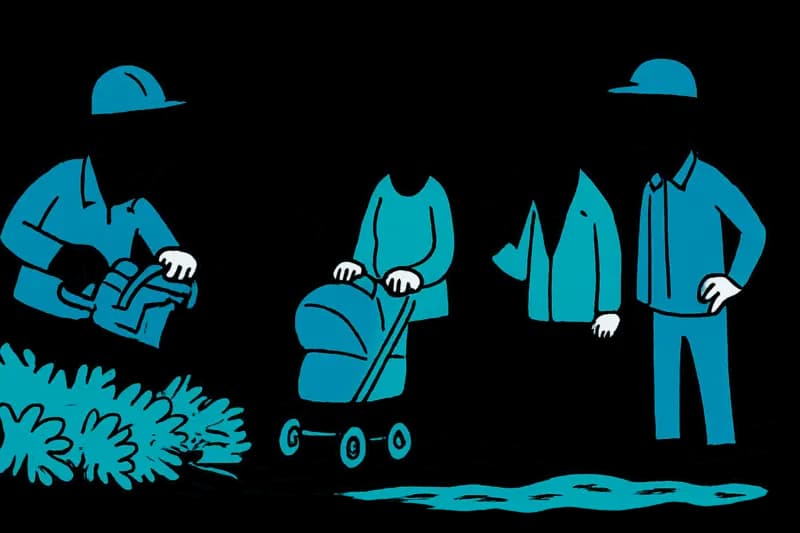
On Passeig del Born in the early morning: a young mother pushes the stroller faster through the light Tramuntana wind because the little girl is coughing quietly. In a pharmacy at Plaça Major, older people wrapped in blankets queue to find out whether a test or a doctor is necessary. On the way to the clinic one can hear the clattering of wheelchairs and the distant ringing of the cathedral — small signals of a daily life that is changing without major alarm.
Concrete solutions
1) Broader testing: sentinel networks of general practitioners, emergency centers and pediatrics should routinely capture RSV and other common pathogens alongside influenza. This helps to see realistic trends.
2) Targeted communication: information leaflets for parents of 2–5-year-olds and for nursing homes, clearly structured by symptoms and actions to take.
3) Outpatient relief: expand short-term clinics for respiratory patients to ease pressure on emergency departments. Mobile diagnostic teams could be deployed in rural communities.
4) Protect nursing homes: regular screenings, visiting rules during outbreaks and vaccination offers for staff and residents as standard.
5) Make capacity management transparent: a public overview of available beds and planned additional capacity so hospitals and the population can plan better.
Why this is realistic
The Balearic government has already provided additional beds — that shows short-term action is possible. Targeted information campaigns and expanded testing strategies are also feasible; they require coordinated resources between the health authority, primary care and municipalities.
What it means for us as an island society
In Mallorca, a high proportion of older residents meets families with small children — multigenerational households are not uncommon. This creates transmission pathways that are often less visible within city borders. Markets, buses and beaches remain meeting points; information can be practical there: pharmacists, bus drivers and market stall operators could post discreet notices and thus contribute to early detection.
Punchy conclusion
The falling flu incidence is welcome, but not a reason to sit back. The growing number of other respiratory infections requires that we broaden our focus and resources: more testing, clear information for parents and care facilities, and transparent handling of capacity data. The islands have shown they can react quickly — now the response must become smarter and more sustainable.
Frequently asked questions
Is flu still spreading in Mallorca right now?
Why are respiratory infections increasing in Mallorca even when flu numbers go down?
Who in Mallorca is most at risk from respiratory infections this winter?
What symptoms in children should parents in Mallorca watch for?
How busy are hospitals in Mallorca with flu and other respiratory infections?
Should people in Mallorca still get the flu vaccine if flu cases are falling?
What should nursing homes in Mallorca do during a rise in respiratory infections?
What can people in Palma do to reduce the spread of winter viruses?
Similar News

New trick at Palma Airport: suitcase stolen from the belt — a reality check
On September 28 a 36-year-old allegedly stole a suitcase from the baggage belt of a 51-year-old German passenger at Palm...
Urgent Clearing of Palma's Torrents: Flood Prevention or Symptom of Short-Sighted Planning?
The city of Palma is responding to storm forecasts and has cleared several torrents. We ask: Is the short-term clearing ...

Evaneos and Mexico: A Reality Check for Sustainable Travel
Travel advertising often reads like a promise: local, sustainable, unique. But how deep do these promises really go? A c...

From Megapark to the Altar: Party Singer Now Offers Weddings in Mallorca
A well-known party artist combines partying and marriage: instead of a traditional church there are ceremonies at the Me...

The Maricarmen Case: Why an Eviction Is Forcing Spain's Housing Debate
Images of an 87-year-old woman on a stretcher have sparked a debate in Spain that also runs deep in Mallorca. Who protec...
More to explore
Discover more interesting content

Can Cap de Bou

Townhouse Lleo 72
