
When Rescuers Become Hunters: How Safe Is Playa de Palma Anymore?
When Rescuers Become Hunters: How Safe Is Playa de Palma Anymore?
Lifeguards at Playa de Palma observed a man stealing from a bag on Sunday afternoon. They pursued and detained him until the Guardia Civil arrived. The case raises questions about the duties, protection and prevention measures on Mallorca's beaches.
When Rescuers Become Hunters: How Safe Is Playa de Palma Anymore?
Key question: Do lifeguards have to do more than pull people from the water?
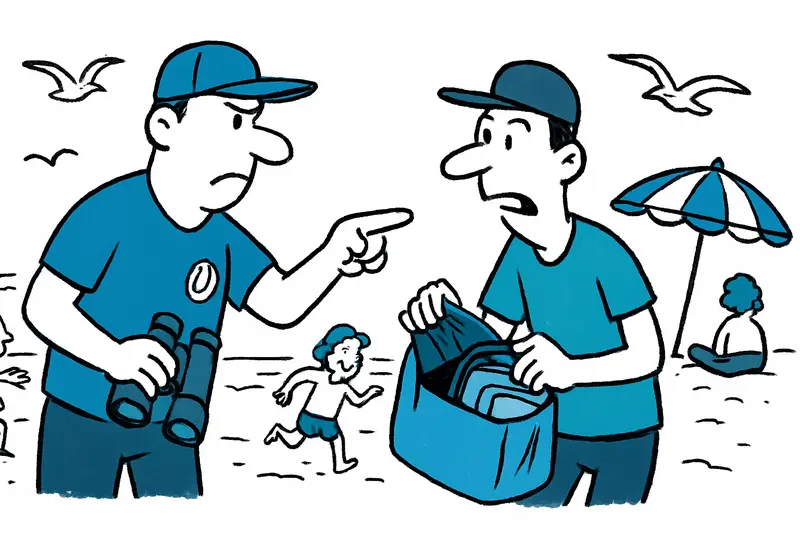
On Sunday afternoon, around 4:15 pm, lifeguards at Playa de Palma on the Llucmajor side observed a man whose behavior they found suspicious. From the observation tower with binoculars they kept him in sight; one of the lifeguards later followed him from a distance. When the man allegedly rummaged through a beachgoer’s bag and removed items, the team intervened, brought him to the lifeguard station and held him there until the Guardia Civil arrived. The team had previously called the emergency number 112.
The scene: children run shrieking with wet hair over the fine sand, gulls circle over the ice cream cart, and the scent of sunscreen drifts in from the Paseo Marítimo. It is still warm, just under 30 degrees; families spread out under parasols. Amid this everyday life, the men and women in red had to take on another role: witnesses, interveners, protectors of property — even though their core task is to save lives.
The lifeguards’ intervention shows two things: readiness to act and a gap in the system, a theme highlighted by After Cash Robbery in Playa de Palma: What the Risky Escape in a Stolen Rental BMW Reveals About Mallorca's Security Gaps. On the one hand, it is reassuring that staff on site are attentive and act quickly. On the other hand, the incident raises questions: What do tourists expect in terms of beach safety? And how far may a lifeguard go when detaining someone before the police take over?
From a legal standpoint the facts are clear: the Guardia Civil took over the case after the alleged offense was secured on site, a topic also discussed in Palma takes stock: Arrests made — is that enough to make beaches safer?. What is missing publicly, however, is a clear regulation for situations in which rescuers must actively interfere in police matters. Lifeguards are trained for water rescue and first aid — not primarily for arrests or securing evidence.
In public discussion one rarely hears the perspective of those who sit in the towers all summer. Their duties are expanding: preventive notices to the public, first aid, search operations — and the observation of thieves. This is discussed too little. There is also a lack of a clear protocol: how does a team document a theft? Who secures camera or observation recordings? What liability questions arise if an intervention turns out to be a false alarm?
Concrete proposals can be sketched quickly: visible information signs in several languages advising not to leave valuables unattended would be a start. Paid or monitored lockers at main beach entrances could prevent many opportunistic thefts. Police and security services should analyze peak times and strengthen their patrols along the shore, especially on busy afternoons. Experiences from local reporting on New Tricks at Ballermann: How Pickpockets Exploit Playa de Palma — and What Actually Helps may be useful when designing such measures.
For the lifeguards themselves clear instructions are needed: simple reporting channels to the Guardia Civil, standardized protocols for securing evidence (who saw what? time? position?), de‑escalation training and legal protection if a detention proves problematic. Some beaches in other countries work with volunteer beach wardens or bodycams — a controversial topic, but one worth discussing.
Prevention is one thing, information is another. Arriving tourists need to know: Mallorca is not a lawless place. A notice in the holiday apartment, at check‑in or on the car rental portal — short, crisp and multilingual — would work wonders, as the recent National Police Arrest Suspected Hotel Thief in Palma – A Safety Check for Travelers shows. Small measures cost little but can significantly reduce risk: keep bags on your person, store money and passports separately, and only take what you need to the beach.
In the end there is a pointed conclusion: the determined intervention of the lifeguards at Playa de Palma deserves respect. At the same time, you cannot burden them with acting as a substitute police force. Authorities, municipalities and the beach industry must share responsibility: better prevention, clear procedures and more visible security forces. Then people can lie on the sand more carefree — and the rescuers can do what they do best: save lives.
Frequently asked questions
How safe are Mallorca beaches for families with lifeguards on duty?
Do lifeguards on Mallorca ever intervene in crimes or thefts on the beach?
What should I do to protect my belongings on Mallorca beaches?
What measures are being proposed to reduce theft on Mallorca beaches?
How are beach incidents in Playa de Palma documented, and who handles the next steps?
What should I do if there's an emergency at Playa de Palma in Mallorca?
What information do lifeguards need if they intervene in an incident?
What should I know about Mallorca beach safety in the summer?
Similar News
Rats in Llucmajor: How Uncollected Garbage Became a Health Problem
In Llucmajor, uncollected trash bags, overflowing containers and rain are leading to increased rat sightings. An assessm...
Sly Distraction Scam at Ballermann: How Tourists Became Targets — and What Must Be Done Now
Five suspected pickpockets were arrested. Their method: distract, secure the loot, return the wallet — without the cash....
Eviction in El Arenal: Who protects neighbors — and who protects the homeless?
A vacant hotel on Carrer Girona was cleared and secured. The neighborhood breathes a sigh of relief. But the action trea...
'La Tapita' loses its home: Who will protect Palma's last affordable meeting places?
The bar 'La Tapita' on Simó-Ballester Street will close at the end of December. For neighbors, police officers and small...
Million Heist at Bulgari: Who Is Responsible for Palma's Security Gaps?
Three men stole jewelry worth around one million euros – the crime series began at the end of September and was likely c...
More to explore
Discover more interesting content

Can Cap de Bou

Townhouse Lleo 72
