
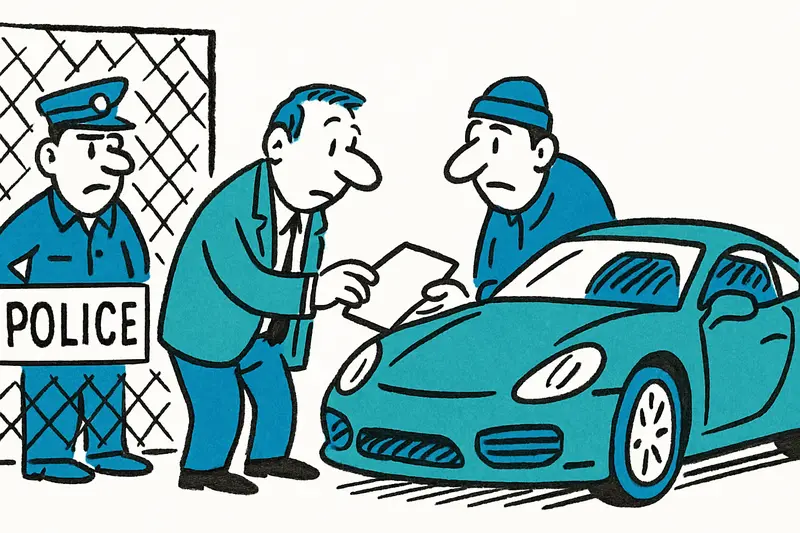
Luxury Cars from Police Depots: How a Gang Has Smuggled Vehicles to Germany Since 2015
Luxury Cars from Police Depots: How a Gang Has Smuggled Vehicles to Germany Since 2015
A court in Mallorca convicted 13 members of an organized group who allegedly used forged court documents to take seized luxury cars from police depots and sell them abroad. What went wrong under the protection of custody?
Luxury cars from police depots: How a gang has smuggled vehicles to Germany since 2015
Court hands down sentences – the method was simple, the consequences severe
Key question: How can it happen that vehicles officially held under court custody were systematically removed from police depots and sold abroad for years?
A recent ruling ends a long investigative phase: judges convicted 13 people alleged to be members of an organized group that stole seized luxury vehicles from depot inventories and resold them. According to the verdict, the group operated at least since 2015. Using forged court orders, the perpetrators managed to present themselves as legitimate collectors and take vehicles directly from the depots. At least 47 cars disappeared – some remained in Spain, others ended up abroad in Germany, Bulgaria and Croatia. Investigators, including the Guardia Civil — whose operations are documented in Big Blow Against Product Counterfeiting: What Mallorca's Role Really Reveals — and the Judicial Police of Algaida, had already seized assets worth more than half a million euros from the organization in 2016 (investigation file: "Prumarium Nuvorania").
The court imposed prison sentences, fines and professional bans on most defendants; confiscations of illegal profits and vehicles were ordered, and compensation is planned. Six defendants were acquitted or had charges dropped.
The crude mechanics of the scheme are shocking: a forged stamp, a convincingly worded letter – and a mistake in a procedural loop is enough for a car to leave the yard. Police depots are often functional spaces, not showrooms: high fences, corrugated roofs, barriers, a little asphalt and lists in file folders. This is precisely where the gang took advantage.
Critical analysis: The problem lies less in a single error than in systemic weaknesses. First: paper documents without digital verification mechanisms can be manipulated. Second: the custody chain is rarely checked in multiple stages; often presenting a paper is enough to initiate release. Third: depot staff are usually overwhelmed by administrative processing and rely on the authenticity of judicial documents. Fourth: the control instances between courts, police and port authorities are linked but not sufficiently protected against targeted deception. Similar security gaps are evident in other cases — for example, the cash robbery in Playa de Palma where a suspect fled in a stolen rental BMW described in After Cash Robbery in Playa de Palma: What the Risky Escape in a Stolen Rental BMW Reveals About Mallorca's Security Gaps.
What has so far received little attention in public debate is the working reality of depots and the officers employed there. There is a lack of detailed insight into how releases are recorded, how long documents are archived and what digital options already exist. Also rarely discussed is the role of intermediaries and logistics companies that organize container bookings and transport – those actors who can formally move goods legally across borders but may be involved in criminal supply chains, as highlighted by an arrest in Palma following fake transfers to hotels reported in Arrest in Palma: How Fake Transfers Undermine the Luxury World.
A small everyday scene from Palma: on Passeig Mallorca early in the morning, before the cafés open, you can hear the clatter of tow trucks and the squeak of gates. A depot guard types data into an old tablet, two police officers briefly discuss a handover. Thus begins a workday that proceeds quietly and routinely – until a forged document changes everything.
Concrete solutions: First, a digital, tamper-proof register for judicial release orders with immediate online query capability for depot staff and police. Second, mandatory two-person verification for every vehicle release and visual documentation via secured camera at the gate, with stored timestamps. Third, regular unannounced audits of depot records by an independent island control body. Fourth, closer cooperation with port authorities: containers should only be released when the digital release code is verified. Fifth, a low-threshold reporting system for depots to anonymously report irregularities without bureaucratic hurdles. Sixth, targeted training for police officers and depot staff to recognize forged documents and ensure procedural security.
Additionally, consistent tracking of exported vehicles is needed: cooperation with foreign authorities and a central register that enables rapid blocks. Those who systematically benefit from vehicles appearing legal must be prevented from rebuilding networks. The verdict makes one thing clear: there are criminal consequences. But the question remains whether the technical and organizational upgrades will be implemented quickly enough.
Punchy conclusion: The court ruling is a beginning, not a substitute for better processes. In Mallorca you cannot rely solely on criminal prosecution; custody protection must be seriously digitized and debureaucratized. Otherwise depots – those inconspicuous backyards with their license plates and file folders – will remain the Achilles' heel in combating the vehicle trade. And the reassuring image of police and authorities we see in the morning on the Passeig would all too easily be damaged again.
Frequently asked questions
How could luxury cars disappear from police depots in Mallorca?
Why are forged court orders such a risk for vehicle depots in Mallorca?
What happened to the luxury cars stolen from police depots?
How did investigators in Mallorca uncover the depot car theft network?
What security weaknesses do police depots in Mallorca need to fix?
What changes could prevent seized vehicles from being removed illegally in Mallorca?
What role did Mallorca play in the luxury car smuggling case?
Why does the Mallorca court ruling matter beyond this one case?
Similar News

Released with Conditions: The Plus Ultra Suspicion and a Mallorcan Finca as Residence
A Dutch entrepreneur, sought in connection with the Plus Ultra case, was extradited to Spain after his arrest in Germany...

Haute Nuit in Puerto Portals: Fashion, Art and Indulgence by the Water
On October 2 the Lobster Club in Puerto Portals will be transformed into a stage for curated fashion, art and culinary e...

Magaluf: Watchtower Alarm – Lifeguards Pull Unconscious Beachgoer from the Water
After a drama in the late afternoon, two lifeguards at Magaluf beach rescued an unconscious 44-year-old man. He was stab...

Turquoise in the City: How dangerous is the color play of the Sa Riera?
The Sa Riera in Palma suddenly turned turquoise — a pretty motif, but behind the effect lies a discharge of saline waste...

Jeckliner at Sunnesching: Cologne spirit sets sail from Palma
In September 2027 the Mein Schiff 2 briefly becomes a floating carnival stage: four days with Cologne bands, comedy and ...
More to explore
Discover more interesting content

Can Cap de Bou

Townhouse Lleo 72
