
Magaluf: Hidden in a wardrobe with a knife — what does this say about safety and protective measures?
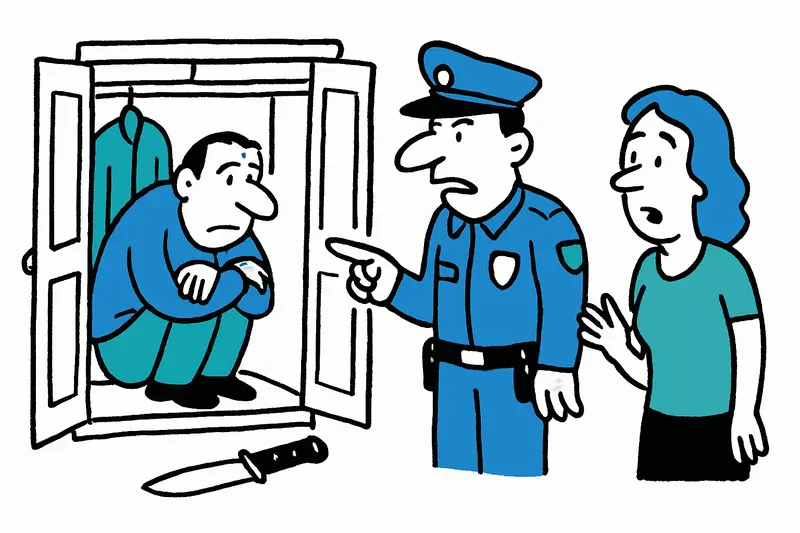
In Magaluf a man was found in a wardrobe — a knife beside him. The Guardia Civil arrested him and judges ordered pre-trial detention. Our article asks: Is the system sufficient to protect those affected?
Magaluf: Hidden in a wardrobe with a knife — what does this say about safety and protective measures?
On an early Friday morning, when the promenade still smelled of sea air and frying oil and the occasional voices of craftsmen and tourists drifted through the alleys, a resident in an apartment complex in Magaluf experienced a major alarm: an intruder in her flat. The Guardia Civil soon found a man, curled up in a lightweight fabric wardrobe — and a knife next to him. The central question remains: How often is an official order or a report alone not enough to actually protect people?
The incident
Around 11:40 a.m. a woman called 112 Spain emergency services because when she entered her apartment she immediately felt that something was wrong. Neighbours listened, the air was warm, a light breeze carried the sound of the sea, and in the hallway two women quietly discussed what they saw. The emergency services searched the apartment and eventually discovered the alleged intruder in a wardrobe. He was arrested; in court he did not deny hiding but claimed the knife had already been there. The judges ordered pre-trial detention. Similar knife incidents have been reported elsewhere, for example Arrest after knife attack in Pere Garau: How safe is Palma's neighborhood?.
Why the case feels disturbingly familiar
At first glance, it is a striking, almost cinematic scene: hide-and-seek, a knife — and neighbours as involuntary witnesses. Behind it, however, lies a more everyday, unsettling reality: relationships that escalate, distancing orders that are not respected, and a system that often walks a fine line between a report and actual safety. In Magaluf, where bars hum in the evenings and the sea sparkles along the coast, many people live in densely populated buildings; the walls are thin and the threshold for direct confrontation is high. Such factors change how danger is perceived, a dynamic also highlighted in Magaluf after the beach discovery: When partying becomes a danger zone.
Aspects that are rarely discussed aloud
Police presence alone is not always enough. What is often missing is a rapid, individualized risk assessment — and pragmatic support immediately after a report: secure temporary accommodation, quick electronic monitoring measures, or coordinated notifications to neighbours without violating privacy. There is also insufficient public discussion about how traces are preserved and forensically evaluated: Can it actually be proven whether the knife had already been in the wardrobe? Such forensic challenges have appeared in other cases, for example Prison furlough on Mallorca ends in knife attack: man arrested in Algaida. Such details later determine charges and protective orders.
Concrete steps that would help now
There are solutions that are not only legal but also practical on the ground: an accelerated reporting unit for alleged violations of protection orders, more training for property managers and concierge staff so they can recognize high-risk situations sooner, and low-threshold services for those affected — for example smart emergency buttons, fast contact channels to the Guardia Civil, and counselling centres that respond within hours. Regular information campaigns in residential complexes about protection rights and behaviour guidelines can also empower neighbours; similar calls for community awareness followed incidents such as Magaluf: Escalation at the Bus Stop — What the Incident Reveals About Safety and Civil Courage. All this costs money and organisation — but the alternative is that cases like this become a sad normality again.
What the judiciary and police need to do now
The investigations are ongoing: the Guardia Civil secured evidence, took statements and handed the files to the courts. The courts must now determine whether a judicial measure was violated and what role the knife played. For those affected, every decision means either possible relief or continued danger. It is crucial that decisions are made transparently and comprehensibly so that trust in the system is maintained.
Conclusion: No easy answer — but clear expectations
The case in Magaluf starkly illustrates how close everyday life and violence can be. The neighbourhood remains on edge, and conversations on balconies and in stairwells continue for days about whether enough was done. Our expectation of authorities and the community is clear: more prevention, faster application of protective mechanisms and concrete help for those affected. And for neighbours: listen, act, and call if necessary. Sometimes one call is enough to turn uncertainty back into safety.
Frequently asked questions
Is Magaluf safe for residents and visitors?
What should I do in Mallorca if I think someone has broken into my flat?
Are protection orders enough to keep people safe in Mallorca?
What evidence matters after a knife incident in Mallorca?
What can apartment managers in Mallorca do to improve tenant safety?
When should neighbours in Magaluf call the police?
What emergency number should I call in Mallorca?
How can Mallorca residents feel safer after a nearby violent incident?
Similar News
Who Gets Left Out? Why Overbookings Will Hit Many Mallorca Travelers This Summer
On hot check-in days at Son Sant Joan, frustrated travelers pile up. New figures from Reclamador.es show that a large sh...
When the Handyman Came: How an Engagement Ring Disappeared in Mallorca and What It Says About Trust
During a repair in Andratx a highly personal engagement ring went missing — a case that calls not only for punishment bu...
How Burglars Test Fincas in Mallorca — and What You Can Do About It
The Spanish National Police warn of a simple but effective trick: small markings on doors reveal whether a finca is occu...
Palma doubles blue zone: What this means for residents, tourists and narrow streets
From 1 January 2027 Palma's ORA area will grow from around 12,000 to 24,000 spaces. Key question: Will the expansion bri...
Engagement ring disappears during repair: court upholds prison sentences for plumber and partner
During a heating repair in an apartment in Andratx an engraved engagement ring disappeared. After a trace to a pawnshop ...
More to explore
Discover more interesting content

Can Cap de Bou

Townhouse Lleo 72
