
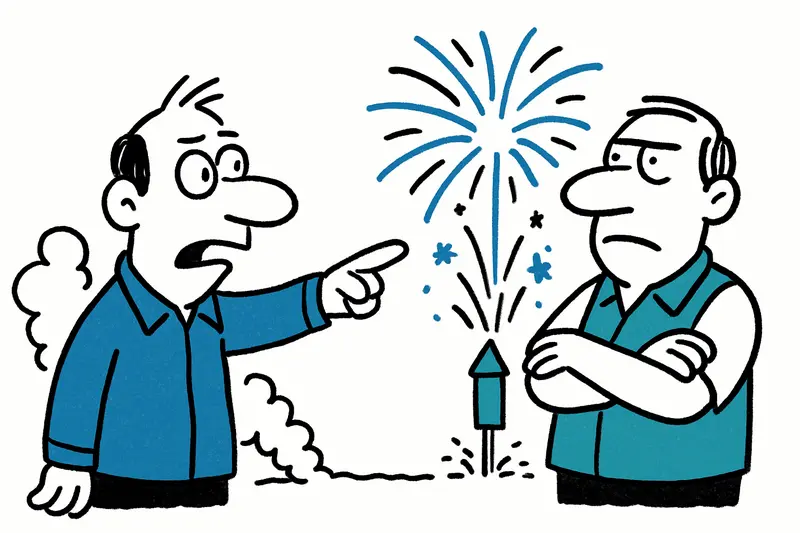
Why fireworks on Mallorca aren't simply banned — and where the limits lie
Why fireworks on Mallorca aren't simply banned — and where the limits lie
Fireworks are part of Mallorca's annual cycle — from village festivals to Sant Sebastià. The practice is regulated, the culture is deeply rooted. Yet discussions about animals, fine particulate matter and safe areas are lacking. What should be changed?
Why fireworks on Mallorca aren't simply banned — and where the limits lie
A critical assessment between tradition, craftsmanship and public safety
Key question: How can the decades-old fireworks tradition and the public protection of people, animals and landscapes on Mallorca be reconciled?
In the evening, when the wind from the sea carries the salty air into the old town and the sizzle of pinchos can be heard from a street in La Lonja, the first bangs eventually fall: a single firecracker, then a practiced spark over the harbor basin. This is how the island sounds during festival season. Fireworks here are not just a New Year's phenomenon; processions, village patron saint festivals and private celebrations fill the year with effects. This has good reasons — and tangible problems.
On the one hand is a local craft that in some places has been maintained for generations. In a workshop in the center of the island pyrotechnic products have been produced since the 1940s, in a traditional manner and for numerous festivities: small effects for weddings, firework batteries for village celebrations, and also large shows for city festivals. These companies supply throughout the year; people speak of hundreds of deployments.
On the other hand are risks that often only appear on the margins of public discourse: fine particulate matter pollution in narrow valleys, nighttime panic among pets and livestock, fire risk during dry periods (Wildfire Season in Mallorca Officially Over — Relief with Reservations) and the burden on emergency services from unauthorized discharges. The island's topography — narrow streets, wooded hills, dense settlements — amplifies dangers that are less noticeable elsewhere.
The legal situation is not completely unclear: setting off fireworks is allowed on New Year's Eve; outside that date, permits and coordination with the municipality are required. Safety distances, informing residents and structured procedures are the norm, not the exception. Nevertheless, these rules falter when private celebrations take place in residential areas or fireworks are ignited near forests.
What is missing from the debate? First: reliable measurement data for local air quality immediately after major events; so far much is estimated, little is measured. Second: binding regulations for times and zones that should remain firework-free — for example sensitive nature reserves, equestrian centers or industrial areas with easily flammable materials; similar measures are discussed in Smoking Ban in Mallorca: What the New Law Means for Terraces, Playgrounds and E‑Cigarettes. Third: a practical system for monitoring and sanctioning violations that links municipal police, fire brigades and public health authorities.
A look at everyday life shows tensions: in the market in Inca some people cast worried looks toward the sky when a battery goes off in the distance; on the Plaça Major in Sóller visitors applaud when a short, well-executed effect concludes the evening. Residents are not fundamentally against bangs — they call for common sense and predictability.
Concrete proposals that could work here: designated firing areas in each region where professional setups are allowed and amateurs may buy and use fireworks only at certain controlled times; mandatory information duties before festivals, including registration of animals within the warning radius; temporary fire-ban zones during dry periods; targeted measurement campaigns after larger shows financed by organizer fees; and offers for communal large-scale fireworks as an alternative to private blasting — fewer individual actions, more coordinated events.
Practically feasible would also be training for municipal staff and private providers: shorter permit procedures but with mandatory safety checks; simple checklists for homeowners; buy-back programs for illegal material; and stricter rules for storage in residential areas. Such measures could protect the craft without depriving islanders of their nights.
Conclusion: A blanket ban would affect cultural traditions, the local economy and artisanal skills on Mallorca; Parliament rejects ban on Eid al-Adha – and Mallorca is only at the start of the debate. At the same time, the island situation demands concrete local rules — more monitoring, clear zones and binding procedures. If municipalities, manufacturers and citizens work together in earnest, the bangs can be tamed without making the nights fall completely silent.
Frequently asked questions
Are fireworks banned in Mallorca?
When is it safest to use fireworks in Mallorca?
Can fireworks affect pets and farm animals in Mallorca?
Why do Mallorca towns allow fireworks at festivals?
What makes fireworks more risky in Mallorca than in other places?
Are there places in Mallorca where fireworks should not be used?
What should I check before setting off fireworks in Mallorca?
Is Mallorca considering stricter fireworks rules?
Similar News
Released with Conditions: The Plus Ultra Suspicion and a Mallorcan Finca as Residence
A Dutch entrepreneur, sought in connection with the Plus Ultra case, was extradited to Spain after his arrest in Germany...

Haute Nuit in Puerto Portals: Fashion, Art and Indulgence by the Water
On October 2 the Lobster Club in Puerto Portals will be transformed into a stage for curated fashion, art and culinary e...
Magaluf: Watchtower Alarm – Lifeguards Pull Unconscious Beachgoer from the Water
After a drama in the late afternoon, two lifeguards at Magaluf beach rescued an unconscious 44-year-old man. He was stab...
Turquoise in the City: How dangerous is the color play of the Sa Riera?
The Sa Riera in Palma suddenly turned turquoise — a pretty motif, but behind the effect lies a discharge of saline waste...

Jeckliner at Sunnesching: Cologne spirit sets sail from Palma
In September 2027 the Mein Schiff 2 briefly becomes a floating carnival stage: four days with Cologne bands, comedy and ...
More to explore
Discover more interesting content

Can Cap de Bou

Townhouse Lleo 72
