
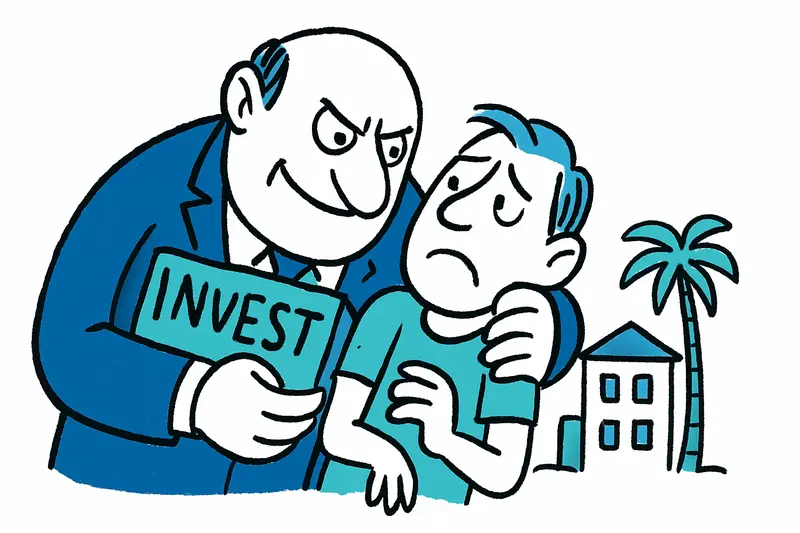
Mallorca in the Stranglehold of Speculation: When Apartments Become Financial Products
Mallorca in the Stranglehold of Speculation: When Apartments Become Financial Products
Since 2007 investment funds have bought around 15 percent of the apartments for sale in the Balearic Islands. What does this mean for the people who live here? A critical look at causes, consequences and possible remedies.
Mallorca in the Stranglehold of Speculation: When Apartments Become Financial Products
How returns are displacing homes – and what the island now lacks
Leading question: Can Mallorca remain a place to live if large capital investors buy every sixth apartment that comes onto the market?
The raw numbers are clear: According to the Consejo General del Notariado, investment companies have acquired about 35,854 apartments in the Balearic Islands since 2007, which is just under 15 percent of all sales in that period. On the streets of Palma you hear it in other ways: fewer 'Se Vende' signs for small family apartments, more café discussions about rents and future prospects.
Critical analysis: The market is losing its local character. Companies increasingly target larger buildings, often with tourist-use potential, and pay on average around €3,137 per square meter compared with €2,484 that private buyers spend. Such differences push the price level upwards, as discussed in Balearic Islands in the Price Squeeze: Who Can Still Afford Mallorca?. At the same time, around 38 percent of buyers come from abroad, many as investment purchases rather than primary residences; see the new notary figures showing 42% of property purchases go to foreigners. The result is a double mechanism of scarcity: less supply for permanent residents and market prices that increasingly exceed private households' means, which is further examined in Buying and Renting in Mallorca: Why Prices Are Pushing Locals to the Edge — and What Could Help Now.
What is often missing in public debate is a nuanced look at forms of ownership. There is much talk about 'investors', but little about the specific contract models that encourage vacancy or make it easier to convert regular rental apartments into short-term rental units; recent coverage on why so much property buying in Mallorca is paid in cash sheds light on one financing mechanism behind such purchases. Also underexposed is how municipalities currently use or fail to use local instruments: from conversion bans to specific acquisition programs there are practical examples that rarely make it into the spotlight.
Everyday scene: On a morning at Plaça Weyler an older woman stands on the phone, her grandson will start school soon; she tells how neighbors moved away because rents rose. A few streets away you see craftsmen modernizing an apartment in an old finca in Portixol; realistically, the marketing prospects are more about returns than neighborhood upkeep. Such scenes repeat in villages and neighborhoods – from the Mercat de l'Olivar to the arches in Alcúdia.
Missing debate points in politics and media: The long-term consequences for social infrastructure receive too little attention. Schools, doctors, bus connections – if long-term residents are displaced, demand for those services collapses. Also unresolved is how municipal planning and tax tools can be better coordinated so that return interests do not automatically take precedence over housing needs.
Concrete, practical solutions for Mallorca:
- Limitations on mass purchases: Municipalities could review acquisition quotas or require registration for larger portfolios to create transparency.
- Purpose restrictions on resale: Restrictions that favor resale to private owners would help break speculative cycles.
- Tax incentives for long-term rentals: Discounts or surcharges could encourage owners to rent to long-term tenants instead of short-term holiday lets.
- Municipal purchase funds and community land trusts: The city or municipality raises capital, buys targeted existing apartments and keeps them permanently available to local residents.
- Strengthened data policy: A regularly updated, publicly accessible database on ownership structures, vacancy and usage licenses would make political decisions more evidence-based.
Such instruments require the courage to change and a close linking of urban planning, tax law and social policy. Looking abroad shows that regions with comparable problems have sometimes introduced stricter rules, but the Balearic Islands face particular challenges: island scarcity, high tourist demand and a dense mix of primary and second homes.
Punchy conclusion: It's not just about numbers, but about everyday life. If investors can gain one percent more return while families lose an affordable place to live, then that's a systemic error that must be addressed politically. Measures range from reporting requirements to municipal housing funds; they are not miracles, but necessary to make the islands function as places to live again. Those who do not act now risk Mallorca becoming increasingly a product for money managers rather than a home for those who work here, raise children and organize daily life.
The coming months will show whether national-level announcements are translated into concrete local tools, and whether proposals such as those sketched out after the September market movements gain traction in municipal policy, as discussed in Why Mallorca's Real Estate Market Suddenly Slid in September — Analysis and Possible Remedies. Residents, neighborhoods and local administrations should use the time to propose reliable solutions – before housing becomes merely a commodity that only shines on paper.
Frequently asked questions
Why are apartment prices in Mallorca rising so much?
Is it still possible to find affordable housing in Mallorca for local residents?
Why do so many property buyers in Mallorca pay in cash?
How does foreign property demand affect the Mallorca housing market?
What can Mallorca municipalities do to stop apartments being bought mainly for speculation?
What does the housing market pressure mean for everyday life in Mallorca?
Why is Palma losing family apartments to investors?
Which Mallorca neighborhoods are showing the effects of speculative buying?
Similar News

Caro Robens: 15 kilograms lighter — and again in the crossfire of online comments
Bodybuilder Caro Robens, who lives in Mallorca, has lost 15 kilograms. Her success on Instagram was met with applause — ...

Meager Industry in Mallorca: How the Island Can Be More Than Just Tourism
The industrial sector in Mallorca is shrinking, productivity is falling and firms remain tiny. The key question: can the...
Pre-Nit de l'Art: Galerie Mensing invites to a special evening with Tom Boston
Before the big art night, Galerie Mensing opens its doors: pop art, champagne, a DJ and a hand-signed print by Tom Bosto...

Sea view and more seats: Cappuccino Grand Café reopens in Port d'Andratx
After a long renovation, the Cappuccino Grand Café on the Port d'Andratx harbor promenade has quietly reopened. Larger t...

Enric Mas wins the Vuelta – a triumph that resonates in Mallorca
Mallorcan Enric Mas has won the 82nd Vuelta — the first Spanish overall victory since 2014. Cyclists and neighbors on Ma...
More to explore
Discover more interesting content

Can Cap de Bou

Townhouse Lleo 72
