
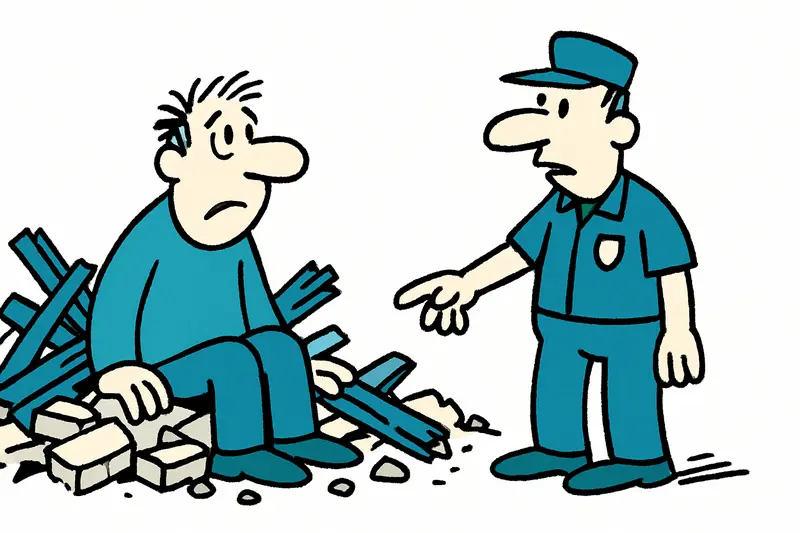
Manacor after the collapse: Who is responsible for safety in Mallorca's old buildings?
Manacor after the collapse: Who is responsible for safety in Mallorca's old buildings?
During the collapse on Carrer de Sant Francesc an 18-year-old died and a child survived — the family is now homeless. Mayor Miquel Oliver is calling for help. A reality check: why such accidents happen on the island and which immediate steps are necessary.
Manacor after the collapse: Who is responsible for safety in Mallorca's old buildings?
Leading question: Why must people die before someone thinks about the building fabric?
On January 15 the roof of a house more than a hundred years old on Carrer de Sant Francesc in Manacor collapsed. Two brothers were sleeping there; 18-year-old Miguel Ángel lost his life, while twelve-year-old Cristian Andrés was rescued alive by the fire brigade. After the collapse the family is not only in shock — they have also lost their home. The city administration set up temporary accommodation and Mayor Miquel Oliver asked for support. The house, built around 1900, apparently never underwent the required inspection for historic buildings. A demolition and a judicial investigation have been announced, and insurance matters are still unresolved.
Critical analysis: This tragedy is not an act of nature. It is the convergence of old building fabric, patchy oversight and a system that lags behind the requirements. Similar incidents in the region, such as Risk of Collapse in Cala Major: Six Venues Temporarily Closed — What Needs to Happen Now, highlight how cracks and structural risks can lead to urgent closures when oversight fails. If a building 'never went through the building inspection', that does not automatically mean a collapse was unavoidable — but it does mean risks were not identified in time. Authorities, owners and often residents share responsibility: some for inspections, others for maintenance; added to that is the question of financial resources for necessary repairs.
What is missing in the public discourse: first, the situation of the survivors. Short-term housing is important, but how can the transition to a permanent solution be achieved? Second: who replaces personal items, keepsakes, clothing, school subjects and school materials? Third: technical prioritization — which houses are inspected when? Fourth: preventive support for owners without money, who give up in front of election-season delays and bureaucratic frustration. And finally: psychological support for children and relatives — this too often remains a footnote.
Everyday scene in Manacor: the morning after the incident dust drifted through the narrow streets, police tape lay on the pavement, neighbors brought cups of coffee to the emergency shelter, a construction machine roared, church bells rang softly. Someone from social services handed over a blanket, youngsters from the neighborhood provided bottles of water. This is what solidarity looks like here — warm, improvised, but limited.
Concrete solutions (immediately implementable and mid-term):
1) Rapid social bridge: The temporary flat must turn into a binding plan: affordable replacement housing, guaranteed school places for children, rapid disbursement of emergency aid.
2) Clear inventory: Municipalities need an up-to-date list of all older houses that have not been inspected. Only those who are counted can be checked.
3) Prioritized inspections: Technicians should prioritise at-risk buildings by age, use and warning signs. Visual inspections by mobile teams reduce waiting times. Construction accidents such as Fatal accident in Santa Margalida: Concrete slabs bury worker – How safe are our construction sites? underline the stakes and the need for timely checks.
4) Financial incentives: Grants or low-interest loans for owners so that urgently needed repairs do not fail because of lack of money.
5) Check mandatory insurance: For old multi-family houses it should be considered whether a minimum insurance is required and must be proven when ownership changes.
6) Transparent procedures for demolition and securing: If a building must be demolished, affected people need quick access to their belongings, accompanied by municipal teams and insurance/legal advice.
7) Psychological first aid: Mobile counselling teams for children and parents, in cooperation with schools and health centres.
Who is called upon? The city administration must prove in the coming weeks that the temporary flat is only the beginning — not the end. The Balearic government and municipalities should compare their supervisory mechanisms: are there gaps in regulations, staffing or funding? Questions of liability are not new in Mallorca, as shown by Medusa Beach: Who Bears Responsibility After the Collapse?. Owners need clear information and support, neighbourhoods local contact persons.
Conclusion: The collapse on Carrer de Sant Francesc is a bitter reminder that historic houses carry our history, but can also pose dangers when maintenance and oversight are lacking. The spontaneous willingness to help in Manacor is moving — but it is not enough to fix structural deficiencies. If we want to prevent another child or young person from dying under the rubble of an old tiled roof, we need systematic inspections, rapid social aid and a plan for how to turn emergency accommodation into a safe home. Without clear steps, solidarity remains piecemeal; the next disaster will not wait long. As other local incidents, including Ceiling Collapse at Plaza de l'Olivar: Questions About Safety and Responsibility, have shown, responsibility and oversight must be enforced consistently.
Frequently asked questions
Who is responsible for the safety of old houses in Mallorca?
Are historic buildings in Mallorca supposed to undergo inspections?
What should residents do if they think an old building in Mallorca may be unsafe?
What happens to families after a house collapse in Mallorca?
Is there help in Mallorca for owners who cannot afford urgent repairs?
Why are older homes in Manacor being discussed after the collapse on Carrer de Sant Francesc?
Can Mallorca municipalities keep a list of old buildings that have not been inspected?
What support should children receive after a building collapse in Mallorca?
Similar News
Warning to Bathers: Nipping Fish in Cala Major and Other Coves — a Reality Check
In Cala Major and several beaches around Mallorca, bathers report painful “nips”. Who are the animals, why are they gett...

Rental Car Theft in El Arenal: What This Incident Reveals About Our Gaps
A teenager steals a running rental car in El Arenal, flees on foot, climbs over walls and is caught by the Guardia Civil...
Red Rope in Palma's Library: What Helps Against Selfie Tourism — and What's Missing
Palma's city library cordoned off an area with a red rope to keep selfie tourism away from reading and working activitie...
Fort San Carlos: Museum, Harbor Dispute — and a Conflict That Demands Answers
The military museum at Fort San Carlos sits right on Palma's harbor, with unexpectedly quiet rooms filled with cannons a...
Old Town Under Pressure: When a Doorway Becomes a Sleeping and Shower Place
For months a woman has been living with a parasol, a clothes rack and personal belongings next to the social welfare off...
More to explore
Discover more interesting content

Can Cap de Bou

Townhouse Lleo 72
