
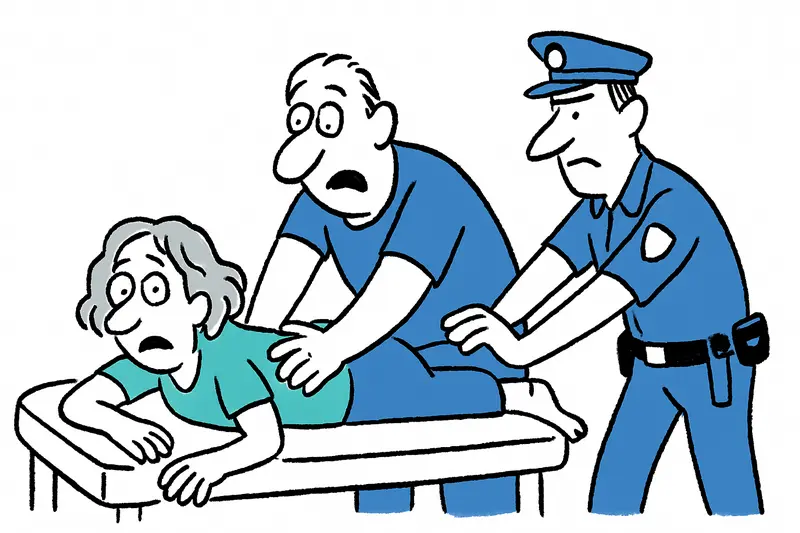
Holiday in Manacor ended badly: Arrest after alleged assault during massage
Holiday in Manacor ended badly: Arrest after alleged assault during massage
A British holidaymaker reports an assault in a hotel in Manacor. A 50-year-old masseur was arrested in Porto Cristo. The incident raises questions about how hotels monitor external service providers.
Holiday in Manacor ended badly: Arrest after alleged assault during massage
Key question
How safe are guests when hotels hire external massage therapists — and what protection gaps does the Manacor case reveal?
An incident in a hotel on Calle Cala Antena caused a stir this week: A 30-year-old British holidaymaker filed a report saying a scheduled massage got out of control. According to her, the treatment developed in such a way that she called for help. Reception staff and hotel management intervened, and the man was arrested shortly afterwards in his car near the sports centre of Porto Cristo. Investigations are ongoing.
The sober facts are brief: time (morning), place (hotel room/treatment room), parties involved (tourist, alleged therapist, hotel staff). Behind them, however, are a number of questions that come up in many conversations on the promenade in Porto Cristo or at the bakery in Manacor: Who checks who is offering treatments in hotels? How should staff respond if a guest feels threatened? And why did an earlier complaint against the same man apparently not lead to sufficient action, as in the Arrest in Cala Bona: How Could This Go On for So Long? case?
In high season the island is full of mobile service providers: masseurs, yoga instructors, excursion organisers. Many work seasonally, often as self-employed individuals with little formal attachment to the hotels where they operate. That brings flexibility — but also insecurity. Guests expect hotels to ensure that only trustworthy providers work in their premises. If this is not done without gaps, victims may have little protection in the worst case. This environment has been linked to concerns about Hidden Offers in Mallorca's Massage Salons: Between Legality and Coercion.
Public discourse often focuses on the event itself: arrest, complaint, police steps; earlier incidents, such as the spa incident in Magaluf, raised similar questions. What is rarely heard are the internal hotel procedures, the follow-up to earlier complaints and the question of how hotels select and monitor external staff. A hotel reception, with the hum of the air conditioning and the smell of cleaning agents, is no substitute for clear rules: documentation, identity checks, proof of references and qualifications should be standard.
A commonplace scene in Mallorca: It's July, the heat sticks to the skin, buses run along Cala Antena, families order sangria on the terraces, and at the same time some holidaymakers receive messages from friends — "Everything okay?" In hotels, receptionists sit between luggage and organisational chaos. They are often the first to have to make assessments when a situation escalates. These employees need clear instructions and backing so they do not have to improvise when a woman seeks protection, as illustrated by the Court Convicts Tourist After Assault in Llucmajor: How Safe Are Hotel Employees Really?.
Concrete measures that could strengthen protection:
1. Registration of external service providers: Hotels could require that all externally hired therapists are registered in a local directory — with identity verification, insurance details and references.
2. Standardised checklists for treatments: Before every massage, name, method, any notes on contact areas and a short consent statement should be documented. No treatment without the client's consent.
3. Refresher training for hotel staff: Reception and security personnel need standardised procedures for immediate assistance, filing complaints and offering support to victims.
4. Make complaint management visible: If hotels document complaints seriously and ensure traceable follow-up, a protection mechanism is created — and other businesses can be warned.
5. Cooperation with authorities: Faster information channels between hotels, the local council and police help to recognise risks. Mobile support points for victims and anonymous reporting channels would lower barriers to reporting.
These measures are not cure-alls. They require political will, staff training and some bureaucracy. But they would send clear signals: guests are not alone, and hotels take responsibility for external providers operating on their premises.
What is often missing in public discussion is the perspective of the victims: How is aftercare organised? Is psychological help offered? Are there confidential contacts? In a case like the one in Manacor, every measure that opens paths out of isolation matters — especially if the woman is pregnant and therefore particularly vulnerable.
Conclusion: The incident showed how quickly routine in holiday life can break down. It is not enough to report arrests alone. Hotels, guests and authorities must take seriously the work of checking external service providers and following up complaints consistently. Otherwise the island may remain loud and lively, but in some corners dangerously unprotected.
Frequently asked questions
What is the best time of year to visit Mallorca for sunny weather and manageable crowds?
Is the water in Mallorca safe for swimming?
What should I pack for a trip to Mallorca?
What are easy day trips from Mallorca that don’t require a lot of planning?
How does the weather vary along Mallorca’s coast?
Are there family-friendly beaches in Mallorca?
What are the best ways to get around Mallorca without a car?
Where can I find good natural swimming spots or coves in Mallorca?
Similar News
Mistaken identity with fatal consequences: Brutal assault in S'Aranjassa — what's missing in the follow-up?
At S'Aranjassa a visitor to a finca was tied up, beaten and thrown out of a van. Three men have been arrested, including...
High heel slips, car accelerates: accident on Camí de Son Hugo
A woman lost a high-heeled shoe on the forecourt of the sports facility at Camí de Son Hugo. The car accelerated, mounte...
Phone Scam: How Two Hotel Employees at Playa de Palma Lost Thousands of Euros
One morning in September, two reception employees at Playa de Palma were pressured by alleged alarm-company staff — in t...

When the Wallet Becomes a Danger: Attack in Peguera and Lessons for Mallorca
In Peguera, two women are said to have stolen the wallet from a 75-year-old German couple. When the victim intervened, t...
Plata stays Plata: Young people take over, Llonguets remain
A small bar on Carrer de l'Argenteria will continue: Tolo Serra hands the place over to young Mallorcans at the end of t...
More to explore
Discover more interesting content

Can Cap de Bou

Townhouse Lleo 72
