
Manacor sets limits: Pyrotechnics at Sant Antoni only with permission
Manacor sets limits: Pyrotechnics at Sant Antoni only with permission
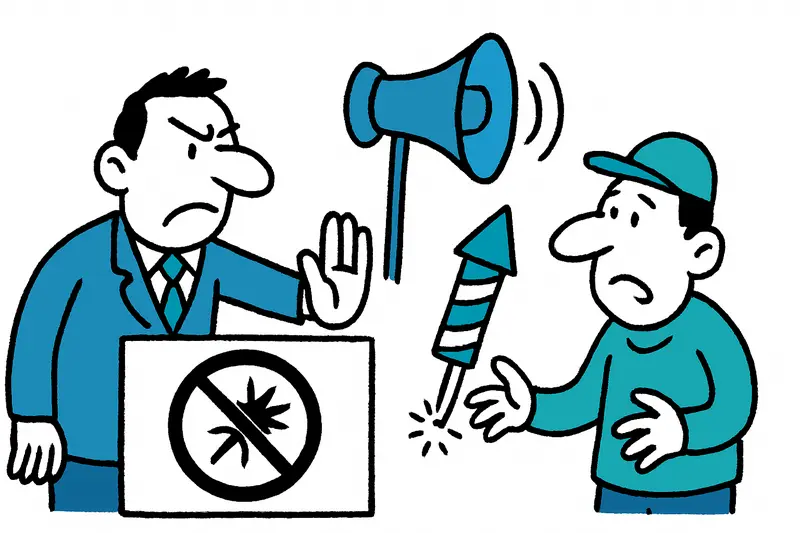
The city of Manacor bans firecrackers and rockets at Sant Antoni 2026 without prior authorization. Live street music and outdoor loudspeakers are also prohibited. A decision with consequences for tradition and the course of the celebrations.
Manacor sets limits: Pyrotechnics at Sant Antoni only with permission
A ban that affects more than just firecrackers
Manacor has tightened the rules for the patronal festival Sant Antoni: fireworks, firecrackers and rockets are prohibited unless the municipality has previously granted an explicit permit. The main celebration points focus on the evening of January 16; January 17 is a public holiday in Manacor. Street concerts and outdoor loudspeakers in public spaces are also banned; see Sa Feixina grows quieter: Music at the Christmas market sharply limited. The traditional "goigs" may still be sung, announced for January 16 at 9:00 p.m. on the Plaça de la Concordia.
Key question: Is the ban a necessary protection for public safety and quality of life — or does it hit local customs and vendors harder than necessary?
At first glance the new rule is simple: less bangs, less danger, less noise. Seen from everyday life this sounds reasonable. In January a strong Tramuntana wind often blows, dry fields and olive groves lie close to the towns; stray sparks can quickly become a problem. At the same time Sant Antoni is a festival that many associate with loud, wild moments (compare Felanitx Between Sparks and Families: How Much Noise Can the Festival Take?). The question is whether the municipality can find a balance with a general ban and individual permits.
Viewed critically, details remain unclear. How does the permitting process work? Who reviews safety plans? Are there designated areas where controlled pyrotechnic displays are allowed, and who covers the costs for barriers, paramedics and fire brigade standby? Without clear answers there is a risk that bans will appear arbitrary in practice — or that organizers will have to cancel at the last minute.
What is often missing in the public debate are concrete requirements and transparency. Citizens want to know whether there are standardized safety requirements (distances from buildings, wind threshold values, fire protection measures), what deadlines apply for applications and what alternative options exist. Little is said about the social consequences either: street vendors, small bars and traditional groups that supplement their income with Sant Antoni are vulnerable to short-term bans.
A scene from Manacor: on the Plaça de la Concordia pensioners sit on wooden benches in the late afternoon, children run between market stalls, and muted music comes from a bar. The announcement of the ban spreads in conversation — some breathe a sigh of relief, others shake their heads. These are not abstract debates: these are people who plan, rehearse and sell. These everyday sounds are part of the decision and should be reflected in the administrative records.
Concrete solutions can be bundled: first, a transparent permitting process with clear deadlines and published criteria is needed — online and at busy points in the town hall. Second, designated safe zones make sense where professionally supervised pyrotechnics can take place; these areas should be equipped with fire-safe zones, firefighting teams and temporary barriers. Third, the municipality should promote alternatives: approved light shows, mobile lamp parades, or coordinated torch processions that keep traditions visible without increased fire risk (see Patronal Festivals in Transition: Drones Instead of Rockets — Safety vs. Tradition).
Fourth, communication is needed: informational evenings in the neighborhoods, template plans for local organizers and clear contacts at the town hall. Fifth: support for businesses that may lose income because of the regulations — short-term permit windows, reduced fees or assistance for reorganizing events. Finally, the "goigs" should be protected as a cultural element and integrated into the official schedule rather than treated as exceptional cases.
Legally the regulation means: the municipality has authority over public spaces and can impose conditions. Politically, however, the issue requires sensitivity. An overly restrictive course risks pushing celebrations into courtyards, leading to illegal ignition and greater dangers. A too-lax approach undermines the purpose of the ban.
My conclusion: the ban is an attempt to limit risks and protect quality of life. Without clear rules, transparent procedures and practical alternatives it could, however, create more problems than it solves. Manacor faces the task of combining legal certainty with cultural sensitivity. If the town hall engages in dialogue with associations, the fire brigade, vendors and older residents, Sant Antoni can be celebrated — perhaps louder in memory, but safer in practice.
Frequently asked questions
Why has Manacor restricted fireworks for Sant Antoni?
Can fireworks still be used during Sant Antoni in Manacor?
What is banned in Manacor during Sant Antoni celebrations?
What should visitors expect in Manacor on January 16 for Sant Antoni?
Is Sant Antoni in Manacor still a traditional festival if fireworks are restricted?
What kind of weather makes fire restrictions more relevant in Mallorca in January?
How can Mallorca towns organise safer alternatives to fireworks?
What does the Sant Antoni permit system mean for organisers in Manacor?
Similar News
Nipping Sea Creatures: Why Bathers in Cala Major and Elsewhere Should Be Cautious
In Cala Major, bathers have reported being nipped by small fish. What is behind it, how can problems be avoided — and wh...
Forced eviction in Santa Catalina: When a 65-year-old slept in her car and showered on the beach — a question of responsibility
The story of Pilar López from Santa Catalina represents a problem affecting many Mallorcans: How can an island with a bo...
New traffic rules from October 1: What Mallorca visitors and locals need to know
From October 1, 2026, Spain will implement far-reaching changes to traffic regulations. Important for Mallorca: greater ...

More water than last year: Mallorca's reservoirs breathe easier
September rain refilled the Tramuntana's reserves: overall fill around 35 percent, Cúber at 40.42 percent, Gorg Blau at ...

Three Luxury Hotels in Banyalbufar: Lots of Money, Many Questions
A Danish investor plans three exclusive accommodations in Banyalbufar — including the historic Son Valentí. The announce...
More to explore
Discover more interesting content

Can Cap de Bou

Townhouse Lleo 72
