
After the Marratxí Accident: Who Inspects the Movable Football Goals?
A goal became dangerous while being moved. After the accident at FC Germania Mallorca, maintenance, clear responsibilities and safe procedures at public sports grounds are in the spotlight.
A training accident raises a bigger question
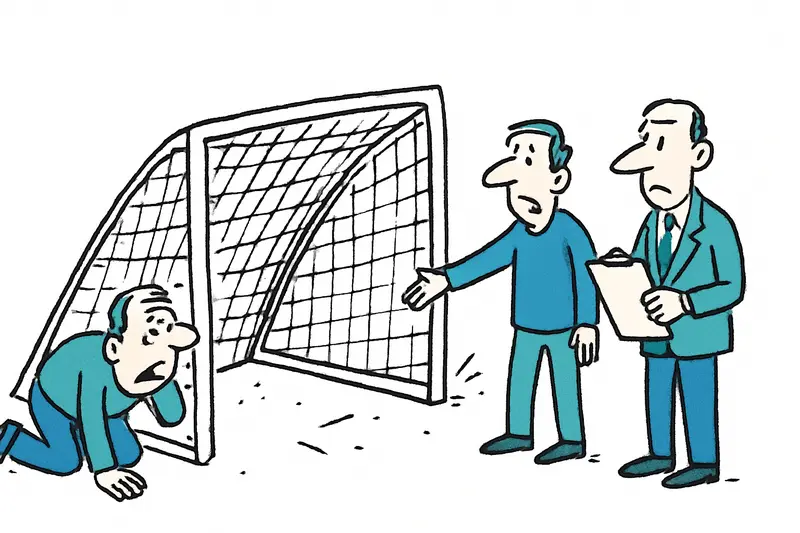
A football goal is to be pushed across the pitch. The wheels will not move, so several people carry the frame. Then a heavy metal part comes loose and hits the goalkeeper on the head. That is how the available information describes the accident during FC Germania Mallorca training on Monday, 16 November. Gavin Didzilatis was taken to hospital with a bleeding head injury. He will be unavailable for Saturday’s home match against Santa Ponsa. No information is available here about his subsequent condition.
The obvious question is: how could a routine task on the pitch become so dangerous—and who must ensure that movable goals can be relocated safely? There is no definitive answer yet. According to the available information, the club is considering possible legal action. La Nova Cabana is a public sports facility in Marratxí and is listed as municipal property. That alone does not establish who was responsible in this particular case for inspections, repairs or the procedure for moving the goal.
A goal is not a harmless piece of training equipment
Football goals are familiar sights. That is precisely why it is easy to underestimate what they involve: a heavy frame, moving parts and wheels that are only useful when they work properly. If a wheel is stuck, the planned push can quickly turn into carrying. This is not a minor change in method. The weight, grip points and balance all change—and a loose or damaged component can become a hazard.
The known account does not establish whether the goal had been poorly maintained, whether there was a defect or whether a mistake was made while moving it. An inspection must determine that. Assigning blame now would skip the very step that matters for protecting the next team. Still, the safety question must be addressed: at a facility used by different teams, everyone needs to know whether a goal may be moved and how to do so.
What often gets overlooked
After an accident, attention understandably turns first to the injured player and the upcoming match. Less visible is the day-to-day organisation behind it: Who checks the goals regularly? Is there a straightforward way to report damage or wheels that are difficult to move? Is a damaged goal taken out of service immediately—or left at the side until someone has time to deal with it? No specific information on these points is available for La Nova Cabana.
These gaps matter. A football club may use a facility without being solely responsible for its technical condition. A municipality may own it without being present at every training session. That is why the facility managers and the club need a clear, practical agreement. Otherwise, each side assumes the other has already carried out the checks.
Anyone passing a sports ground on a November evening in Mallorca knows the familiar scene: voices carry across the artificial turf or dusty sidelines, a water bottle rattles somewhere, and after training the cones are collected. Moving a goal is part of the routine cleanup for many people. It is precisely in such an everyday moment that safety must not be left to chance or depend on whether a particularly strong player happens to lend a hand.
What clubs and facility operators can do now
The first step is a factual technical inspection of the goal involved and its moving parts. Until it is confirmed to be safe, it should not be used or moved again. This is a precautionary recommendation, not a statement about what was actually done on Monday. It would also make sense to document a visual inspection of all the goals at the facility, including their wheels, safety devices, connections and any visible damage. If anything is amiss, the goal should be clearly taken out of service and a designated person should arrange repairs.
A short, clear rule can help with day-to-day operations: move goals only if they are designed to be moved and their wheels are working properly; do not improvise by having individuals carry heavy equipment; and report any defect to the person responsible for the facility. The club and municipality could agree on who carries out inspections, how faults are reported and who authorises the facility to be used again. This costs less than an accident—and prevents the same uncertainty from arising at the next training session.
On Saturday, substitute goalkeeper Leonard Storch is expected to take his place in goal. For him, it is another appearance; for the team, a sporting setback. But the result against Santa Ponsa is not the most important issue this week. What matters is whether the accident leads to a routine that can be checked: clear responsibility, regular inspections and a goal that is moved only when it can be moved safely. A sports ground should be full of life. But when heavy metal is involved, there should be no room for improvisation.
Frequently asked questions
How should movable football goals be moved safely at a Mallorca sports ground?
What should a football team do if a goal’s wheels will not turn?
How often should movable football goals be inspected in Mallorca?
Who should deal with damaged football equipment at a shared sports ground in Mallorca?
What happened during FC Germania Mallorca training at La Nova Cabana?
Who is responsible for inspecting the movable goals at La Nova Cabana in Marratxí?
Has the cause of the football goal accident in Marratxí been established?
Who was expected to play in goal for FC Germania Mallorca against Santa Ponsa?
Similar News

Mallorca Holiday with Your Phone: How Much Protection Does Your Digital Life Need?
Boarding pass, hotel Wi-Fi, beach photos: your smartphone is now part of every trip. A few simple precautions can protec...

Calvià Wins Europe’s Tourism Award – But What Will Change Locally?
In 2027, Calvià will be named European Capital of Tourism in its population category. The title recognises plans and ini...

When Motorhomes Become Homes: Palma’s Difficult Parking Question
A public car park must remain accessible to everyone. But people living in campers do not simply disappear when an entra...
A Shipwreck from the Islamic Period off Mallorca: Protection Comes Before Curiosity About Its Location
A member of the public alerted the Island Council to a shipwreck from the Islamic period. Ceramic fragments and deer ant...
Luxury Hotels near Banyalbufar: What’s Still Missing on Paper
New upscale hotels are being discussed around Banyalbufar. What matters is not the glamour of the plans, but what they m...
More to explore
Discover more interesting content

Can Cap de Bou

Townhouse Lleo 72
