
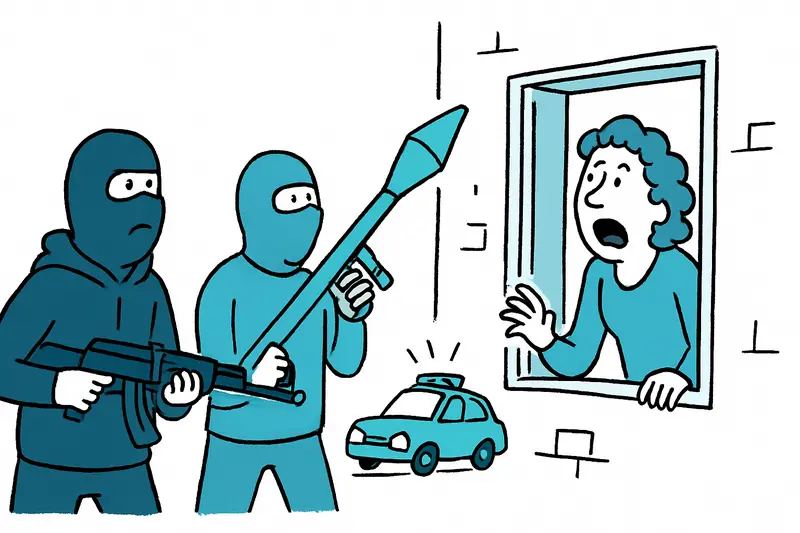
Masked Images, Real Panic: When Social Media Aesthetics Alarm Neighbors
Five German content creators filmed on a recently vacated detention site using deceptively realistic props. The result: alarmed residents and a police response. A lesson for creators, authorities and platforms.
Masked Images, Real Panic: When Social Media Aesthetics Alarm Neighbors
Key question: How far can the search for striking images go when the neighborhood becomes worried?
In the morning, before the street cafés are fully running, residents report an unusual sight: masked people, heavy-looking rifles and an object resembling a rocket-propelled grenade launcher on the grounds of a former detention facility. Police cars arrive. The situation later calms down — after identities were checked and the participants explained that the shots were staged with non-real weapons. Nevertheless, the incident leaves questions.
Facts as they stand: Five people, German nationals, were filming on a site that had recently been vacated. Passersby perceived the props as very realistic. The group's Instagram account apparently has more than 20,000 followers; the participants say they produce deliberately provocative content in an underground scene and also sell merchandise. The police documented identities and, according to local reports, did not take further measures on site.
Critical analysis: Such actions sit at the intersection of art, provocation and public safety. Three problem areas stand out: First, the external effect: deceptively realistic props can trigger panic in random observers and provoke emergency calls. Second, the location: entering buildings with a troubled history is especially sensitive; here residents' concerns and legal questions meet. Third, reach: content with extreme imagery is shared online at speed; this increases the likelihood of imitators or escalating reactions.
What is often missing in the public debate: a concrete look at layers of responsibility. It's not just the individual group that must respond; platform operators, venue owners, prop renters and local authorities are also involved. The discussion is usually reduced to whether something is criminally relevant. Too rarely does it focus on prevention, informing the local community in advance, and clear rules for shoots involving realistic-looking weapons.
A Mallorca everyday scene that illustrates the problem: I sometimes see this in Palma's old town — tourists in costumes, young people using urban spots for photos, residents looking on warily from balconies. The clatter of rolling suitcases, the whoosh of a public bus, voices trying to explain a scene; practically speaking: the balance between expressive enthusiasm and neighborhood calm is fragile.
Concrete, practical solutions without romanticism:
1. Mandatory marking for props: If props look that real, they should be clearly and permanently marked during shoots (for example with bright ribbons or QR codes) so that casual observers immediately recognize them as props.
2. Reporting obligation and advance notice: For shoots in sensitive or recently vacated locations, a simple online notification to the local Policía Local or Guardia Civil could suffice so that response units are informed and residents can be warned in advance by notices or digital neighborhood posts.
3. Platform responsibility: Social media providers must work more intensively on rules for distributing realistic weapon depictions — for example, context notices on posts that could be disturbing.
4. Creator awareness: Workshops in cooperation with municipalities: How do I film provocatively without causing panic? Which locations should I avoid?
5. Clear rental rules for airsoft and props: Vendors could be required to issue props only with warning notes or markings, especially when buyers have large reach.
These measures are not silver bullets, but they would significantly reduce the risk of such alarm reports and strengthen trust between the creative scene and local residents.
Punchy conclusion: Images that scream for attention must not come at the expense of other people's safety. Those who provoke bear responsibility — not only morally, but practically. In Mallorca: a good shot is worth nothing if the neighborhood watches from the window with their hearts racing.
Frequently asked questions
Why can realistic-looking props in Mallorca photo shoots cause public panic, and what can be done to prevent it?
How should props that look real be marked during Mallorca shoots to avoid confusion?
Should filming teams in Mallorca inform local authorities before shooting in sensitive locations?
What responsibility do social media platforms have when Mallorca shoots feature realistic weapon imagery?
How can Mallorca photographers practice provocative photography without causing neighborhood panic?
Are there rental rules for airsoft and props in Mallorca to reduce risk?
What should Mallorca residents do if they see a shoot with realistic props that worries them?
What does a responsible approach to expressive photography look like in Mallorca neighborhoods like Palma's old town?
Similar News
Why the Striped Breams in Cala Pí Should Be a Wake-up Call
Once again bathers in Cala Pí were surrounded while swimming by small, nippy fish — some wounds bled. Time for clear rul...
Daily from New York: How Palma's Air Traffic Is Growing — and What Must Change
United will increase the Newark–Palma service to daily flights in 2027 (Boeing, 231 seats). Strong tourist numbers clash...
When Love Ends in Shards: Destruction in Son Vida and the Questions That Remain
In Son Vida a relationship dispute escalated: a woman destroyed furniture in a luxury villa, later pressed a panic butto...
Who Bears the Burden? Mallorca Between Tenant Protection and Landlord Fears
Madrid's new housing decrees strengthen tenant rights — but on Mallorca concern is growing: will the law drive small lan...
On the Edge: What Mallorca's Airport Loses If a Major Low-Cost Carrier Falters
The company that operates numerous connections from Palma to France and domestically is negotiating with creditors to re...
More to explore
Discover more interesting content

Can Cap de Bou

Townhouse Lleo 72
