
Migrant boat lands in Colònia de Sant Jordi — Why the procedure on Mallorca's beaches is stalling
A boat reaches Colònia de Sant Jordi during the day. Twelve men come ashore, disperse, and the local police arrive with a delay. What gaps do such arrivals reveal?
Migrant boat lands in Colònia de Sant Jordi — Why the procedure on Mallorca's beaches is stalling
Key question: How well is our island really prepared for such landings — between coastal idyll and administrative reality?
What happened
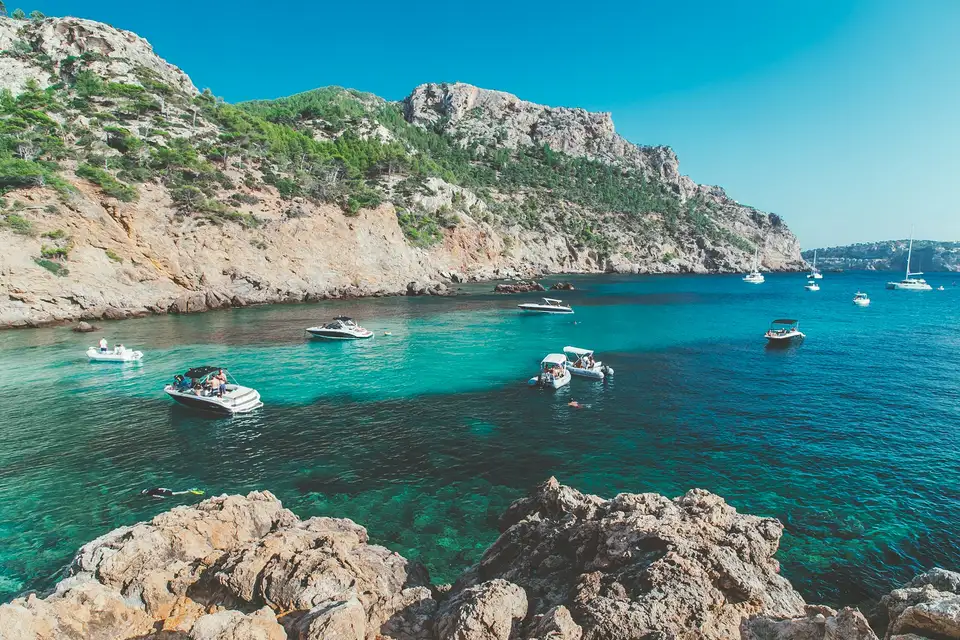
On a bright July day a small refugee boat reached the beach in Colònia de Sant Jordi, not far from the harbor. A resident filmed the scene: twelve men disembarked in total, changed clothes, appeared calm and disappeared in different directions around the town. The local police arrived about ten minutes after the landing and initially alerted the Guardia Civil. Because the arrivals had spread out, the usual procedure — registering everyone and transporting them by bus — was no longer applicable. The day before, official figures reported 71 people arriving on four boats on the islands; since the start of the year 3,656 arrivals via this route have been recorded for the Balearics, as detailed in More Boats, More Questions: Mallorca Under Pressure from Rising Boat Arrivals.
Critical analysis
At first the scene sounds harmless: beachgoers, seagulls, a smartphone video. But behind the picture of relaxed people on the sand lies an organizational problem. The delay before intervention and the fact that people dispersed quickly through the town show that detection, registration and coordination mechanisms are not functioning smoothly, a strain also visible in reports about how ports are coping under pressure such as Between Quays and Bureaucracy: How Mallorca's Ports Are Responding to Landings. Someone sitting on the playa looking at the sea often hears boats, engines, the clatter of bilge pumps — but one rarely hears clear procedures for how authorities act immediately and humanely at the same time.
What is missing from the public discourse
There is much talk about numbers, but little about the local impact: Which tasks remain with the municipality, the local police force, and volunteer helpers? How do shelters, clinics and social services react when people suddenly appear in a small town? And what about informing residents — from the beach bar on the promenade to the small bakery on the harbor street? These perspectives are too rarely taken into account; local coverage of episodes like Six boats, 75 people: When the nights on the coasts grow denser illustrates how quickly local services can be tested.
An everyday scene from Colònia
Imagine the promenade in the late afternoon: a fishing boat in the bay, sun umbrellas, the air smelling of salt and fried fish. A man on the shore shows his neighbour the video on his smartphone; children play at the edge — and the local police drive slowly along the coastal road. It is precisely this contrast between normality and sudden unrest that makes visible how narrow the buffers are: a few minutes' delay, and the situation shifts into the town centre.
Concrete solutions
In the short term, clear local checklists are needed: alert levels for the local police, mobile reception points for initial registration at nearby buildings, coordinated communication chains between the municipality, the Guardia Civil and social services. A simple, portable registration kit could help — photographing identity documents, a basic health check, translators available by phone. Municipalities should also publish crisis plans so businesses and residents know how to respond.
In the medium term, better resources are necessary: targeted training for local police officers, more staff for first reception in coastal communities, prearranged bus capacity that can be requested at short notice; recent large rescues such as New surge of boat migrants: 122 people rescued in one day off the Balearic Islands underline this urgency. At the regional level, procedures for distribution and provision (medical services, supply of water and food, information) should be standardized so that each arrival does not become an improvisation.
Long-term perspective
Such landings are part of a broader dynamic: routes, smuggling networks and political frameworks. In the long run, only a mix of greater maritime presence where the boats depart, legal access routes for people seeking protection and an EU-coordinated procedure that can handle landings more quickly, humanely and lawfully will help — without leaving the responsibility solely to small municipalities.
Conclusion
The incident in Colònia de Sant Jordi is not a single photo but a film that shows where processes break down: in detection, coordination and provision. If we continue to hope that "it will be fine," we risk chaos again on the promenade. Better would be: clear rules, visible plans and more support for the places where the sea brings people ashore.
Frequently asked questions
What happens when a migrant boat lands on Mallorca beaches?
How prepared is Mallorca for sudden beach landings and what are the main challenges?
What short-term steps can Colònia de Sant Jordi take to better handle landings?
What medium-term improvements are suggested across Mallorca for migrant landings?
What long-term strategies are proposed to manage migrant landings in Mallorca?
What did the Colònia de Sant Jordi incident reveal about local impact and information needs?
Are translators and immediate health checks part of the initial response to landings on Mallorca?
What is Colònia de Sant Jordi like during a normal day on its promenade?
Similar News

When Shopping Weighs Heavier: Mallorca Demands a Tax Pause on Food and Fuel
Rising prices are putting pressure on households and agriculture. The Balearic Islands are calling for temporary tax rel...

Almost 70 Euros for Just Under Three Hours of Parking: The Trap at Son Sant Joan
A short work errand at the airport ended with a surprisingly high parking bill. Why the two-hour tariff limit raises so ...
Goodbye Megayachts: Why Palma's Port Is Now Focusing on Small Luxury Liners
Four smaller luxury liners berthed in Palma at the same time recently — around 1,600 passengers on board, plus about 2,0...
Fear in the Sa Teulera Forest: Youth Groups Harass Cruising Zone in Palma
In the wooded area of Sa Teulera, those affected report verbal attacks, property damage and intimidation. How safe is th...
Axa opens first health center in Palma: €3 million, 650 m² and more local access for La Vileta
In the heart of La Vileta, Axa has opened its first own health center in Mallorca. On around 650 square meters and with ...
More to explore
Discover more interesting content

Can Cap de Bou

Townhouse Lleo 72
