
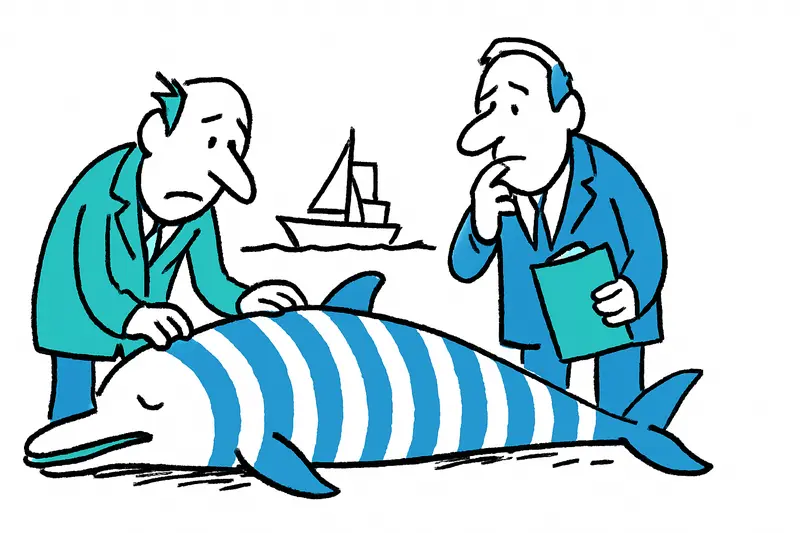
Mystery at the Mole: Striped Dolphin as a Warning for Palma's Sea
A dead striped dolphin at the Club de Mar not only foregrounds grief but raises fundamental questions about the condition of the Mediterranean off Palma: investigating causes, capacities for necropsies, and practical measures for protection and prevention.
Mystery at the Mole: Striped Dolphin as a Warning for Palma's Sea
It was one of those cool Tramuntana mornings when the sun only creeps over Palma's rooftops and the gulls are louder than the tourist groups. Harbor workers from the Club de Mar found a lifeless striped dolphin on the mole, an event covered in Mystery at the Mole: Striped Dolphin as a Warning for Palma's Sea. An inflatable boat was launched, lines were thrown, the animal was hoisted onto the stern platform — and for a moment the busy clatter of bollards and the distant horn of the ferries fell silent.
The central question: accident, illness, or symptom?
At the moment, only smell, skin and the lab know. Specialists from conservation organizations and experts from the aquarium have taken over the animal; a necropsy is to provide clarity. Samples of tissue, stomach contents and blood will be examined for plastic residues, medicines, parasites, cut injuries and pollutants. These findings take time — days, more likely weeks — and should provide more than conjecture.
But the necropsy is only the beginning: was this an isolated case, an accident with a boat, an attack, or an indication of a stressed ecosystem? Striped dolphins are not unusual in the Mediterranean, but every dead marine mammal is like a folding mirror that shows us our relationship with the sea.
What is often overheard at the mole
On the quay fishermen discuss torn nets, boat owners about ever-narrower routes, and environmentalists about microplastics. Less loud, but no less dangerous, are pharmaceutical residues in wastewater, chronic underwater noise from recreational boats and ferries, and snagged fishing hooks. Often it does not feel like a single cause, but rather the sum of many small stresses that alter food chains and weaken animals.
Another blind spot: the limited capacity for forensic marine biology in the Balearics. Laboratories are small, staff are scarce and samples from strandings are piling up. Without rapid, coordinated analysis, patterns remain hidden — and so do the opportunities for prevention.
Concrete approaches instead of resigned looks at the mole
Reactions at the cafés on the Passeig are not just expressions of concern, but increasingly ideas. Some pragmatic proposals that could help sound simple — because they are:
1. Rapid reporting and coordinated first response: A well-known hotline or a simple app, combined with short training sessions for port staff, boat owners and fishermen, so injured animals can be reached sooner.
2. Traffic zones and speed limits: Temporary or seasonal speed limits at harbor entrances, in seagrass areas and in popular bathing zones could reduce collisions with marine mammals.
3. Better funding for necropsies: More resources for autopsies, standardized protocols and a central data portal would allow causes to be identified more quickly and trends to be tracked over years.
4. Awareness in marinas and tourism: Guidelines for charter companies, codes of conduct for boaters and information points in marinas serve not only guests but also protect wildlife — a small effort with big impact.
5. Infrastructure against pollutants: Improved wastewater treatment plants, stricter controls on ship discharges and targeted programs to reduce pharmaceutical residues in wastewater are more effective in the long term than desperate ad hoc actions.
Why this issue concerns us all
The recovered dolphin remains an image that hangs at the mole: people putting down their coffee, buoys swaying to the rhythm, and the question of whether our island is doing enough to protect what it lives from. It is not just about sad photos or media headlines, but about tangible decisions — from the port authority to local municipalities and individual boaters.
Authorities ask for information: anyone who had observations, saw strange animal behavior or documented boat contacts should come forward. And those who spend a lot of time by the water: a look, a call, a report address can make a difference, as noted in Misterio en el muelle: delfín de rayas recuperado en Palma – investigación en curso.
On the Passeig Marítim people will hear the sound of conversations differently in the coming days — more thoughtful, less superficial. The dead striped dolphin is more than a sad find; it is a reminder not to take marine life for granted but to give it our attention, research and sometimes our legal decisions.
Frequently asked questions
What does it mean when a striped dolphin is found dead in Palma’s sea?
Can you swim safely in Palma if a dead dolphin has been found nearby?
Why do striped dolphins appear in the Mediterranean around Mallorca?
What should I do if I see a stranded or injured dolphin in Mallorca?
Could boat traffic in Palma Bay be affecting marine life?
Are pollution and wastewater a problem for the sea around Mallorca?
What is a necropsy and why is it done on marine animals in Mallorca?
Are speed limits for boats used to protect dolphins in Mallorca?
Similar News
Fear in the Sa Teulera Forest: Youth Groups Harass Cruising Zone in Palma
In the wooded area of Sa Teulera, those affected report verbal attacks, property damage and intimidation. How safe is th...

Axa opens first health center in Palma: €3 million, 650 m² and more local access for La Vileta
In the heart of La Vileta, Axa has opened its first own health center in Mallorca. On around 650 square meters and with ...

30 Years of Nit de l'Art: What Palma's Art Night Really Shows — and Conceals
Nit de l'Art celebrated its thirtieth anniversary: full galleries, young visitors — and the quiet tensions between the a...

Hunt for Older Holidaymakers: Arrests after Suspected Pickpocketing in Port d'Andratx and Bellver
Five suspects were arrested after investigators accuse them of targeted pickpocketing of elderly tourists in Port d'Andr...
Knife stabbing in Magaluf: Why it must not remain an isolated incident
A 21-year-old tourist was stabbed in the chest in Magaluf and is in life-threatening condition. A reality check: what's ...
More to explore
Discover more interesting content

Can Cap de Bou

Townhouse Lleo 72
