
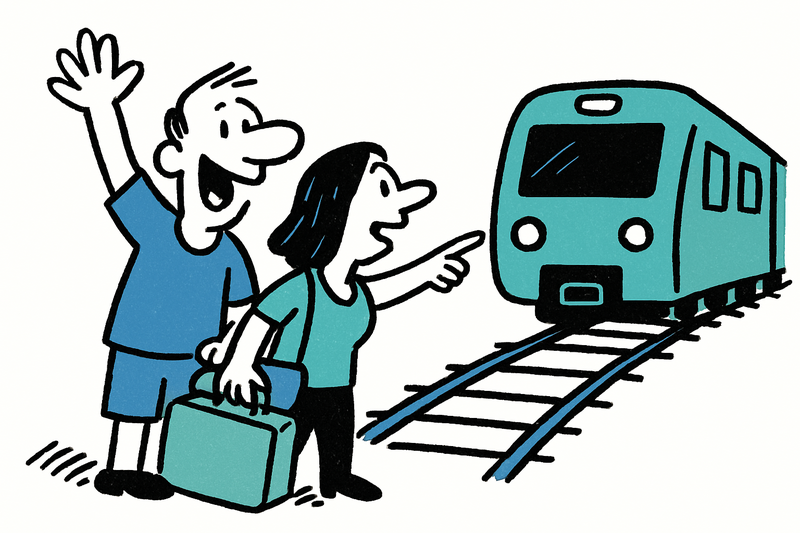
Train to Peguera: Vision with a Timetable or Just Election Rhetoric?
A rail line from Son Espases toward the southwest sounds like a mobility shift. But without figures, trials and links to buses and work schedules, the vision risks becoming an expensive symbolic project.
Key question: Can the new railway really unclog Mallorca?
Someone standing on the Paseo del Borne on a late autumn afternoon still hears the cracking of the last summer heat in the plane trees and sees the empty tables of the cafés. Promises sound good here. On the Ma-1 between Llogarets and Son Ferrer the picture is different: an endless chain of rental cars, air conditioners buzzing, taxis whining around corners. Can a New Palma–Calvià rail link from Son Espases metro plans via Santa Ponça, Palmanova to Peguera rewrite these two images — or will it remain political show?
What is on the table
The Balearic government has asked SFM to examine whether a train connection from Palma to Calvià is feasible. Names like Palmanova, Santa Ponça and Peguera keep coming up; longer-term plans also mention Llucmajor or Alcúdia as possible hubs. That sounds like a major stroke: a mobility axis connecting tourist centers with Palma and the health center. Only: concrete figures, financing models or timetables are missing from the public debate.
The project's three Achilles' heels
When you look behind the slides with lines and dots, three open questions remain that will decide success or failure:
Costs and financing: There is no reliable cost estimate and no clear division of who pays how much — regional government, municipalities, EU funds or private investors? Without that, the idea remains a postcard-pretty vision New Rail Link to Calvià: Opportunity or Traffic Illusion?.
Seasonality: In high summer the trains would probably be full, in winter half-empty carriages threaten. That makes planning and profitability more difficult than on continental networks.
Last mile and integration: A stop in Peguera is only the beginning. Hotels are often scattered, luggage must be transported, shift changes for cleaning staff happen at unusual times. Without reliable bus connections, bike lockers and fare integration, the train is only a nice photo spot.
What is rarely said
Publicly many talk about line colors and timetables, less about the everyday consequences. How do property prices behave along a new route? Who pays for soil sealing, who for fences against noise? And how much does a fixed route change the face of small coastal villages — positively through fewer cars or negatively through land consumption?
Also rarely heard: the perspective of the people who would have to use the system daily. Cleaners, cooks, emergency services — they need affordable, flexible connections that fit their shift schedules. A political announcement does not replace a change in work mobility.
Pragmatic steps instead of grand dreams
For the idea to become a robust project, it needs more practice and less symbolism. Proposals that seem sensible from here — between taxi horns, seagull cries and construction dust:
1) Pilot instead of mega-construction: First a modular trial route Son Espases–Santa Ponça. Single-track, with three to four stops, measured over two full seasons. This would allow real determination of demand profiles, operating costs and connection problems.
2) Clear financial transparency: Open cost calculations, definition of funding shares and repayment models — no political smoke screens. Municipalities like Calvià or Andratx must know what they are signing up for.
3) Fare and operational integration: Immediate inclusion in the TIB system, discounted monthly tickets for hotel staff, surcharges for night trips at shift changes. A bit of practical logic: thinking beyond tourist tickets.
4) Multimodal hubs: At the endpoints: secured taxi ranks, microbus systems to scattered hotels, bike lockers and luggage services. This makes the last kilometer no longer an obstacle.
5) Flexible operation: Denser intervals in summer, smaller trains or railbuses in winter. Workforce planning with seasonal contracts, training offers and social protections for employees.
6) Participation and environmental assessments: Early involvement of residents, independent studies on noise, biodiversity and land consumption — and clear compensation measures.
What is at stake
If integration succeeds, the railway can be more than a congestion avoider. It could organize commuter flows, reduce parking pressure in Palma and get workers reliably to their shifts. On the roads between Son Ferrer and Llogarets one would hear the boats of everyday life again instead of engine noise. If the project fails due to vague promises, however, it will serve in the election campaign as proof of political activity — without real benefit for the island.
Conclusion: Realpolitik instead of showcase speeches
The idea of a train to Peguera has potential. But potential alone is not enough. Without transparent figures, tested pilot projects and concrete plans for the last kilometers, the idea remains half-hearted. Now the regional government and municipalities are called upon: from promise to workshop, from election poster to construction site. Anyone who stands by the sea on a mild autumn afternoon and hears the silence knows: if you do it right, Mallorca can become quieter, cleaner and more reliable. If not, it remains just a nice story for the next campaign poster.
Frequently asked questions
Is a train to Peguera in Mallorca actually being planned?
Could a new rail link really help reduce traffic on Mallorca?
Why is a train to Peguera difficult to plan?
What would make a Mallorca rail project useful for hotel workers?
What is the proposed route for the Palma to Calvià train in Mallorca?
Would a train to Peguera change daily life in southwest Mallorca?
What happens if the Mallorca rail project stays vague?
What should Mallorca residents look for before supporting a new train line?
Similar News

Rats in Llucmajor: How Uncollected Garbage Became a Health Problem
In Llucmajor, uncollected trash bags, overflowing containers and rain are leading to increased rat sightings. An assessm...
Sly Distraction Scam at Ballermann: How Tourists Became Targets — and What Must Be Done Now
Five suspected pickpockets were arrested. Their method: distract, secure the loot, return the wallet — without the cash....
Eviction in El Arenal: Who protects neighbors — and who protects the homeless?
A vacant hotel on Carrer Girona was cleared and secured. The neighborhood breathes a sigh of relief. But the action trea...
'La Tapita' loses its home: Who will protect Palma's last affordable meeting places?
The bar 'La Tapita' on Simó-Ballester Street will close at the end of December. For neighbors, police officers and small...

Million Heist at Bulgari: Who Is Responsible for Palma's Security Gaps?
Three men stole jewelry worth around one million euros – the crime series began at the end of September and was likely c...
More to explore
Discover more interesting content

Can Cap de Bou

Townhouse Lleo 72
