
Monkeypox in Mallorca: Clade I detected – how worried should we really be?
Monkeypox in Mallorca: Clade I detected – how worried should we really be?
Health authorities have for the first time recorded the Clade I strain of Mpox in the Balearic Islands. Case numbers remain low and illnesses have so far been mild. What is needed now: transparent data, accessible testing and multilingual information and outreach.
Monkeypox in Mallorca: Clade I detected – how worried should we really be?
Guiding question: Is the current information and protection strategy sufficient, or are there gaps in prevention and care?
This week the public health service reported that the so‑called Clade I strain of the monkeypox virus (Mpox) has been detected on the Balearic Islands for the first time. That sounds dramatic; in practice, however, the recorded cases remain manageable. For 2025 the region lists twelve confirmed infections, nine of them in the fourth quarter. By comparison: in 2024 the archipelago reported 16 cases, 2023 saw 15, while 2022 recorded significantly more — back then over 200.
The authorities emphasize that Clade I has not led to more severe courses of illness here than the previously known variants. Those affected were predominantly men between 35 and 40 years old, and some had sex with men. Two patients were briefly hospitalized and quickly discharged. The typical course: initially flu‑like symptoms, one to five days later skin changes up to pustules and scabs; a person is considered recovered once all scabs have healed. See WHO: Monkeypox (Mpox) fact sheet for clinical details.
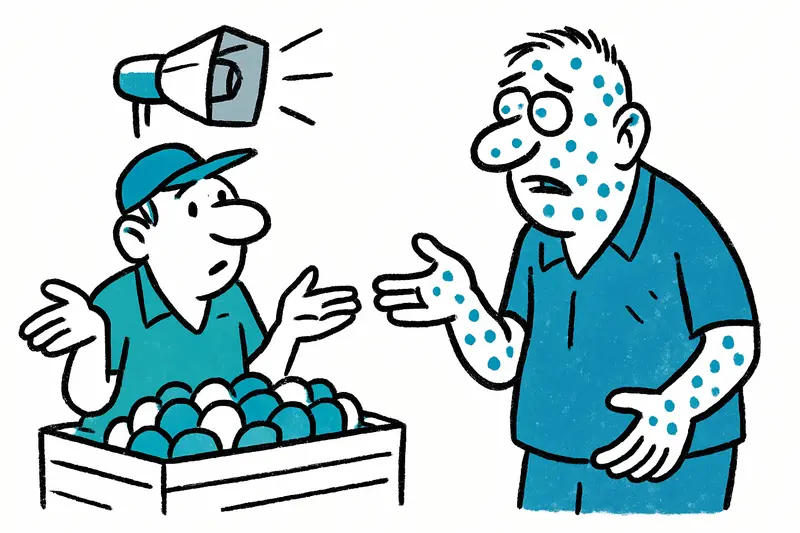
That sounds reassuring — and yet: the central question remains whether the islands are sufficiently prepared. Recent animal disease incidents such as Emergency in Bunyola: New Bluetongue Disease Puts Mallorca's Animal Health to the Test highlight broader preparedness challenges. On the Plaça del Mercat in Palma a fruit seller hears the announcement from the bus station and shrugs: “We always just hear: don’t panic. But who do I tell that to when a customer needs advice?” This everyday observation shows how official messaging and actual information needs can diverge.
Critical analysis: the numbers are low, but that can be misleading. Low case counts can result from limited testing, stigmatised help‑seeking, or inadequate reporting systems. If primarily men from certain networks are affected, there is a risk that cases remain undetected because people seek discretion. Moreover, the scientific assessment of Clade I has been revised in recent years: early estimates of higher danger have since been toned down, but public trust in this re‑evaluation is not automatically present, as seen with communication around other local outbreaks such as First West Nile Case in the Balearic Islands: What the Horse Discovery on Menorca Means.
What is missing from the public debate: clear, low‑threshold testing offers and widely accessible, language‑adapted information. Many residents and visitors on Mallorca do not speak Catalan or Spanish as a first language; tourist hotspots, migrant communities and people with insecure residency status need targeted outreach. In clinics and health centres there is hardly any specific informational material in English or German — but that would be necessary.
Concrete solutions: first, mobile testing and vaccination campaigns at high‑traffic locations, for example along the Paseo Marítimo and in neighbourhoods with many meeting places. Second, cooperation with LGBT organisations, sex worker networks and urgent care providers for non‑stigmatizing education. Third, clear isolation recommendations for those infected, coupled with social support — if someone must stay home by order, they need help with shopping and possibly compensation for lost wages. Fourth, multilingual information leaflets (Spanish, Catalan, English, German) and a central website with symptom pictures, contact addresses and testing locations.
In addition, the regional health authority should present reporting data more transparently: age, affected areas, possible transmission routes — of course anonymized. That builds trust and allows professionals to respond more selectively. Vaccination offers for people at increased risk are appropriate; the challenge is reaching these groups and explaining the pros and cons clearly.
Practical measures that help immediately: general practitioners should be trained to quickly recognise skin changes as possible Mpox symptoms; pharmacies can keep information flyers on hand; counselling centres should offer discreet testing appointments. On Mallorca this also means: tourism boards, hoteliers and landlords should know where to refer affected people, instead of fuelling panic, and to learn from recent policy moves such as Why Mallorca is tightening controls on pig transports — and what really matters now.
Pointed conclusion: the detection of Clade I is a signal to be vigilant, not a reason for hysteria. People living locally want concrete help instead of general reassurances. If authorities now rely on transparent data, low‑threshold services and targeted outreach, a potential rise can be dampened early. Someone strolling along Playa de Palma may hear the seagulls over the sea, but more important is that people are well informed and supported health‑wise — that is the best protection against a real problem.
Frequently asked questions
How worried should people in Mallorca be about monkeypox now that Clade I has been detected?
What are the first symptoms of monkeypox and when should I get tested in Mallorca?
Is monkeypox more severe in Mallorca with the Clade I variant?
Where can people in Mallorca get information about monkeypox in English or German?
Can monkeypox be passed on through casual contact while visiting Mallorca?
What should tourists in Palma or Playa de Palma do if they think they have monkeypox?
Is there a monkeypox vaccine available for people at higher risk in Mallorca?
What can Mallorca’s health system do better to control monkeypox outbreaks?
Similar News
Released with Conditions: The Plus Ultra Suspicion and a Mallorcan Finca as Residence
A Dutch entrepreneur, sought in connection with the Plus Ultra case, was extradited to Spain after his arrest in Germany...

Haute Nuit in Puerto Portals: Fashion, Art and Indulgence by the Water
On October 2 the Lobster Club in Puerto Portals will be transformed into a stage for curated fashion, art and culinary e...
Magaluf: Watchtower Alarm – Lifeguards Pull Unconscious Beachgoer from the Water
After a drama in the late afternoon, two lifeguards at Magaluf beach rescued an unconscious 44-year-old man. He was stab...
Turquoise in the City: How dangerous is the color play of the Sa Riera?
The Sa Riera in Palma suddenly turned turquoise — a pretty motif, but behind the effect lies a discharge of saline waste...

Jeckliner at Sunnesching: Cologne spirit sets sail from Palma
In September 2027 the Mein Schiff 2 briefly becomes a floating carnival stage: four days with Cologne bands, comedy and ...
More to explore
Discover more interesting content

Can Cap de Bou

Townhouse Lleo 72
