
More than 1,000 Dead on the Algeria Route: Who Searches When Boats Vanish Without a Trace?
More than 1,000 Dead on the Algeria Route: Who Searches When Boats Vanish Without a Trace?
In 2025 the NGO Caminando Fronteras reports more than 1,037 deaths on the Algeria–Balearic Islands route. The report raises questions about search operations, cooperation and political priorities. A reality check with an everyday scene and concrete proposals.
More than 1,000 Dead on the Algeria Route: Who Searches When Boats Vanish Without a Trace?
A reality check on the deadly Mediterranean crossing that hit Mallorca and the neighboring islands particularly hard in 2025
Key question: What responsibility do local and European authorities bear when more than 1,000 people lose their lives on a single route and dozens of boats simply disappear?
The sober numbers from the IOM Missing Migrants Project monitoring report are hard to ignore: for 2025 at least 1,037 deaths are documented on the route from Algeria to the Balearic Islands. On this subroute 121 incidents were reported; in 47 cases boats are said to have gone missing entirely, with no recovered victims, as documented in 18 People Missing off Mallorca — A Call to Politics and Society. These figures make the route one of the deadliest entry points to Spain.
The data do not answer all questions, but a clear picture emerges: several months—above all January, October and November—recorded unusually many victims. In addition, a large share of the accidents was concentrated around Mallorca and the surrounding islands. Adding this tally to the total for Spain results in a shocking sum of at least 3,090 deaths across all routes in 2025; the crossing to the Canary Islands remained the overall most dangerous passage with nearly 1,906 deaths.
Critical analysis: the numbers are a warning sign of more than bad weather or overloaded dinghies. The organization's reports shed light on systemic problems: limited search operations, inadequate cross-border coordination of search and rescue zones, and a political framing of migration primarily as a security issue rather than a humanitarian one. When state activities are limited to "coastal searching," a wide area remains unobserved where boats can fall off the radar.
What is often missing in public debate: first, the perspective of search and rescue teams who must improvise on the ground; second, the data base on lost boats—many cases lack a clear situational picture, as shown by local reports such as Two Dead on Balearic Coasts: When the Sea Withholds Answers; third, transparent information on how rescue responsibilities are actually managed between neighboring states. And fourth: an honest debate about legal alternatives to hazardous crossings that could deter people from attempting them.
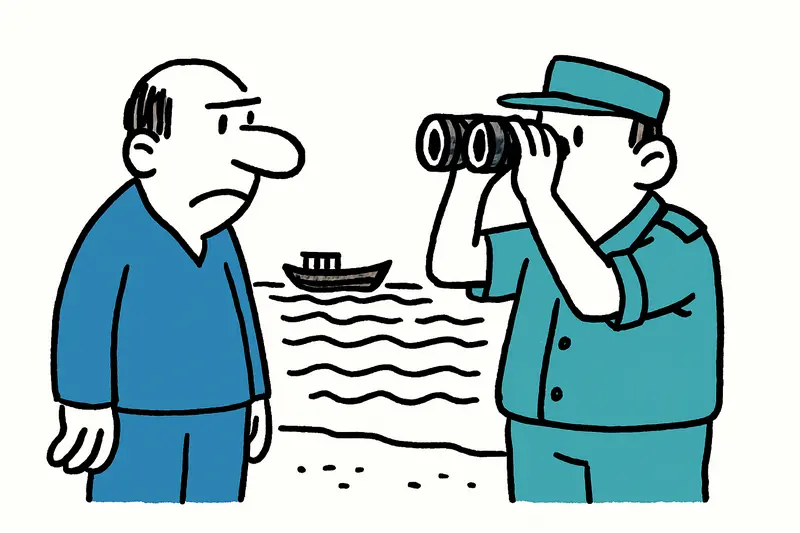
An everyday scene from Palma: in the late afternoon, when the lamps on the Passeig start to flicker, fishermen sit on the breakwater and talk about small boats appearing on the horizon at night. They describe the same pattern: short crossings, panic, then radio silence. The harbor market smells of fish and diesel, gulls circle, and the waterfront promenades look untouched—but for some the sea remains a deadly boundary.
Concrete solutions: first, there needs to be binding, transparent coordination of search and rescue operations in the affected zone, including comprehensive data collection on departures and accidents. Joint operations centers for the Balearic region could clearly define search radii, assets and lines of responsibility. Second: mandatory and independent investigations into incidents so patterns can be identified. Third: humanitarian search and rescue offers that function independently of deportation policies, as well as strengthened diplomatic channels with transit countries that focus on preventive measures and safe routes. Fourth: expansion of legal admission and protection pathways so that people are not forced into life-threatening crossings.
Politically this is not easy. State authorities often view migration through the lens of border security. Practically, however, this means that if rescue is given lower priority than control, the risk of death at sea increases. A different balance is possible without a complete foreign policy overhaul: greater transparency, clear protocols and more civilian search capacities can quickly save lives.
What should happen now: authorities in the Balearic Islands and Madrid should use the report as an occasion to publicly clarify search corridors and responsibilities and to conduct joint exercise scenarios. At the same time there needs to be pressure at the European level to regulate the distribution of responsibility and resources in emergencies. Civil society and local fishermen's associations could be officially involved as witnesses and helpers.
Punchy conclusion: the sea in front of Mallorca is not just a backdrop for postcard scenes. In these cases it is a place of great uncertainty and human suffering. Numbers like "1,037 dead" are more than statistics; they point to missed cooperation, blind spots in rescue operations and a politics that too often permits looking away. Standing on the docks of Palma, the sea sounds less romantic: it speaks in radio calls, mooring lines and occasional silence. That should be enough to rethink responsibility.
Frequently asked questions
Why is the Algeria route to Mallorca considered so dangerous in 2025?
What happens when a migrant boat disappears off Mallorca without a trace?
Which months are worst for crossings from Algeria to the Balearic Islands?
How many deaths were recorded on the Algeria route to the Balearic Islands in 2025?
Why do so many rescue gaps appear around Mallorca and the nearby islands?
What should authorities in Mallorca and Madrid do after these missing-boat cases?
Can fishermen and local people in Mallorca help when boats are in distress?
What are safer alternatives to crossing from Algeria to Mallorca?
Similar News

Palma Gets a Welcoming Park: Tirador Goes Greener — and a Café Is Coming
A new green project in Es Fortí/Camí de Jesús will transform the old Voltadora into a city park with an experience fores...
Why the End of "Los Últimos Mohicanos" Is More Than the Closing of a Bar
With squealing tires and one last glass, an icon on the Palma–Manacor expressway closes. Why the demise of this German b...
Protest camp on Plaza España: Who asks for solutions to the right to housing?
Around 30 activists set up a tent camp on Palma's Plaza España to push for stronger tenant rights. Our analysis asks: Ar...
In the Name of a Gang: Alleged Extortion in El Molinar and What It Reveals About the Protection of Sex Workers
A man is accused of posing as a member of the Hells Angels and extorting two women at accommodation in El Molinar. The s...

When Chile Meets the Mediterranean: A New Flavor at Can Bordoy
At Can Bordoy in Palma's old town, Chilean chef Jhonatan Maldonado combines Patagonian seafood with Mediterranean island...
More to explore
Discover more interesting content

Can Cap de Bou

Townhouse Lleo 72
