
Motorcycle crash at Portals Nous: An accident — and many unanswered questions
In the night leading into Friday a 48-year-old motorcyclist crashed heavily on the Ma-1 near Portals Nous (km 9). He suffered fractured vertebrae and a brain hemorrhage and was taken to Son Espases University Hospital in critical condition. Why do such accidents happen here so often — and what is missing from the debate?
Motorcycle crash at Portals Nous: An accident — and many unanswered questions
Key question: Why are serious motorcycle accidents on the Ma‑1 repeatedly discussed without leading to substantial changes?
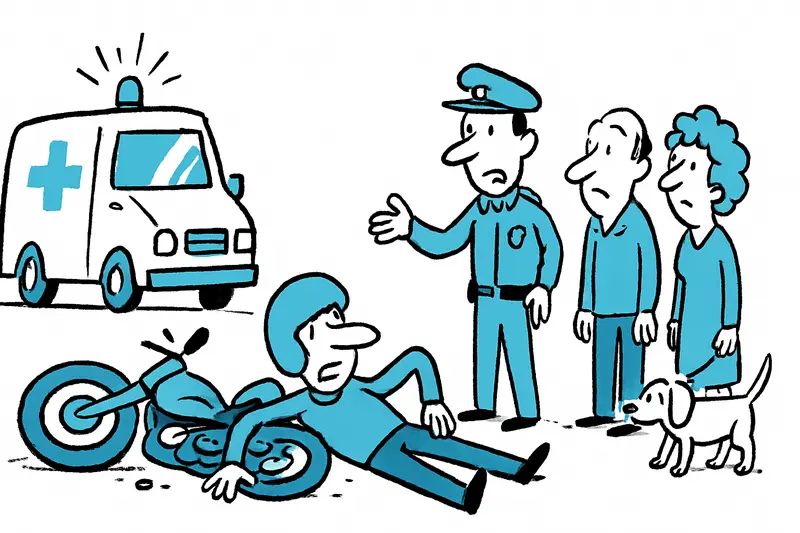
In the night leading into Friday at around 22:15, a 48-year-old motorcyclist lost control of his vehicle on the Ma‑1 near Portals Nous. Ambulances and the traffic unit of the Guardia Civil arrived quickly. The man was wearing an open-face jet helmet, which apparently came off during the fall; he struck the road with his face. Emergency teams treated him at the scene and then transported him in very critical condition to Son Espases University Hospital. According to the mission report: several fractured vertebrae and a brain hemorrhage.
The facts are sparse, but they suggest a troubling pattern: the Ma‑1 at Portals Nous is characterized by a marked gradient, steep bends and often reduced visibility at night. On this stretch tourists, locals and groups of sport-oriented motorcyclists meet. A rapid descent, a moment of inattention or a misjudgement of speed appear sufficient here for a ride to end in a hospital case.
Critical analysis
Accidents like this bring several layers into collision: individual decisions (type of helmet, speed, riding style), vehicle-technical factors (brakes, tires) and the road itself (gradient, surface, lighting). The reports indicate that the helmet was ripped off the head. That alone does not fully answer the question about protective performance — but it does point to the real limits of open-face helmets in severe impacts. The location near km 9 suggests the downhill section played a role. Another point: how good is the nighttime illumination, are warning signs sufficient and do road markings, rumble strips and guardrails function properly?
What is missing from the public discourse
The debate often focuses on assigning blame or on spectacular images. Infrastructure is hardly discussed: inadequate signage before steep descents, missing or insufficient rumble strips before bends, aged asphalt, poor reflective markings and whether night traffic on this road should be regulated differently. Also underrepresented is communication aimed at tourists and foreign motorcyclists: safety information is not always available in understandable languages, and regional awareness campaigns do not necessarily reach those who are only passing through for a short time.
Everyday scene from Mallorca
Imagine Portals Nous on such a night: the last tapas tables are being cleared away, the water in the marina laps quietly against the quay, a cleaning machine rattles along the promenade. Suddenly the shrill howl of sirens cuts through the calm; blue lights reflect in the portholes of the permanently moored boats. Residents step out of their flats and speak quietly about the accident while an older couple holds back their small dog. This is the everyday contrast: holiday scenery and serious accidents lie close together here.
Concrete approaches
- Short term: visible warning signs before steep sections, additional reflective road markings and rumble strips at danger points; mobile speed detectors and increased checks by the Guardia Civil on particularly critical nights or weekends.
- Medium term: investments in the road surface and in night lighting at key locations; installation of protective barriers that reduce the risk of secondary injuries in a crash.
- Prevention: multilingual awareness campaigns for motorcyclists visiting Mallorca; cooperation with hotels, rental stations and motorcycle clubs to promote safety checks (tires, brakes, helmet fastening) before longer tours.
- Training: refresher offers for recreational riders to practice downhill and cornering risks. Publicly funded courses could be offered especially in the early season.
What the authorities could do now
Responsible bodies could set up temporary measurement points to record actual speeds and publish these data transparently. This would show whether certain sections are systematically ridden too fast. Accident clusters should also be openly published so that priorities for maintenance and measures can be set.
Pointed conclusion
The fall at km 9 is more than an isolated case: it points to an interplay of human, machine and road that exists in many places on Mallorca. What would help are fewer outraged reactions and more data, targeted infrastructure work and practical prevention for those who travel here with horsepower and speed. Otherwise, after every flashing light the same question remains: Could we have prevented this?
Frequently asked questions
What safety factors should motorcyclists consider on Mallorca’s Ma-1 near Portals Nous at night?
What concrete measures could improve safety on Mallorca’s Ma-1 near Portals Nous?
Why is night driving on Mallorca’s downhill roads especially risky for motorcyclists?
How does helmet choice affect outcomes in motorcycle crashes on Mallorca?
What practical steps can visitors take to stay safe on Mallorca’s motorcycle routes?
What road features on Mallorca's Ma-1 could help or hinder night riders?
What should authorities publish to improve motorcycle safety on Mallorca?
How does the Portals Nous crash reflect wider safety challenges for Mallorca's motorcyclists?
Similar News
Rent explosion in the Balearic Islands: Why prices rose so sharply between 2020 and 2025
New data from the Observatori show: the average rent for new contracts in the Balearic Islands was €1,390 in 2025 — almo...
First Day, First Consequences: What Palma's Rent Freeze Really Means
A new decree stops a planned eviction in Palma — but what really changes for tenants and landlords? A reality check with...
When Housing Becomes a Matter of Survival: Mallorca Between Rental Frenzy and Everyday Life
The case of 87-year-old Maricarmen showed that on Mallorca many people's lives are poised between affordable and uninhab...
Autumn in Mallorca: When Melancholy Gets a Window
Why autumn quietly tightens here — and how to make use of the mood: walks, culture, candles and the light from Palma to ...
Near-miss on Lanzarote: Landing Ryanair Jet and Iberia Takeoff — what really went wrong
On Lanzarote there was a dangerous incident: A Ryanair flight (FR5910) from Dublin landed on runway 03 while an Iberia E...
More to explore
Discover more interesting content

Can Cap de Bou

Townhouse Lleo 72
