
Near catastrophe at Valldemossa: Bus overtakes cycling group despite oncoming bus
Near catastrophe at Valldemossa: Bus overtakes cycling group despite oncoming bus
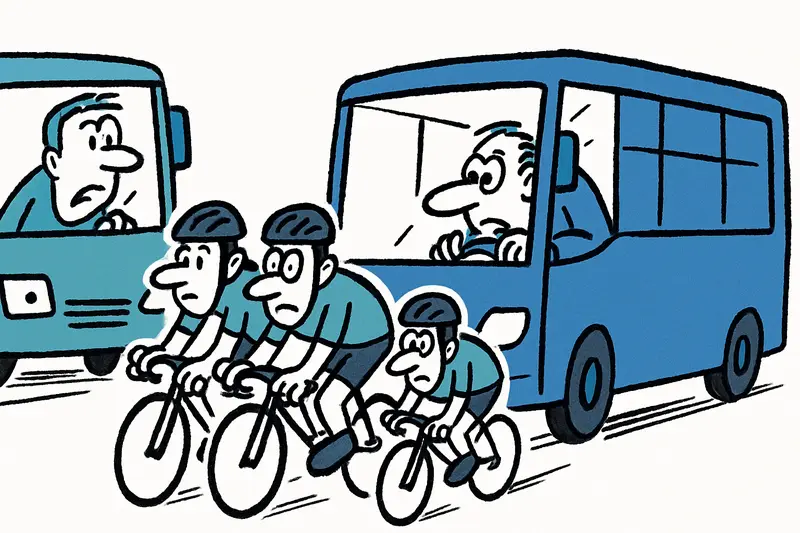
A TIB bus overtook a group of road cyclists on the road to Valldemossa near the UIB despite an approaching coach. The required 1.5-meter minimum distance was reportedly not observed. No one was injured, but the near-miss raises questions about infrastructure, enforcement and driver training.
Near catastrophe at Valldemossa: Bus overtakes cycling group despite oncoming bus
Key question
How safe are groups of road cyclists on Mallorca's popular training routes when a public bus becomes a risk?
On Tuesday a video was recorded of an overtaking maneuver on the country road toward Valldemossa, near the University of the Balearic Islands (UIB). What can be seen is: a closed training group, apparently riding two abreast, a TIB public transport bus passing them, and on the opposite lane another coach already within sight. According to the rider who shared the clip, the legally required minimum distance of 1.5 meters was not respected. No one was injured – but that does not make the incident any less serious.
In short: a near-accident at speed. The sound of the bus diesel, the crunch of tires on the shoulder, the clicking of derailleurs – they all come together here. On an otherwise calm spring ride, with 23 degrees in Palma and light cloud cover, a moment of inattention is enough to turn routine into danger.
Critical analysis
At first glance two behaviors clash: the urge of motorized vehicles to overtake and the need of cycling groups to use the road. Behind this lie concrete weaknesses:
- Road cross-section and bottlenecks: Many country roads toward the Serra de Tramuntana are narrow, with little or no protected shoulder. A public bus needs considerably more space than a car; if the road offers no escape zone, conflict arises. Similar narrow-road risks contributed to the MA-10 under scrutiny: Head-on collision between intercity bus and delivery truck near Esporles.
- Schedules and operational pressure: Line buses run on a timetable. If drivers are under time pressure or want to avoid a chain of stops, the temptation to attempt risky overtaking maneuvers increases. This operational pressure has been linked to incidents such as the Dangerous braking maneuver on the Ma-20: When will authorities finally act effectively?.
- Enforcement and sanctions: A minimum distance of 1.5 meters is mandated. Yet practical enforcement is largely lacking. Without visible controls, some road users treat the rules as optional.
- Lack of dialogue: There is little structured exchange between cycling clubs, public transport operators and municipalities about which roads are particularly conflict-prone at training times.
What's missing from the public debate
The debate often narrows to blame: who was there first, who was inconsiderate? Much rarer is a discussion of systemic issues. Reliable figures on so-called near-misses are missing. There are hardly any maps showing priority corridors where many groups ride in the mornings. And there is no concrete plan for how public transport operators could adapt their driving to cyclist-friendly times.
Everyday scene from Mallorca
Imagine a Tuesday morning: dozens of road bikes roll down the hill from the UIB car park, the clicks of cleats, a chat here, a passing greeting there. On the other side, a TIB bus approaches, the air conditioning humming, the radio playing softly. No barrier, no protected lane. A second too late to hesitate, and the group must split to give the overtaking vehicle room. A normal training ride can become a police incident within minutes.
Concrete solutions
There are practical measures that could take effect quickly:
- Preventive infrastructure: add simple protected lanes or wider shoulders on heavily used routes. Where structural measures are difficult, a temporary lane marking plan can help.
- Driver assistance in buses: buses could be equipped with acoustic warnings that alert when initiating an overtaking maneuver near cyclists. Rear and side cameras with bicycle detection would also help.
- Deployment planning and driver training: TIB and other operators should include overtaking rules in mandatory refresher courses. Awareness of local training times would reduce risky maneuvers.
- Controls and visibility: mobile checks at known hotspots, better signage reminding drivers of the 1.5-meter rule, and multilingual awareness campaigns for visitors and locals.
- Near-miss reporting system: a simple app or online platform for cyclists to report dangerous encounters. Aggregated data would show where concrete measures are needed.
Conclusion
The incident at the UIB was not an accident but a symptom: Mallorca needs a mix of infrastructure, driver training, rule enforcement and better planning. The fault lies neither solely with the bus nor solely with the cycling group. It is a systemic problem that could have far worse consequences next time. If we only react with outrage without acting, island cycling will remain more dangerous than it needs to be.
Note to authorities and TIB: map the location, trial a protected lane solution there, deploy targeted controls – and report the results. The people who roll down the coast every morning deserve safe roads. And bus passengers deserve to arrive safely without endangering others. These measures are underscored by past incidents like the Accident near Valldemossa — A wake-up call for the Tramuntana country roads.
Frequently asked questions
Are cyclists safe on Mallorca's country roads near Valldemossa?
What is the minimum passing distance for cars and buses when overtaking cyclists in Mallorca?
Why are Mallorca's roads so difficult for cycling groups and buses to share?
When is the best time to cycle in Mallorca to avoid heavy traffic?
What should road cyclists in Mallorca do when a bus needs to overtake?
What can TIB buses do to reduce dangerous overtaking near cyclists in Mallorca?
Is Valldemossa a popular route for road cyclists in Mallorca?
What can Mallorca do to make dangerous near-misses between buses and cyclists less common?
Similar News
More water than last year: Mallorca's reservoirs breathe easier
September rain refilled the Tramuntana's reserves: overall fill around 35 percent, Cúber at 40.42 percent, Gorg Blau at ...

Three Luxury Hotels in Banyalbufar: Lots of Money, Many Questions
A Danish investor plans three exclusive accommodations in Banyalbufar — including the historic Son Valentí. The announce...
2.1 tonnes of cocaine on sailing yacht off Spain's coast – a reality check for the coastguard
A 14-metre yacht was seized with 2.1 tonnes of cocaine. Who monitors the ports, how does the international hunt succeed ...

Heat Bonus in Mallorca: 100 Euros Extra for Outdoor Staff at MarSenses
MarSenses pays employees who worked outdoors in August an extra €100 as recognition. Lighter uniforms, reduced hours for...
Renovating in Mallorca: What You Really Can Do Without Neighbour Consent
Many think they can do whatever they want in their apartment. That's partly true — but only as long as structural elemen...
More to explore
Discover more interesting content

Can Cap de Bou

Townhouse Lleo 72
