
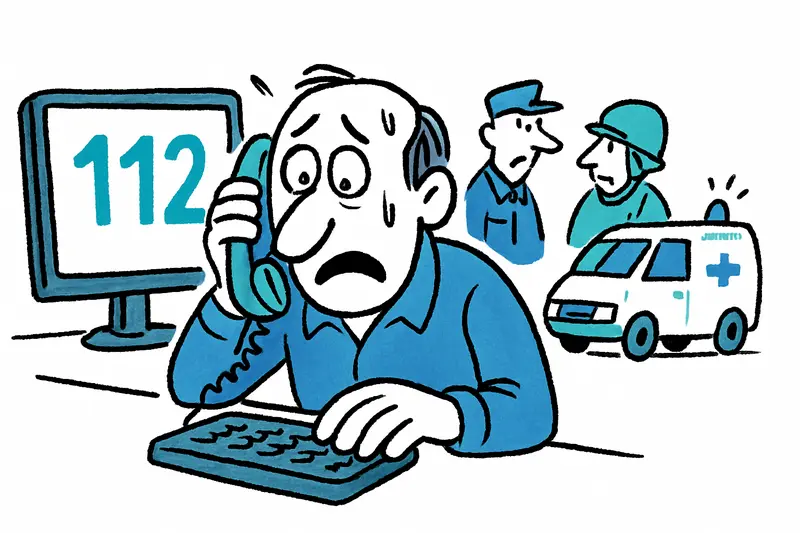
New Year's Eve on the Balearic Islands: Almost 1,000 Emergency Calls, 135 Deployments — Is the System Sufficient?
New Year's Eve on the Balearic Islands: Almost 1,000 Emergency Calls, 135 Deployments — Is the System Sufficient?
Almost 990 emergency calls and 135 deployments on New Year's Eve — 112 deployments on Mallorca alone, most in Palma. A reality check: why such nights overload emergency services and which practical steps could help now.
Almost 990 emergency calls, 135 deployments: The New Year's Eve that tested the emergency services
On New Year's Eve night nearly 990 calls were received by the 112 emergency call center across the Balearic Islands; the context is explored in Emergency in the Balearic Islands: Between Rapid Aid and Open Questions; in total responders were dispatched 135 times. On Mallorca 112 of those deployments occurred, most in Palma. The spectrum: fights, alcohol poisoning, traffic accidents — the familiar accompaniments of large celebrations.
Key question
Are the structures of ambulance services, police and municipal organisations sufficient to handle such nights safely and orderly — or are they pushed close to their limits year after year?
Critical analysis
The raw numbers say it all: almost 1,000 incoming calls, 135 deployments. The ratio shows that many reports do not necessarily lead to a mobile deployment — yet they tie up telephone capacity, reflected in Hospital hotline crippled: Why appointment scheduling on the Balearic Islands is failing, dispatch centre staff and decision-making resources. That most deployments are recorded in Palma is no surprise: crowds, public squares and traffic concentrate there. But the challenge is systemic: short-term peaks demand more than merely available vehicles. Crucial are fast triage at the emergency call, sufficient staff at dispatch centres, coordinated on-site organisation and flexible transport capacities to hospitals.
The problem is particularly evident with alcohol poisonings and altercations. Both categories generate medical, police and logistical steps — from first contact to handover at hospitals or return to the care of friends. Traffic accidents on New Year's Eve often follow predictable patterns: increased speed, reduced visibility, combined with alcohol consumption. This should not be seen only as an individual choice but also as a consequence of lacking safe alternatives at night.
What is missing from the public discourse
The debate quickly focuses on blame: bans, tougher controls, harsher penalties. That is too narrow. Concrete, pragmatic proposals for managing night-time peaks without stifling the festive mood are often missing. Also rarely discussed are simple organisational measures: temporary medical posts at known party locations, extended night bus services, coordinated information campaigns about personal responsibility and recognizing alcohol poisoning.
An everyday scene from Palma
Imagine Plaça Major around 1 a.m.: the smell of smoking areas mixes with the residue of fireworks; a group of young people laugh, two streets away a voice argues, and sirens wail in the distance through the alleys. On the town hall steps a small group of volunteers stands with water bottles and blankets — an improvised aid, not everywhere coordinated infrastructure. I have often seen such scenes in past years: willingness to help on the street, alongside gaps in official provision.
Concrete approaches
- Short-term, recurring medical posts at known party hotspots (temporary tents with paramedics) reduce transports and relieve hospitals.
- Strengthened phone triage: additional trained staff for dispatch centres during peak times to prioritise calls quickly and avoid unnecessary deployments.
- Coordinated night logistics: extended night buses and taxi partnerships so people are less tempted to drive while intoxicated.
- On-site prevention: information booths with clear guidance on recognizing alcohol poisoning and a clear guide on when an emergency call is necessary.
- Better data use: systematic analysis of deployment days, locations and causes to plan resources more targetedly; Balearic statistics provide a starting point for seasonal deployment plans.
- Cooperation with organisers and the hospitality sector: regulated alcohol serving, entry controls and clear emergency routes so rescue teams can work faster on site.
Who pays, who plans?
Many proposals cost money and require cooperation between municipalities, health services and private providers, as shown when Mallorca's emergency crews head to the mainland: solidarity — and open questions. That is inconvenient, but less expensive than recurring overloads of emergency care. Investments in prevention and night infrastructure pay off through fewer deployments, shorter hospital stays and lower follow-up costs from accidents.
Concise conclusion: The New Year's Eve numbers — almost 990 emergency calls, 135 deployments, 112 on Mallorca — are a wake-up call. Not every call means a deployment, but the peak loads reveal structural weaknesses. Those who really want to bring calm to the night must align planning, personnel and prevention. Otherwise the next New Year's Eve will remain a stress test for the same system — and for the people who keep it running.
Frequently asked questions
How busy are emergency services in Mallorca on New Year's Eve?
Why do emergency call centres get so many calls on New Year's Eve in Mallorca?
Is it safe to go out in Palma on New Year's Eve?
What problems do emergency teams deal with most on New Year's Eve in Mallorca?
What should I do in Mallorca if someone has alcohol poisoning?
Are night buses in Mallorca useful for New Year's Eve?
What emergency measures could help Palma during large holiday nights?
Do Mallorca's emergency services need more resources for New Year's Eve?
Similar News
Mistaken identity with fatal consequences: Brutal assault in S'Aranjassa — what's missing in the follow-up?
At S'Aranjassa a visitor to a finca was tied up, beaten and thrown out of a van. Three men have been arrested, including...
High heel slips, car accelerates: accident on Camí de Son Hugo
A woman lost a high-heeled shoe on the forecourt of the sports facility at Camí de Son Hugo. The car accelerated, mounte...
Phone Scam: How Two Hotel Employees at Playa de Palma Lost Thousands of Euros
One morning in September, two reception employees at Playa de Palma were pressured by alleged alarm-company staff — in t...

When the Wallet Becomes a Danger: Attack in Peguera and Lessons for Mallorca
In Peguera, two women are said to have stolen the wallet from a 75-year-old German couple. When the victim intervened, t...
Plata stays Plata: Young people take over, Llonguets remain
A small bar on Carrer de l'Argenteria will continue: Tolo Serra hands the place over to young Mallorcans at the end of t...
More to explore
Discover more interesting content

Can Cap de Bou

Townhouse Lleo 72
