
Nighttime attack on the Paseo Marítimo: Facial bones broken — and many unanswered questions
Nighttime attack on the Paseo Marítimo: Facial bones broken — and many unanswered questions
A 20-year-old man was seriously injured in the early hours on the Paseo Marítimo: chin, jaw and cheekbone broken. The family is seeking witnesses. Why do such incidents happen on a busy promenade?
Nighttime attack on the Paseo Marítimo: Facial bones broken — and many unanswered questions
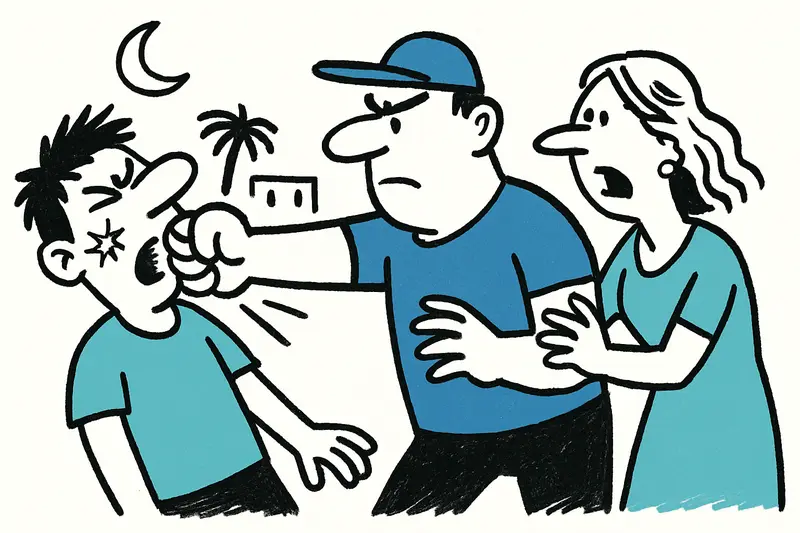
In the early hours of a Saturday, a 20-year-old Mallorcan at the Paseo Marítimo was so severely injured that he required facial reconstruction. According to the information gathered at the scene, the victim and a friend had been sitting in a bar on Avinguda Gabriel Roca and decided around three a.m. to move on. Without warning, an unknown man approached from behind and struck him. The chin, jaw and cheekbone were so badly damaged that a hospital stay followed by surgery was necessary; recovery time is estimated at about six weeks, including a liquid diet.
Key question
How safe is the Paseo Marítimo at night if people are being seriously injured in public without reason and the search for the perpetrator has to rely on the public?
A few facts are clear: the attack happened around three in the morning; the victim is 20 years old; the alleged attacker is said to have been an approximately 30-year-old Spanish man of strong build, accompanied by a group including a woman who apparently tried to restrain the man. After the act, the suspect took off his white T-shirt and left with the group. The victim's family filed a report and is asking the public for information. These are the visible points. Much else is missing.
Viewed critically, the incident reveals several problems that are becoming more frequent: First, the density of people, establishments and tourists on the Paseo makes the place lively at night — louder and quickly confusing. Second, the presence of security forces and technical surveillance — cameras, lighting, fast response chains — is not publicly documented. Third, the role of the local hospitality industry and bouncers is rarely transparent: How are conflicts defused before they escalate? Fourth, aftercare for victims: Who helps with the return to life when the injury cuts so deep physically and psychologically?
What is missing in the public discourse are concrete figures. How many physical assaults are registered here each year, how many lead to severe facial injuries? What measures has the city of Palma planned for the hours after midnight? And: how quickly do emergency services reach a wounded young man from the Paseo if he first goes home alone and only later goes to hospital? Without these data, the discussion remains imprecise and emotional rather than targeted. Technology used in other investigations, such as the Playa de Palma at Night: Phone Tracking Catches Suspect — But What Does It Say About Our Safety?, could be part of that discussion.
A small everyday scene: On a February morning at the Paseo Marítimo you see the same things every Mallorcan knows — fishing boats still rocking in the harbor, the smell of the sea in the air, calls for taxis, occasional cleaning vehicles clearing the traces of the night. During the day retirees sit on benches, in the evening groups of young people gather outside clubs. This mix makes the place special but also creates friction. When someone strikes for no apparent reason at three in the morning, it hits not just the victim; it hits a whole neighborhood that expects calm and reliability. Sometimes hazards and late-night chaos lead to very different incidents, as in the Nighttime accident on the Paseo Marítimo: alcohol, a tripping hazard and many questions.
Concrete practical solutions that could work locally: better lighting of dark sections of the Paseo; targeted police presence during the night hours, visible and approachable; more video cameras at the entrances and exits of hotspots, combined with clear rules for storage and access; mandatory de-escalation training for bouncers and staff in venues along Avinguda Gabriel Roca; a reporting channel for witnesses that is simple, anonymous and available in German/Spanish; and an information point for victims that coordinates psychosocial help, legal advice and medical aftercare. Important: measures must be verifiable, not just announced.
A pragmatic step the city could take in the short term: an information campaign urging residents and night-time visitors to report suspicious activity — combined with clear advice on how to behave in an emergency (safe routes home, immediate emergency calls, meeting points). In the medium term, a partnership is needed between city hall, the police, the hospitality industry and neighborhood representatives so that prevention, not just reaction, is created.
In conclusion: The injury of this young man is more than an isolated case. Together with other serious incidents, such as the Fatal Accident on the Paseo Marítimo: Trial Raises Questions About Safety and Control, it is a wake-up call for Palma. Those who walk the Paseo at night want to see the harbor lights, not feel fear at their back. The island has the means to make the promenade safer. What matters now is consistency — visible patrols, functioning technology and people who look instead of look away. And anyone who saw something should report it; sometimes a witness tip decides investigations and whether someone can laugh again without pain in the face. Incidents of rising tension have been documented in nearby nightlife areas as well, for example the Brawl at Playa de Palma: Why a verbal exchange could have ended fatally, underscoring the need for coordinated prevention.
Frequently asked questions
Is the Paseo Marítimo in Palma safe at night?
What should you do if you witness an assault in Mallorca at night?
Why can the Paseo Marítimo feel risky late at night?
What kind of injuries can happen in a sudden street attack?
How long does recovery take after facial reconstruction?
What safety measures could help on Palma’s Paseo Marítimo at night?
Where can victims of violence in Palma get help after an attack?
What details matter most when reporting a suspect in Mallorca?
Similar News
Magaluf: Watchtower Alarm – Lifeguards Pull Unconscious Beachgoer from the Water
After a drama in the late afternoon, two lifeguards at Magaluf beach rescued an unconscious 44-year-old man. He was stab...
Turquoise in the City: How dangerous is the color play of the Sa Riera?
The Sa Riera in Palma suddenly turned turquoise — a pretty motif, but behind the effect lies a discharge of saline waste...

Jeckliner at Sunnesching: Cologne spirit sets sail from Palma
In September 2027 the Mein Schiff 2 briefly becomes a floating carnival stage: four days with Cologne bands, comedy and ...
Finally Home: Mike and Leyla Heiter Buy Villa with Sea View in Mallorca
The reality TV couple Mike and Leyla Heiter have bought a house in Mallorca with a roof terrace and sea view. An Instagr...
Arrest after series in Palma: Who protects apartments from repeat offenders?
The National Police arrested a man in Palma who investigators say may have broken into several apartments. In one incide...
More to explore
Discover more interesting content

Can Cap de Bou

Townhouse Lleo 72
