
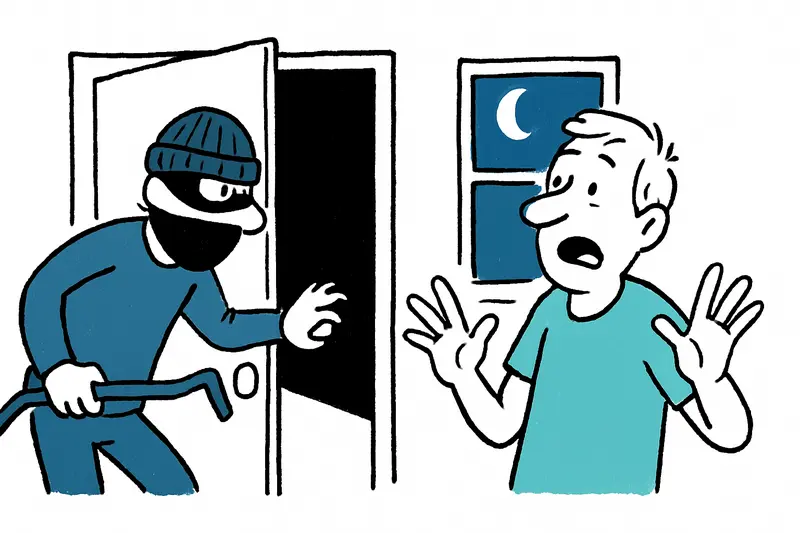
How safe are our homes? The nighttime attack in Alcúdia and lessons for the old town
An assault at the end of August shook Alcúdia's old town awake: a 37-year-old neighbor was arrested. What does this mean for safety in the narrow streets, and which measures actually help?
Fear and questions after a loud summer evening
At the end of August something broke the usual calm of Alcúdia's old town: a woman woke in the night and suddenly found an intruder at her bedside. According to witnesses, the man threatened her, apparently attempted a sexual assault, took personal items and fled when the woman drew attention by screaming. Shortly afterwards the Guardia Civil arrested a 37-year-old man in the neighborhood; personal items belonging to the woman were found during a search. Related reports include Severely injured in Port d'Alcúdia: When life explodes behind closed doors, Nighttime Attack on the Paseo Marítimo: How Safe Is Palma’s Party Mile Really? and Watch theft in Palma's Old Town: Escape ends in Barcelona – How safe are our streets?.
The next morning, in the regular café at the Plaça, conversations were quiet. The church clock struck nine, a cup clinked somewhere — and in between a simple question: How could this happen, in the middle of the narrow alleys, in a house people thought they knew?
The central question: How close can danger come?
The central, most uncomfortable question is: How did someone gain unnoticed access to a private space that was apparently close enough to the victim to get inside? In old town houses it is normal to have trapas, open front doors and windows left ajar on warm nights. Who lives next to us — and how well do we really know them?
The phenomenon has several facets: high turnover because of short-term rentals, streets where people only exchange quick greetings, and tenants who hardly put down roots. Such social fractures reduce mutual vigilance. And this is a point often overlooked in discussions: danger does not always come from outside, it can sit right next door.
Investigations, care and gaps in the system
The Guardia Civil (Pollença-Alcúdia post) took over evidence collection and victim support. Official reports speak of physical injuries and considerable psychological distress. First medical aid is important — but after that the real problem begins: often fragmented aftercare.
Victims of sexualized violence need rapid, coordinated support: medical care, initial psychological assistance, social support and legal advice. On Mallorca such clearly networked procedures are sometimes lacking — affected people are bounced between health centers, police and counseling services.
Three often underestimated causes
1. Structural weaknesses: Many old-town houses evolved over centuries; modern locking systems are often missing, stairwells are poorly lit, and trapas are open. A simple, sturdy door chain or a peephole is not a luxury but an actual prevention measure.
2. Social alienation: Streets with a lot of through-traffic, holiday apartments and changing tenants create anonymity. If people do not know each other, they notice unusual things less. A short conversation on the Plaça, a look out of the window at the right time, a neighborhood WhatsApp — social cohesion can help to spot dangers early.
3. Lack of coordinated victim support: Many victims report that after leaving the clinic the referral to psychological and legal services stalls. A quick, clear advisory pathway is often missing.
Concrete, immediately implementable steps
The problem is not solely a police matter: it is municipal, architectural and social. Practical measures could have quick effects:
- Visible presence of the Guardia Civil in the evenings and at night at the key points of the old town — not just patrol cars, but foot patrols that are noticeable and speak with residents.
- Strengthen neighborhood networks: Street WhatsApp groups, notices in stairwells, regular meetings in the community center or the café can foster social cohesion. Vigilance costs little but pays off.
- Promote structural prevention: Subsidized lock-replacement campaigns for older front doors, information evenings on home security and simple measures such as better external lighting in alleys.
- Better advisory pathway for victims: A central contact point that connects the clinic, police, psychologists and legal advice — accessible around the clock — would remove many hurdles.
What the old town needs now
Alcúdia's old town is small enough that change becomes visible: brighter street lamps, regular foot patrols or a notice with the number of the local Guardia Civil post at the Plaça build trust. No spectacular measures are needed, but a denser network of eyes, better doors and reliable support services.
For the victim what matters most now is time and care. Violence leaves traces that do not disappear with a police report. The task of authorities and neighbors is to ensure that the next night becomes somewhat calmer — without fear, but with more attention.
The Guardia Civil asks witnesses of the evening of August 30 to come forward. Even small observations can be decisive. And for the people in the old town the message is: look instead of looking away.
Frequently asked questions
Is it safe to leave windows or doors open at night in Mallorca's old towns?
What should residents in Mallorca do after a home invasion or assault?
Are old town houses in Mallorca more vulnerable to break-ins?
What can neighbors in Mallorca do to improve safety in their street?
What happened in Alcúdia's old town?
How safe is Alcúdia old town for residents at night?
What security improvements could help Mallorca's old towns?
Where should witnesses of the Alcúdia attack contact the police?
Similar News

When coercive fines aren't enough: Could holiday rental owners soon face prosecution?
The island administration is stepping up action against unauthorized holiday rentals: high daily coercive fines up to €5...

Palma Airport on an Expansion Course — Who Decides How Much Growth the Island Needs?
Aena and Madrid are planning multi-million euro investments for Son Sant Joan and project higher capacities. Concern is ...
Who Gets Left Out? Why Overbookings Will Hit Many Mallorca Travelers This Summer
On hot check-in days at Son Sant Joan, frustrated travelers pile up. New figures from Reclamador.es show that a large sh...
When the Handyman Came: How an Engagement Ring Disappeared in Mallorca and What It Says About Trust
During a repair in Andratx a highly personal engagement ring went missing — a case that calls not only for punishment bu...
How Burglars Test Fincas in Mallorca — and What You Can Do About It
The Spanish National Police warn of a simple but effective trick: small markings on doors reveal whether a finca is occu...
More to explore
Discover more interesting content

Can Cap de Bou

Townhouse Lleo 72
