
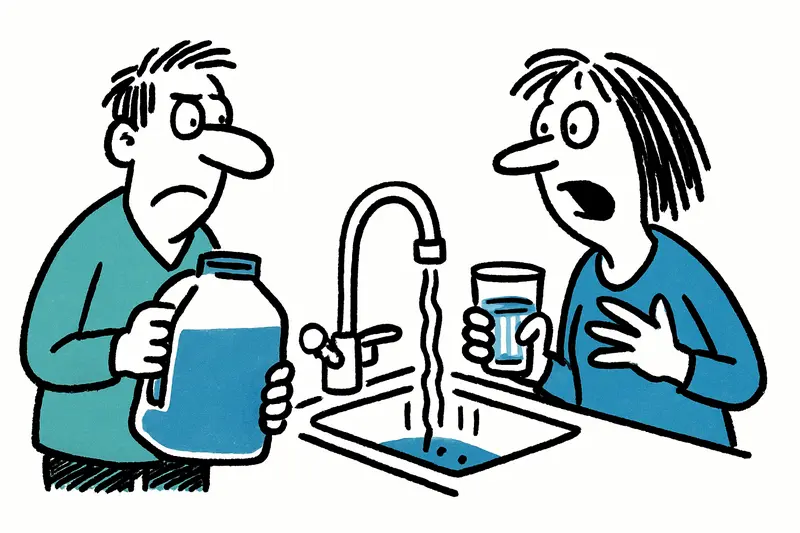
Nitrate alarm in Santa Margalida: Tap water not safe to drink — now what?
Nitrate alarm in Santa Margalida: Tap water not safe to drink — now what?
The municipality of Santa Margalida has declared tap water unsuitable for human consumption due to elevated nitrate levels. Showering and laundry remain possible. What is now missing in managing the crisis? A reality check on site.
Nitrate alarm in Santa Margalida: Tap water not safe to drink — now what?
Key question: Why were residents not reassured earlier, and how can Santa Margalida quickly secure safe drinking water?
In Santa Margalida there is a recent clear restriction: tap water may no longer be used for drinking or cooking. The reason is nitrate levels that exceed the legally permitted limit. The municipality also emphasizes that showering, washing clothes and doing the dishes remain possible and harmless. This combination of prohibition and reassurance creates uncertainty — especially among families with babies and older people.
Critical analysis: The most sober finding first: nitrate in drinking water is not an abstract problem; it can impair oxygen uptake in the blood of infants. Above 50 milligrams per liter this risk increases significantly. The source of nitrate can often be explained on Mallorca: intensive agriculture, slurry runoff, excessive fertilizer use, or poorly protected wells that draw nitrate from the soil. At the local level, private and municipal extraction points are often mixed — a technical and organizational risk.
What is missing from the public discussion: transparency with numbers. Many people want to know: What were the measured values exactly? Which sampling points are affected? How long could the restriction last? Too often general phrases are used instead of publishing concrete measurement data and a timetable. Also missing is a discussion of the long-term causes: Do we need stricter fertilizer rules, larger protection zones around wells, or a monitoring network that publishes results online on a regular basis?
Everyday scene from Santa Margalida: On a mild morning I walk across the square in front of the church. Sellers arrange olives and oranges, an old man fills a plastic jug at the public fountain — an image that feels ordinary until you learn that the tap water is no longer fit to drink. Parents pick up children from school and ask quietly at the bakery, "Can I make the little one a tea today?" Such questions show: information must be not only legally correct but also understandable and practical.
Concrete solution proposals that can take effect immediately: 1) Transparent immediate communication: The municipality should publish the laboratory results with dates and sampling locations online and issue easy-to-understand FAQs. 2) Protection of risk groups: Free supply of bottled water for families with infants, nursing homes and health centers until safe values are proven. 3) Temporary technical measures: deploy mobile treatment units (e.g. reverse osmosis or ion exchangers) at critical extraction points or temporarily replace affected sources with cleaner supply points. 4) Medium term: inspect wells, install a regular monitoring grid, advise farms and use subsidy programs to reduce nitrate. Similar well-related emergencies were described in Water Emergency in Valldemossa: When the Wells Whisper. 5) Transparency about responsibilities: disclose which company operates water extraction and what short-term plans it has.
What the authorities are already doing: The administration says it is checking alternative supply sources and possible treatments (see Sóller Facing a Drinking Water Emergency: Ten Days Until the Crisis?). And a look at the neighboring municipality of Sa Pobla is a reminder that information obligations must be taken seriously: there were also elevated nitrate levels there and proceedings against the municipality because the population was not informed immediately, as documented in Water alarm in Mallorca: Seven municipalities turn off the tap — is saving alone enough?.
Economic and social consequences: Even small municipalities quickly feel the impact. Cafés, restaurants and holiday rental providers must reorganize, procure bottled water, pass additional costs on to customers or bear them themselves. For farmers, follow-up investigations could mean restrictions if their practices are identified as the cause.
A technical perspective: Nitrate can be reduced fairly well with the right investments. Local water utilities can use technologies such as reverse osmosis, ion exchange or strategic blending of sources. Such systems are not cheap and require maintenance. Therefore prevention is important: protecting catchment areas, controlling fertilizer application and clear regulations to protect municipal wells.
My appeal to the town hall and administration: Speak plainly. Publish measurements, provide a provisional timetable and set up contact points — by phone and on-site at the town hall market. Distribute water to households with babies and to care facilities. And immediately check which technical and organizational measures can be implemented within weeks.
Concise conclusion: Nitrate in water is manageable if it is taken seriously. Panic helps no one; concealment makes everything worse. Santa Margalida now stands at a turning point: with clear information, short-term relief measures and targeted technical upgrades, trust in the public water supply can be restored. The question remains whether the administration, operators and agriculture will now feel enough pressure to address the causes sustainably — or whether we will hear similar reports again in the coming months.
Frequently asked questions
Can you drink tap water in Santa Margalida right now?
Why is the water in Santa Margalida unsafe to drink?
Is it still safe to shower or do laundry in Santa Margalida?
Why is nitrate in drinking water a concern for babies?
What should families in Santa Margalida do until the water is safe again?
How can Mallorca reduce nitrate in municipal water supplies?
Will Santa Margalida publish the water test results?
How long could the Santa Margalida tap water restriction last?
Similar News
Bomb threat before Jet2 flight in Tenerife: A reality check for security protocols
A passenger reported a bomb in luggage shortly before departure in Tenerife. Evacuation, baggage checks, delays — and ma...
Who is stripping Mallorca's coast bare? Why entire slopes are being removed for villas
On Mallorca steep slopes are again being removed to make way for luxury construction sites. Who bears the responsibility...

Robber Falls While Fleeing in Sant Agustí: Who Takes Responsibility?
During a purse-snatching in Sant Agustí, a non-commissioned officer chased the suspect; the man jumped from a bridge and...
Bomb threat on board? Why the Tenerife incident concerns us in Mallorca
A passenger on a Jet2 flight from Tenerife to London triggered an evacuation and intensive security checks. The result: ...

More Electric Cars in the Balearic Islands: Sales Rise Sharply
Between January and August, 14,185 vehicles without petrol or diesel propulsion were sold — an increase of more than 40 ...
More to explore
Discover more interesting content

Can Cap de Bou

Townhouse Lleo 72
