
No More 'Just Hop on a Boat': Mallorca, Mandatory Boating License and the Open Questions
No More 'Just Hop on a Boat': Mallorca, Mandatory Boating License and the Open Questions
From October 1, the Balearic Islands will require a boating license for small rental boats under five meters/15 hp. A tragic accident accelerated the reform — but many gaps remain unresolved.
No More 'Just Hop on a Boat': Mallorca, Mandatory Boating License and the Open Questions
Key question: Does the new requirement — that from October 1 small rental boats under five meters and 15 hp may only be handed over to someone with a boating license — really save lives, or does it shift risks without addressing the root causes?
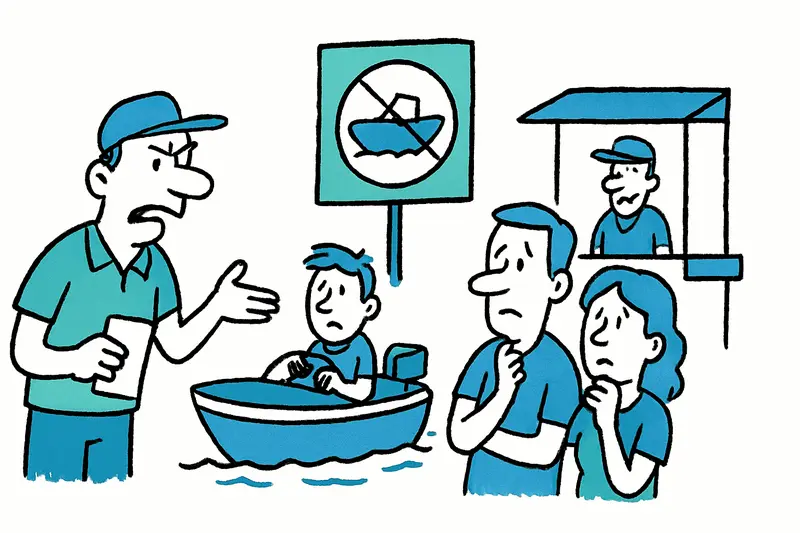
The figures given by authorities are clear: roughly 600 of the approximately 3,500 charter permits registered in the Balearics concern the small vessels affected. The reform did not come out of nowhere. Only a few days ago a rental boat capsized off s'Estanyol; a tourist lost his life. Such events push reforms forward, as reported in Drunk Boats, Battered Bays: When Private Boat Rentals Put Mallorca's Coasts at Risk. At the same time, controls are being tightened: in the first half of August 32 violations were recorded, five of which led to proposed sanctions.
On the pier in Port de Pollença the fishermen sit in the morning, a vendor rattles by with his coffee cart, and at the rental desks holidaymakers often only dream of sun and quick fun on the water. The problem: conditions at sea are capricious - wind shifts, suddenly rising waves, currents and the guardians of the Posidonia meadows, as highlighted in Trouble over license-free boat rentals: When Es Carbó becomes a racetrack. Starting the motor helps little when basic knowledge about navigation, distance to bathing areas or rescue maneuvers is missing.
Critical analysis
Positive: the rule creates a clear minimum requirement that is hard to circumvent. Nevertheless, questions remain. First: how quickly can thousands of potential renters obtain recognized certificates of competence? The testing centers are already busy - around 3,000 people take nautical exams each year, according to officials. Waiting lines for theory and practical tests would further strain the season.
Second: there is unequal treatment between owners and renters: boat owners apparently can continue to operate without a license if they submit a declaration. That raises legal questions about liability and insurance conditions if a boat steered by an uncertified owner causes damage, and it comes at a time when Between Waves and Berth: Mallorca's Problem with 'Floating Holiday Rentals' highlights how private rental frameworks complicate enforcement.
Third: control and enforcement at sea remain difficult. Video analysis and land checks are helpful, but what happens in remote coves on weekends? High summer activity, rapid turnover of tourists and language barriers during safety briefings - these are everyday situations that fines alone will not solve.
What is missing from the public discourse
The debate often revolves around 'more controls' or 'stricter rules'; other issues are hardly discussed: insurance policies, clear chains of liability between lessor and renter, and the capacity for practice-oriented training in multiple languages. Also barely visible are concrete plans on how dangerous hotspots - such as areas with protected Posidonia or narrow entrances - should be monitored permanently and made visible to tourists.
Everyday scene in Mallorca
Imagine Cala de Santanyí on a hot afternoon: children build sandcastles, a scooter boat circles, the boat renter explains the route in German, English and Mallorcan Spanish. In such moments safety is decided not only by legal texts, but by the clarity of the briefing and whether someone on site patiently explains how and where to be rescued. Similar incidents — for example when a catamaran came in too far — underline these tensions, as described in When the Catamaran Came in Too Far: Banyalbufar and the Question of Who Shares Mallorca's Coasts. Such scenes repeat at dozens of locations.
Concrete solutions
- Transitional rule with fast-track courses: short certified online theory (multilingual) plus mandatory practical briefing on site by accredited instructors; testing centers should offer mobile practical days in tourist regions.
- Certificate levels: a simple safety certificate for boats up to 5 m/15 hp, and an advanced license for more complex navigation areas. This reduces testing workload and makes the rules more practical.
- Obligation to provide clear information at check-in: QR codes on the jetty with multilingual videos about life jackets, restricted areas and wind warnings.
- Redesign insurance and liability: lessors must prove that their policies cover operations by drivers without a regular license or must offer supplemental insurance.
- Focused controls where images and reports repeatedly show violations; time-concentrated intensified checks on weekends and in known bathing areas.
Conclusion - pointed
The license requirement for small rental boats is a necessary step, but not a cure-all. It formally raises safety standards - yet without practicable transition models, clear liability rules and tangible multilingual offerings, practice will remain patchy. If we really want to protect lives, Mallorca needs more than bans: transparent rules, reliable on-site training and a realistic implementation that does not abandon the island during the high season. Otherwise the measure risks causing more annoyance than safety - and the people on the pier would notice that immediately.
Frequently asked questions
What is the new boating license rule for small rental boats in Mallorca?
How quickly can renters obtain the required boating certificate in Mallorca?
What are the main concerns about Mallorca's new licensing rule?
How is enforcement being carried out to ensure compliance?
What should I expect at check-in when renting a boat in Mallorca?
How does insurance work with Mallorca's new licensing rule?
Are there safer or designated areas in Mallorca to be mindful of safety restrictions?
What practical training options are proposed to help Mallorca renters learn safely?
Similar News
Golden October: Island pleasures instead of a winter coat – Mallorca stays warm
A late-summer remnant in October: Up to 27 °C, pleasant water temperatures around 22–24 °C and sunny days – ideal for be...

Son Sant Joan Control Center: What Questions Remain When the Island's 'Brain' Relocates
The air traffic control center in Palma manages the airspace over the Balearic Islands. With the planned move to Son Bon...
Son Gotleu under pressure: Why many rental cars were broken into in recent weeks
Residents in Son Gotleu have experienced a series of break-ins of parked cars in recent weeks. A reality check: what is ...
From Jungle Camp to Hotel Stage: Julian F. M. Stoeckel Delights in Camp de Mar
Berlin entertainer Julian F. M. Stoeckel performed two evenings in the atrium of The Camp de Mar Hotel & Resort and prov...
Man hides under bus in Cales de Mallorca: Why did the rescue take so long?
On Passeig Manacor a man stopped a bus, climbed underneath it and caused a traffic jam and a tense police operation. Wha...
More to explore
Discover more interesting content

Can Cap de Bou

Townhouse Lleo 72
