
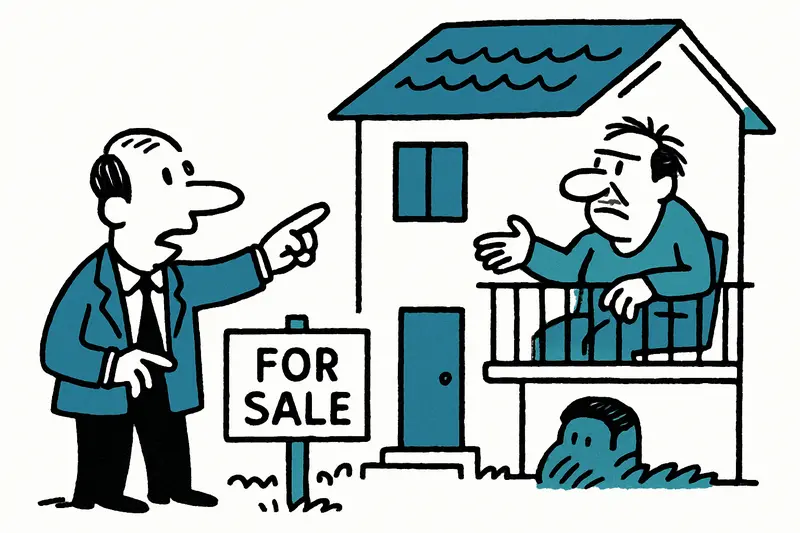
Almost 500 Occupied Homes for Sale: A Problem for Buyers, Neighbors and the Island
Nearly 500 occupied flats and houses in the Balearic Islands are simultaneously listed for sale. What buyers, neighbors and the island need to learn — and which solutions are possible.
Almost 500 listings with more behind the photos and the price
Nearly 500 properties in the Balearic Islands are currently listed as for sale — even though people live in them. At first glance, 1.5 percent of all listings sounds harmless. But when you stroll through Palma's alleys, smell freshly brewed coffee on the plaça and hear the buzzing of scooters, you realise: the problem is real and very tangible locally.
How debts, inheritance and negligence turn into occupations
Often it's a mix of unpaid bills, complicated inheritance issues or an owner who prefers to sell rather than manage a tenancy. Agents report listings where curtains still hang during viewings, boxes stand in the hallway or keys are deposited at a neighbour's house. I was walking through the old town on a Thursday morning and met an agent who dryly said: "You can't tell from the listings until you call."
An island phenomenon with regional differences
The situation varies regionally; for example, reporting on similar pressures in nearby towns can be found in Soller facing housing shortage: When neighbors can no longer find a home. On the Spanish mainland some cities are much more affected; on the Balearics it is mainly Palma and more densely populated neighbourhoods where almost 2.5 percent of listings concern occupied properties. In streets like Carrer Sant Miquel or around the Plaça Major you encounter such cases more often — and that does not leave the neighbourhood unaffected, as explored in When the Neighborhood Gives Way to the Market: Paths Out of Mallorca's Housing Shortage.
What neighbours feel first
Neighbours report less cleanliness in courtyards, more frequent noise at night and a diffuse feeling of insecurity — not only because of individual residents, but because legal grey areas arise. An older man on the Passeig Marítim said laughingly with a hint of irony: "Better to have a coffee first and look, than to fall for surprises." A sentence that fits many viewings.
Risks buyers underestimate
For buyers a jungle of formalities begins: rented flats, lease agreements or occupations without an official tenancy. An eviction lawsuit can take months or years, with additional lawyer fees and uncertainty about the actual ownership situation. It is recommended to involve notaries and lawyers early, check land register extracts (Registro de la Propiedad) and ask for the escritura and any existing tenancy agreements.
Why the statistics don't tell the whole story
Statistically the share is lower than in some mainland cities. However, this is misleading: a single case in a busy old-town flat has more impact on the neighbourhood image than ten empty fincas in the countryside. The figures therefore hide local colour — the whirr of mopeds, the bell chimes in the morning, neighbours chatting at the window.
What is missing from the public debate
There is little discussion about how online platforms, agents and municipalities can work together better. Listings that do not clearly state the occupancy status create unnecessary legal uncertainty. Investigations such as Shadow Market in the Island Paradise: Occupied Houses in Mallorca Sold at Premium Prices document how occupied properties are marketed. The perspective of the residents, who are often in precarious situations, is also missing: not all occupations are criminal; some are an expression of housing shortage.
Concrete solution approaches — pragmatic and local
More transparency in listings would be a first step: mandatory information on occupancy status, existing tenancy agreements and contact details of any caretaker could be required. Platforms could introduce verification tools, agents could assume a duty of care. At the municipal level, mediation centres that mediate between owners, residents and buyers would make sense — instead of relying solely on court proceedings.
Urban development opportunities instead of just problems
The situation also opens up opportunities: municipalities could selectively purchase abandoned or complicatedly occupied properties and convert them into social housing or more flexible interim uses. Such projects would not only create legal certainty but also improve the urban fabric — squares could become livelier, streets safer.
Practical tips for prospective buyers
Anyone looking for a property in the Balearics should be suspicious of very cheap offers. Morning appointments often give a realistic picture because residents are more likely to be at home. Ask to see the land register extract, the escritura and, if applicable, padrón certificates. And: rely on a lawyer's review before closing — it saves nerves and money later.
Conclusion: No reason to panic, but reason to act
Almost 500 occupied properties for sale are not a red alert for the entire island, but they do indicate that we need to be more transparent and pragmatic in some areas. For buyers that means: check carefully. For neighbours: stay vigilant and communicate. For politicians and the real estate sector: clear rules, more mediation offers and bold models for social use could be the best long-term answer.
The next time you stroll through Santa Catalina, you might hear cutlery clinking in a bar, see someone smoking on a balcony and think: behind every facade there is a story — and often some work to be done before a sale can be made legally secure.
Frequently asked questions
Why are some homes for sale in Mallorca still occupied?
What should I check before buying an occupied property in Mallorca?
Are occupied homes in Mallorca risky for buyers?
How common are occupied properties for sale in Mallorca?
Which parts of Palma are most affected by occupied homes for sale?
What problems do neighbours face when a flat in Mallorca is occupied and for sale?
Is a very cheap property in Mallorca always a good deal?
What could Mallorca do to make occupied property sales more transparent?
Similar News

Palma: Car Flips Over – Seniors Rescued, Questions About Traffic Safety
On a major arterial road in Palma, a car flipped onto its roof after a heavy collision. An elderly couple was freed and ...
Calvià opts for style over rowdiness – a plan for year-round, diversified tourism
Calvià wants to shake off Ballermann images by 2030 and boost hiking, sports, culture and gastronomy tourism. Hotels, th...

Autumn Is Coming — When the Rain System Will Cool Mallorca and What We Must Learn
AEMET warns: the chance of rain increases on Thursday and Friday — temperatures will fall. An opportunity to prepare our...

Eurowings in Palma: Expansion, Approval Chaos and the Reality Test for Island Planning
Eurowings is significantly increasing its presence in Palma and is even considering technical maintenance on site. The i...

A.M.Y.: Between Finca, Cornfield and Schoolyard – a 13-Year-Old Who Gets Mallorca Humming
With sunglasses, a rock guitar and the courage to sing over nagging voices: Amy Horber, 13, lives with her family on Mal...
More to explore
Discover more interesting content

Can Cap de Bou

Townhouse Lleo 72
