
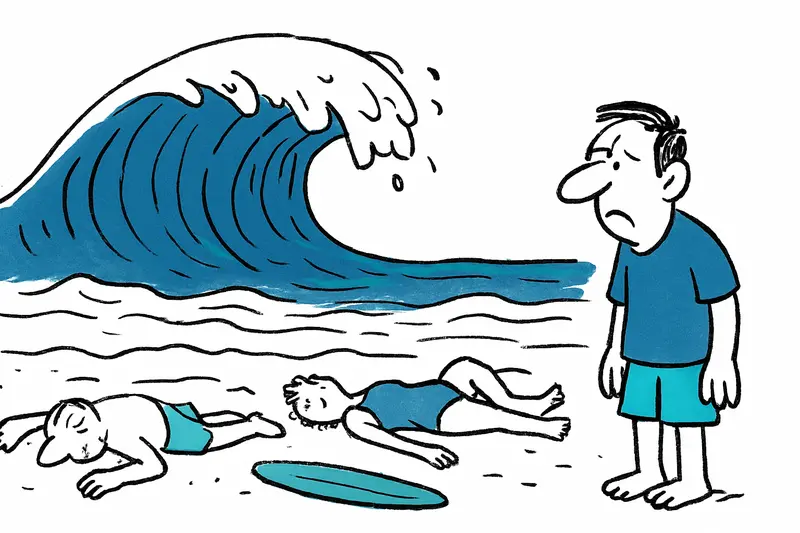
When the Surf Strikes: Deaths in Tenerife – What Mallorca Must Learn
Three deaths in Tenerife remind us of old and new dangers along Mallorca's coasts. Why do people underestimate the surf — and what can the island administration do concretely to protect lives?
When the Surf Strikes: Deaths in Tenerife – What Mallorca Must Learn
The news of the three deaths in Tenerife has weighed heavily on many of us. Anyone who lives on the coast or spends leisure time there knows the dull rumble of the surf, the slap against rocks and the screaming of seagulls on windy days. And yet: too often I see people stepping closer to the edge to get a better photo or to explore a sea grotto, even though the sea is rough. The central question now is: why do we repeatedly walk into this trap voluntarily — and what can municipalities and visitors do to make such tragedies less frequent?
Between Curiosity and Ignorance
The victim lists from the islands show a pattern: it is not only the careless, but often the curious, day trippers and people who misjudge the sea. Memories of Mallorca's own tragedies — from Cala Serena along the east coast to Sa Bassa Blanca — come to mind immediately. The situations are similar: calm spots on rocky shores, sudden high waves that sweep people into the sea in a split second. What is often missing in public debate is the role of modern risk sources: social media, travel guides, or well-meaning tips from others that downplay the danger.
What Is Missing in Prevention?
There are already warning signs and rescue points — but their effectiveness depends on details, as highlighted in a reality check on giant waves and cliff protection. Some signs are too small or only in one language, others are placed where they can easily be overlooked. In the off-season lifeguards are often absent, and many visitors are unaware of the danger. Another problem is the appeal of spectacular photo spots. A stable rock ledge with a sea view is a magnet for selfies; the click is more important than the small note ‘dangerous in rough seas’. So the question is: is information work alone enough, or are visible, structural measures needed?
Concrete Proposals — Pragmatic and Local
Better, universal signage: Pictograms that are understandable without language skills, in several highly visible colors and with reflectors for evening hours. This should be standard on Mallorca, especially at known danger spots such as grottoes, steep cliffs and rocky coves.
Seasonal rescue services and local spotters: Not everywhere needs year-round lifeguards, but in autumn and winter, when the sea turns treacherous, municipalities could set up local spotter teams together with volunteers — fishermen know the currents, young locals know the coves.
Physical barriers and safe viewpoints: At particularly dangerous edges, railings, marked paths and safe platforms from which the spectacle of the surf can be watched without risk help. Yes, that changes the view a little — but it saves lives.
Digital warning chains: A central island app or integration into popular tourist apps could send alerts for storms, high waves or temporary closures directly to smartphones. Hotels, landlords and car rental companies should briefly raise awareness during check-in processes — one minute of information can be decisive.
Education against selfie risks: Campaigns against dangerous photo poses have proven effective in other countries. On Mallorca, local artists, surfers and rescuers could place clear, striking messages together — short, visual and with local humor.
Legal and Organizational Steps
Stricter controls and fines for dangerous behavior in designated closed zones would be an option, but must be weighed carefully so tourism and local life are not overregulated. More important, in my view, is a systematic hazard mapping: a publicly available map with known accident hotspots, currents and safe access routes. This data should be updated regularly and linked with rescue services.
A Mix of Respect and Reason
The fisherman on the corner of our harbor often says: “The sea doesn't lie, it surprises.” This is not a catchy slogan but a warning. We must find the balance between the freedom to enjoy the coast and the responsibility to follow simple rules. That does not mean isolation but smart planning: better information, targeted infrastructure, more presence and a different form of awareness-raising — especially for those who are only visiting briefly.
Our thoughts are with the families of the victims in Tenerife. For everyone who goes to the water tomorrow: watch the waves, heed the flags and stay one step back — often that's enough.
Frequently asked questions
Is it safe to walk close to the sea in Mallorca when the waves are high?
What should I do if I want to visit a rocky cove or sea grotto in Mallorca?
Why do people get into trouble at Mallorca’s coastline even when the spot looks calm?
What is the best time of year to visit Mallorca’s cliffs and rocky beaches safely?
What should I pack for a coastal walk in Mallorca?
Are warning signs at Mallorca beaches and cliffs always easy to understand?
Is it a bad idea to take photos near the sea in Mallorca during rough weather?
What can Mallorca do to prevent accidents on dangerous coastal spots?
Similar News
The End of the Cheap Ride? Why Mallorca Is Hit Harder by the Fuel-Price Shock
Gasoline and diesel average close to two euros per liter. What this means for commuters, supply chains and renters in Ma...
Relaxed liquid rules in Munich: What Mallorca travelers will notice
At Munich Airport the 100-milliliter rule will be lifted at all checkpoint lanes — thanks to new CT scanners passengers ...
For 45 Years on Mallorca — and Then This: How a Market Visit in Santa Ponsa Became a Lesson
A woman who has lived on the island for decades lost money and important documents at the Mercat Setmanal in Santa Ponsa...
10 percent surcharge on the beach: How legal and transparent is the extra charge at Playa de Muro?
A German part-time resident noticed days after a restaurant visit in Playa de Muro that the bill included a flat ten per...
Body near the Llevant Market: What this death says about our city
A man was found dead on Sunday afternoon near the Llevant Market. Police say the death appears natural. The scene raises...
More to explore
Discover more interesting content

Can Cap de Bou

Townhouse Lleo 72
