
Reality check on the coast: Giant waves in Tenerife — who protects people on the cliffs?
Reality check on the coast: Giant waves in Tenerife — who protects people on the cliffs?
Four dead, several injured and one person missing after a giant wave in Los Gigantes. Time for an honest look at warning systems, access to cliffs and the role of authorities, businesses and holidaymakers.
Reality check on the coast: Giant waves in Tenerife — who protects people on the cliffs?
Key question
How could a stretch of coast known as a 'natural swimming pool' near Los Gigantes become the scene of an accident with four fatalities and several injured, even though there had been warnings of high waves beforehand?
Summary
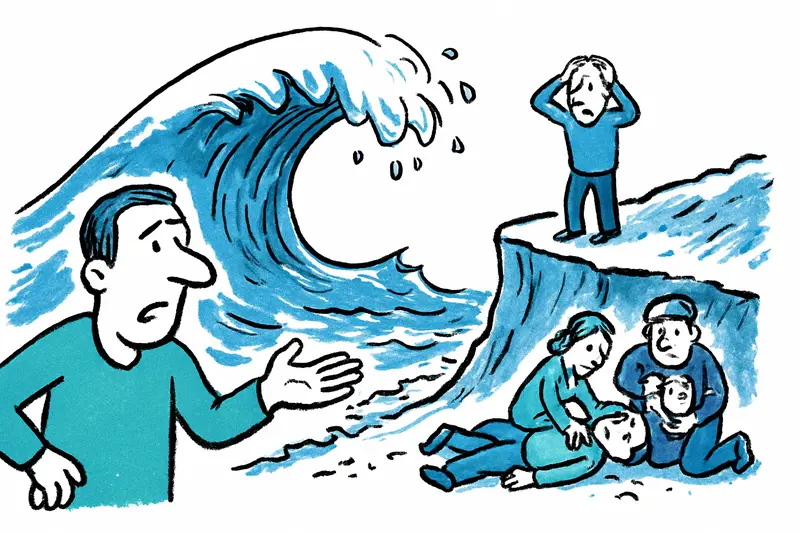
In the incident at the cliffs of Los Gigantes (municipality of Santiago del Teide), several people were swept into the sea by a sudden giant wave. Authorities reported four dead — two men, two women — and three injured; one person was initially reported missing. Among the confirmed victims were a 35-year-old man and a 55-year-old woman. Later reports said another woman died in hospital. Similar cases had already occurred on the Canary Islands shortly before, most recently in early November, when several people were hit by surging waters and there were multiple fatalities, as noted in When the Surf Strikes: Deaths in Tenerife – What Mallorca Must Learn.
Critical analysis
That storm surges and high waves endanger people is not new. The problem lies at the interface between advance warning and actual protection on site. Authorities issue advisories, AEMET wave forecasts, but warnings alone do not prevent accidents. At exposed cliffs like Los Gigantes, where the sea can hit rock ledges with full force from a standing start, there are often only limited physical barriers, sparse signage and no continuous surveillance. Added to this is the mix of locals, photographers and tourists who underestimate the risk — the sea often looks harmless until it suddenly is not.
What's missing in the public debate
First: the language of warnings. Many visitors only skim signs and not all information is available in every language; a red flag on a beach tells little at a rocky promontory. Second: practice instead of tokenism — in some places warning signs are put up but access points remain open. Third: responsibilities are diffuse. Who closes off a coastal section? Who decides to evacuate tourist groups from a cove? These questions rarely appear clearly in the debate, despite local reporting on dangerous cliff behaviour such as When Dares Turn Deadly: Examining Cliff Jumps on Mallorca's East Coast.
An everyday scene from Mallorca
On the Paseo Marítimo in Palma a fisherman sits next to his boat, drinks a café con leche and shakes his head when tourists climb the harbour wall to get the perfect photo. In Portixol residents regularly see people walking by even when warning flags are flying and children being lured to the quay, a reminder captured in reports like Red Flag in Talamanca: When Warnings Fade in the Wind. This is not an accusation aimed only at tourists; some treat the coast as a safe backdrop because the water looks calm today. That behaviour is an echo chamber for the tragedy in Los Gigantes.
Concrete solutions
1) Visible, multilingual warning systems at dangerous spots: Not just signs, but brightly coloured columns that light up automatically at warning levels and provide acoustic alerts. The wording must prescribe action: 'Leave area immediately — life-threatening danger'.
2) Physical barriers at high alert levels: Temporary closures at access points to cliffs and natural pools during periods of high waves. A barrier changes behaviour: people keep their distance and photographers are stopped.
3) Coordination between meteorological services and local authorities: AEMET warning levels should be forwarded automatically to island administrations (Cabildos) and municipalities with clear implementation plans — for example: at warning level X, measures Y are activated.
4) Increased presence and training: More rescue personnel and specially trained coastal wardens who can address people at danger spots and intervene quickly.
5) Information campaigns for tourist centres and landlords: Leaflets, QR codes in apartments, short clips at hotel receptions so guests understand what a red wave warning or a meteorological alert practically means.
6) Technical assistance: Wave-detection sensors, camera monitoring at critical points with live monitoring and automatic alarms, life-saving equipment such as lifebuoys at selected locations.
Why this is feasible
Many of the proposed steps are not life insurance; they are pragmatic and comparatively inexpensive: visible signalling systems, mobile barriers and a tiered activation protocol are logistically feasible. Island administrations and municipalities have budgets and emergency plans; it often comes down to setting priorities and the willingness to temporarily restrict tourist amenities.
Who needs to cooperate?
A functioning solution requires cooperation between AEMET, island councils (Cabildos), municipalities, rescue services, tourism providers and the police. Private actors must also take part: boat rentals, hotels, landlords and tour guides. Without a shared 'if-X-then-Y' scenario, warnings remain defensive and only partly effective.
Pointed conclusion
Four deaths in Los Gigantes are more than a statistic; they remind us that warnings alone are not enough. When we see people in danger on the promenades of Palma or on the cliffs of Sóller, the solution is less panic and more concrete measures: clear signals, barriers, presence and a culture that takes risks seriously — whether people are locals or tourists. Otherwise such tragedies will repeat, and after each disaster we will write the same good intentions on paper.
Frequently asked questions
Why can giant waves be dangerous on Mallorca’s coast even when the sea looks calm?
What should I do if there is a wave warning in Mallorca?
Are natural pools in Mallorca safe during high waves?
What should tourists pack or check before visiting the coast in Mallorca in rough weather?
Why are cliff areas like Los Gigantes so dangerous during big waves?
Who is responsible for closing dangerous coastal areas in Mallorca?
Do red flags at Mallorca beaches also mean danger near cliffs and harbours?
What safety measures could help prevent accidents on Mallorca’s cliffs and rocky shores?
Similar News
Caro Robens: 15 kilograms lighter — and again in the crossfire of online comments
Bodybuilder Caro Robens, who lives in Mallorca, has lost 15 kilograms. Her success on Instagram was met with applause — ...
Meager Industry in Mallorca: How the Island Can Be More Than Just Tourism
The industrial sector in Mallorca is shrinking, productivity is falling and firms remain tiny. The key question: can the...
Pre-Nit de l'Art: Galerie Mensing invites to a special evening with Tom Boston
Before the big art night, Galerie Mensing opens its doors: pop art, champagne, a DJ and a hand-signed print by Tom Bosto...
Sea view and more seats: Cappuccino Grand Café reopens in Port d'Andratx
After a long renovation, the Cappuccino Grand Café on the Port d'Andratx harbor promenade has quietly reopened. Larger t...
Enric Mas wins the Vuelta – a triumph that resonates in Mallorca
Mallorcan Enric Mas has won the 82nd Vuelta — the first Spanish overall victory since 2014. Cyclists and neighbors on Ma...
More to explore
Discover more interesting content

Can Cap de Bou

Townhouse Lleo 72
