
When Chains Snap in Palma: How Safe Are We on Buses?
When Chains Snap in Palma: How Safe Are We on Buses?
Two cases in which a man's gold chains were torn from his neck by passengers in Palma ended with an arrest. A reality check: what do the facts say, where are the everyday problems and which measures would really help?
When Chains Snap in Palma: How Safe Are We on Buses?
Key question: What do residents of Palma need so that a bus ride is not a risk for necklaces, wallets or their personal safety?
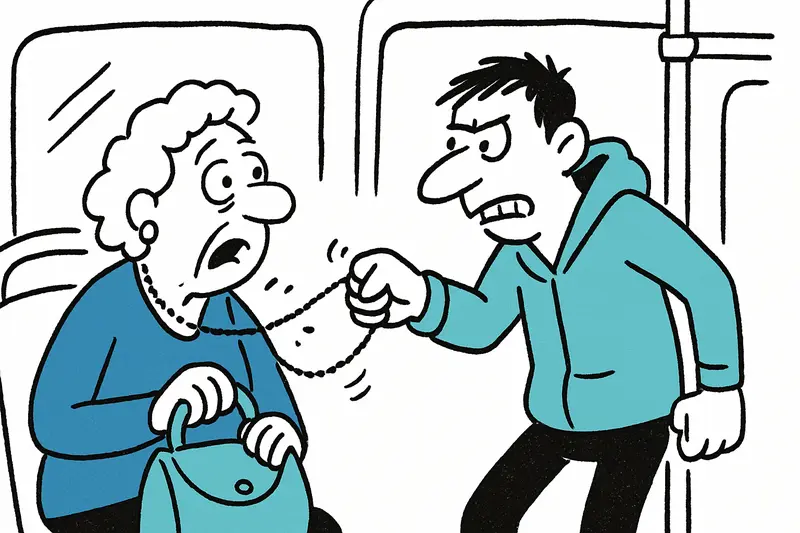
At the end of last year two similar assaults occurred in Palma on buses: an older victim near the stop on Calle Indalecio Prieto lost a gold chain after a sudden tug and suffered injuries; a second man was shortly afterwards robbed of his jewelry on an open line. After months of investigation by the Centro criminal police, investigators were able to identify the suspected perpetrator. He was arrested on March 4 in the Son Gotleu neighborhood.
Those are the hard facts — short, concise, and certainly unsettling for anyone who regularly uses buses and the metro. These incidents show: perpetrators exploit fleeting moments, the crowding when boarding and alighting, brief lapses in attention. For the victims there are not only material losses but also injuries and shock. For the city the question remains why such assaults are possible in the first place.
Critical analysis: facts alone are not enough. We know who was arrested and where the incidents took place. We do not know how quickly reports were filed, whether the buses had video surveillance, or whether certain stops are particularly poorly lit. And we hear nothing about how victims were treated medically or psychologically. In public debate a statement about an arrest often sounds like a final full stop, but it is only an intermediate step.
What is missing from the public discourse is an honest assessment of everyday safety on public transport. There is no overview of which lines are particularly affected, whether reports lead to prompt police intervention, or whether preventive measures are being planned systematically. Lack of transparency unsettles passengers and allows rumours to grow — a luxury a city like Palma cannot afford.
An everyday scene: It is early evening on Calle Indalecio Prieto. The bus arrives, doors open, brakes squeak, people get off — an older man with shopping bags, a mother with a stroller, a woman wearing a fine gold necklace. Next to the stop-post a kiosk from which radio programs in half Spanish, half Mallorcan drift. Moments are enough: a grab, a tug, and the routine journey ends in shock. Such details happen everywhere on the island — at Plaça d'Espanya, on La Rambla or in Son Gotleu, as seen in Crash in Son Gotleu: Five Injured — How Safe Are Palma's Intersections?.
Concrete solutions — not empty promises: First, review interior surveillance on buses and install cameras where they are missing; not a cure-all, but an important deterrent and source of evidence. Second, check lighting and sightlines at stops — dark corners invite not only vandals but also pickpockets. Third, training for drivers: How should I act if someone on the bus is being harassed? How do I call for help quickly? Such measures can be complemented by operational changes highlighted in More Breaks, More Safety: Why Mallorca's Bus Drivers Now Receive Scheduled Break Minutes. Fourth, visible presence: more foot patrols by police at peak times at known hotspots; this signals that assaults will not go unpunished. Fifth, victim support: simple information leaflets at stops, multilingual hotlines and quick medical first aid can reduce both physical injuries and psychological harm.
In all of this, one must not forget: prevention is not solely a police problem. Urban planning, lighting concepts, social work in neighborhoods and a reliable public transport system belong together. Those who wait in Son Gotleu or on the large avenue at boarding zones should be able to rely on safe infrastructure — not just occasional raids. Recent disruptions such as Accident on the Ma-19: Why Palma's Bus Network Collapses on Hot Days also underline the need for a resilient network.
What authorities and operators could deliver concretely: transparent incident statistics by bus line, short intervention times for alarms, clearly visible information points at stops and a review plan for video and emergency call technology in vehicles. A low-threshold reporting system via an app that anonymously records cases and forwards them to the transport operators would also help to detect patterns. Similar robberies have occurred elsewhere, such as Watch theft in Palma's Old Town: Escape ends in Barcelona – How safe are our streets?, reinforcing the need for coordinated measures.
Conclusion: The arrest is right and necessary. But it must not obscure the fact that protection against street and bus crimes requires systemic answers — better lighting, greater visibility, technical aids and care for victims. Otherwise it will remain: short headlines, long worries in passengers' minds. And the golden chain will remain at risk.
Frequently asked questions
Is it safe to use buses in Palma?
What should I do to protect my necklace or valuables on a bus in Mallorca?
Are bus stops in Palma safe in the evening?
What happened with the bus robberies in Palma?
Why are buses and stops in Son Gotleu getting attention for safety?
What safety measures could make Palma buses safer?
What should I do if I’m robbed or harassed on a bus in Mallorca?
Are Mallorca bus passengers being given better support after incidents?
Similar News

More water than last year: Mallorca's reservoirs breathe easier
September rain refilled the Tramuntana's reserves: overall fill around 35 percent, Cúber at 40.42 percent, Gorg Blau at ...
Three Luxury Hotels in Banyalbufar: Lots of Money, Many Questions
A Danish investor plans three exclusive accommodations in Banyalbufar — including the historic Son Valentí. The announce...
2.1 tonnes of cocaine on sailing yacht off Spain's coast – a reality check for the coastguard
A 14-metre yacht was seized with 2.1 tonnes of cocaine. Who monitors the ports, how does the international hunt succeed ...

Heat Bonus in Mallorca: 100 Euros Extra for Outdoor Staff at MarSenses
MarSenses pays employees who worked outdoors in August an extra €100 as recognition. Lighter uniforms, reduced hours for...
Renovating in Mallorca: What You Really Can Do Without Neighbour Consent
Many think they can do whatever they want in their apartment. That's partly true — but only as long as structural elemen...
More to explore
Discover more interesting content

Can Cap de Bou

Townhouse Lleo 72
