
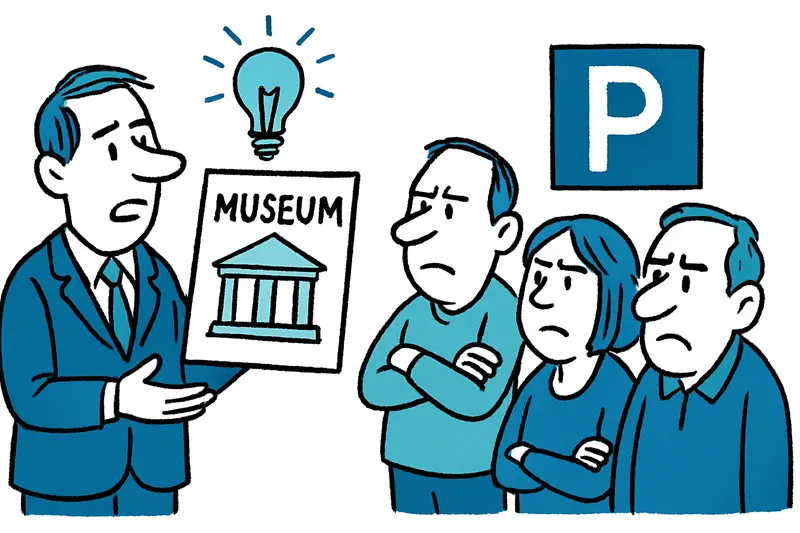
Palma launches ideas competition for the Gesa site — museum concepts versus parking plans
Palma launches ideas competition for the Gesa site — museum concepts versus parking plans
The city of Palma has launched an ideas competition for the area around the Gesa building. A large sum is planned — but who is really asking the residents?
Palma plans major redevelopment around the Gesa building — dispute over parking, cultural space and costs
The news is brief: the city of Palma has launched an ideas competition for the area around the old Gesa building, with a submission deadline in early April and a planning horizon to 2030. The announcement states a total sum of just under €91 million, of which around €40 million is earmarked for the renovation of the distinctive Gesa structure. Planned are also two underground new buildings, a parking garage for about 700 vehicles, more green spaces and the lowering of a roadway towards the Paseo Marítimo. The renovated Gesa building is intended to include new exhibition spaces, among other things.
Guiding question
Guiding question: Does this project truly serve the city's society — or are we mainly saving the car and real estate interests at the expense of public space?
In short: the project sounds ambitious and brings money for culture into play. At the same time, a huge parking garage is on the table and a road lowering that will significantly change the cost picture and traffic flows. Such decisions affect not just facades, but how people move through Palma, where children play and how the experience of accessing the sea at the Paseo Marítimo is preserved.
Critical analysis: the figures are concrete — €91 million, €40 million for Gesa — but they say nothing about how the operating costs for the new facilities will be financed, who will use the parking spaces in the future, or how the redevelopment will change daily traffic loads. A parking garage with 700 spaces attracts drivers into the city center, especially at a time when urban mobility concepts in many places are shifting toward fewer cars and more cycling, buses and walking. Lowering the road may promise short-term relief, but in the long run it can act as a traffic amplifier (known as induced demand).
In addition, the key data lack any mention of climate resilience: how does the project respond to increasingly intense rain events and sea level issues? Underground structures pose particular requirements for sealing and drainage; that can become expensive and is not resolved by the mere construction cost estimate.
What is often missing in public debate: the perspective of residents, the small businesses along the promenade and the people who use the Paseo Marítimo daily. There are no reliable traffic studies, estimates on parking pricing, statements on financing (city budget, grants, private partners?) or binding commitments on the use of the new exhibition spaces — will they remain publicly accessible or mainly be rented out for lucrative special exhibitions?
Everyday scene from Palma: early in the morning an elderly woman sits with her shopping basket on the bench in front of the Gesa building, two young people lock their bicycles to a lamppost, buses and scooters make noise on the Paseo Marítimo, but the air smells of freshly brewed coffee from the kiosk on the corner. For these people it will be decided whether the promenade becomes more open, greener or dominated by cars in future. Months of construction mean noise, detours and fewer parking spaces for the customers of local bakeries — these are not abstract risks, this is everyday life.
Concrete solutions so the competition doesn't plan past reality:
• Instead of 700 parking spaces, provide a mix of short-term parking and significantly more bicycle parking spaces as well as reliable bus connections. Parking can be decentralized (park-and-ride on the outskirts) and the city center designed to be more car-free.
• Allocate public spaces bindingly: one percent of exhibition space reserved for local cultural initiatives, without high rents. Temporary uses during the construction phase (pop-up galleries, weekly markets) protect local providers.
• Examine environmental and climate risks early: disclose flood, groundwater and sealing plans, consider energy concepts with solar/geothermal, prefer sustainable building materials.
• Plan construction phases so that shopping streets are not cut off for months. A transparent schedule, replacement parking and noise-reduction requirements during construction should be part of the competition brief.
• Strengthen participation: neighborhood forums, evening events, digital designs for commenting and a commitment by prizewinners to implement small, early visible improvements (e.g. more trees, footpaths) would build trust.
Conclusion: The idea of opening the Gesa building for culture and creating more green space fits Palma. Criticism is justified because the allocation of huge parking areas and road lowering sets the direction toward more cars instead of more quality of life. If the city takes the competition seriously, it must formulate the conditions so that social use, climate adaptation and the mobility transition take precedence. Otherwise there is a risk of an expensive redevelopment that mainly creates new parking spaces for commuters — and hardly benefits the people who currently live the Paseo daily.
Frequently asked questions
What is Palma planning for the Gesa building area?
How much does the Gesa redevelopment in Palma cost?
Will there be parking at the Gesa site in Palma?
What will the renovated Gesa building be used for?
How could the Gesa project affect traffic on the Paseo Marítimo in Palma?
Why are people criticising Palma’s Gesa redevelopment plan?
Is the Gesa project in Palma taking climate risks into account?
When is the deadline for the Palma Gesa ideas competition?
Similar News

When coercive fines aren't enough: Could holiday rental owners soon face prosecution?
The island administration is stepping up action against unauthorized holiday rentals: high daily coercive fines up to €5...

Palma Airport on an Expansion Course — Who Decides How Much Growth the Island Needs?
Aena and Madrid are planning multi-million euro investments for Son Sant Joan and project higher capacities. Concern is ...

Who Gets Left Out? Why Overbookings Will Hit Many Mallorca Travelers This Summer
On hot check-in days at Son Sant Joan, frustrated travelers pile up. New figures from Reclamador.es show that a large sh...

When the Handyman Came: How an Engagement Ring Disappeared in Mallorca and What It Says About Trust
During a repair in Andratx a highly personal engagement ring went missing — a case that calls not only for punishment bu...

How Burglars Test Fincas in Mallorca — and What You Can Do About It
The Spanish National Police warn of a simple but effective trick: small markings on doors reveal whether a finca is occu...
More to explore
Discover more interesting content

Can Cap de Bou

Townhouse Lleo 72
