
After the Eviction of the Occupied Prison in Palma: A Reality Check
After the Eviction of the Occupied Prison in Palma: A Reality Check
The forced eviction of the long-occupied prison ruin near Ocimax has been carried out. Was the action necessary — and what happens now to the people, the containers by the fire station and the site? A critical look.
After the Eviction of the Occupied Prison in Palma: A Reality Check
Key question: Was the forced eviction necessary — and is the city accompanying the step with clear, accountable solutions?
On Thursday the area of the former detention facility near Ocimax suddenly looked emptier than in recent years. Following a judicial order, the last residents left the site; according to the city more than 80 emergency personnel were involved. Mayor Jaime Martínez described it as a partial victory. Yet between the ruin's fence and the daily bustle of the shopping center there remain a number of unanswered questions.
The short version: The city justifies the action with structural instability, blocked escape routes, and fire and health risks. The administration also provides figures: at times more than 200 people lived there before the procedure began; most recently there were said to be about 70 left; around 45 of them reportedly accepted places in emergency shelters or integration programs. Individual residents were apparently detained because there were deportation orders against them.
That sounds like action taken out of care and for order. Viewed critically, however, another problem emerges: If a municipality allows a building to remain occupied for twelve years and only carries out a forced eviction after many years, it must transparently explain why earlier interventions did not work (another major operation in Son Banya: demolition alone solves nothing) — and above all how short-term emergency aid will be turned into viable mid-term solutions.
Lack of perspective: The city speaks of transfers to emergency shelters and programs for social and professional integration. What has not become clear publicly, however, is: where exactly are these offers located? How long will people remain in emergency shelters? Who guarantees that those with health problems, without papers, or with psychological burdens will not soon end up on the street again? Such details are missing from public statements — and it is precisely here that risks arise for those affected and for the neighborhood.
Another point of contention is the provisional accommodation placed right next to the municipal fire station. Firefighters warn that access routes would be blocked and operational procedures could suffer. This is not bureaucratic bickering: if rescuers are slowed down in an emergency by parked residential containers, everyone's safety is affected. The decision to place containers at this exact spot appears thoughtless and fuels frustration among emergency crews.
What hardly appears in the public debate is a health assessment of the site. Weeks ago there were indications of possible biological risks. A serious risk assessment by independent experts (laboratory tests for pathogens, mold, asbestos and fire load reports) should be published. Only in this way can it be understood whether the eviction was purely precautionary or strictly necessary.
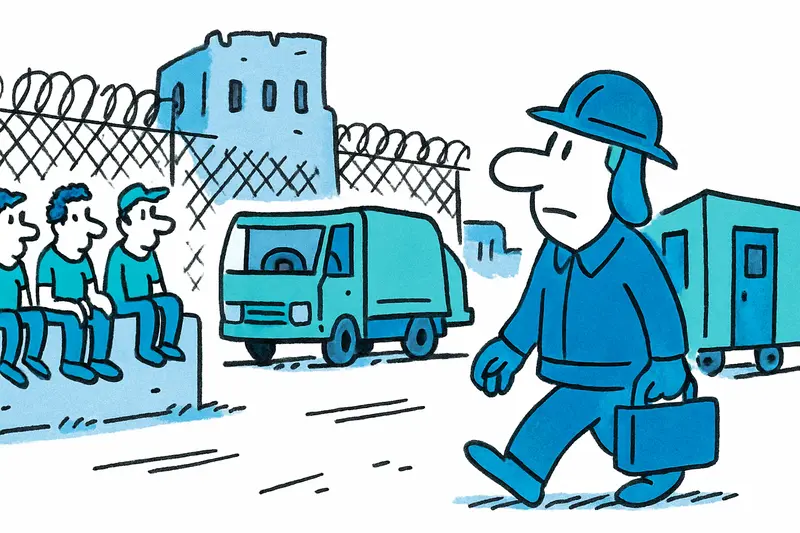
Everyday scene: The morning after the operation delivery vans roll at Ocimax, garbage trucks rumble, a group of teenagers sits on the low wall and looks at the barriers. A firefighter heads to the station, speaking quietly with colleagues about additional alternative routes. The consequences of actions are that close to normal life — and so are the conflicts.
Concrete solutions: First, the city must publish a transparent roadmap: who was taken where, which support services have been promised, how long do they last, and who monitors compliance? Data protection must not be used as a pretext to hide effectiveness and traceability. Second, independent health and safety assessments of the site with published results are needed before decisions on redevelopment or future use are made.
Third: the container issue is solvable, but not at the fire station. Mobile accommodations must be placed so that rescue services can operate without restriction. Fourth: instead of only reacting short-term, the city should make binding commitments for affordable housing — for example by reclassifying municipal land (court confirmation that Son Banya is municipal property), accelerating social housing programs (the escalating housing crisis in Palma) or partnering with NGOs and housing cooperatives for long-term integration.
Practically, this also means: a joint task force with the fire service, urban planning, social services, public health authorities and representatives of those affected. No action without coordinating accompanying measures. And furthermore: a clear signal that proceedings against people with deportation orders are conducted transparently, in accordance with the rule of law and with a humanitarian perspective.
Those who now insist only on the triumph of an emptied ruin overlook three things: the people have not disappeared, the site is still there, and the quarrel between the administration and the fire service shows how little coordinated some of the haste was. This is not an appeal against safety — but for better follow-through.
Conclusion: The forced eviction can be justified for safety reasons. What is decisive now is not the image of empty walls, but what follows. Without clear, verifiable steps for accommodation, health checks, protecting the operational readiness of the fire station and a real prospect of permanent housing, the action remains only a moment, not a result. Palma must not let that be — neither for the people from the former prison nor for the rescuers who stand by us in emergencies.
Frequently asked questions
Why was the occupied former prison in Palma evicted?
What happens to people evicted from the former prison site in Palma?
Is the area around Ocimax in Palma now safe after the eviction?
Why are firefighters in Palma upset about the temporary housing containers?
Was the eviction of the occupied prison in Palma necessary?
What should Mallorca do after the Palma prison eviction?
How long had the former prison in Palma been occupied?
Will the former prison site near Ocimax in Palma be redeveloped?
Similar News
Fear in the Sa Teulera Forest: Youth Groups Harass Cruising Zone in Palma
In the wooded area of Sa Teulera, those affected report verbal attacks, property damage and intimidation. How safe is th...
Axa opens first health center in Palma: €3 million, 650 m² and more local access for La Vileta
In the heart of La Vileta, Axa has opened its first own health center in Mallorca. On around 650 square meters and with ...

30 Years of Nit de l'Art: What Palma's Art Night Really Shows — and Conceals
Nit de l'Art celebrated its thirtieth anniversary: full galleries, young visitors — and the quiet tensions between the a...

Hunt for Older Holidaymakers: Arrests after Suspected Pickpocketing in Port d'Andratx and Bellver
Five suspects were arrested after investigators accuse them of targeted pickpocketing of elderly tourists in Port d'Andr...

Knife stabbing in Magaluf: Why it must not remain an isolated incident
A 21-year-old tourist was stabbed in the chest in Magaluf and is in life-threatening condition. A reality check: what's ...
More to explore
Discover more interesting content

Can Cap de Bou

Townhouse Lleo 72
