
Palma expands ORA zones – who pays the price?
Palma expands ORA zones – who pays the price?
The city significantly expands paid parking zones: from around 12,000 to more than 25,900 spaces. Decision, costs and consequences – a reality check from Palma.
Palma expands ORA zones – who pays the price?
Commission unanimous: parking meters and paid areas grow significantly
Key question: Does the expansion of the ORA zones into more neighborhoods in Palma bring more order – or does it simply shift the parking problem and burden residents and small shops?
The facts are clear: the municipal commission voted unanimously to extend the paid parking areas from the center into several peripheral districts. Affected are Foners, Pere Garau, Plaça de Toros, Bons Aires, Camp Redó, Es Fortí–Serralta, Santa Catalina Nord as well as Son Oliva and Son Fortesa Sud. The number of managed parking spaces thus rises from just under 12,000 to more than 25,900, and the parking meters from 404 to 570. For preparatory work such as markings, signs and meter installation the city expects costs of around 1.36 million euros; the money is included in the operating company's budget planning for 2026. The decision was based on a traffic study that examined occupancy, connections to buses and trains and traffic flows.
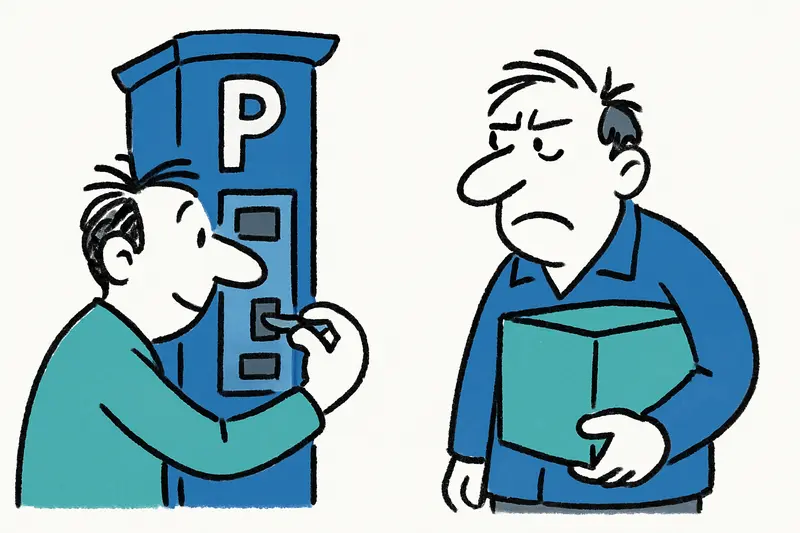
It sounds technical, but feels different in everyday life. Imagine a Saturday morning in Pere Garau: delivery vans manoeuvre in front of the market, people with shopping bags squeeze past, and outside cars make ever tighter rounds in search of a free spot. Exactly there parking meters will be installed more frequently in the future. That brings order for some – and new friction points for others.
Critical analysis: Doubling the number of paid spaces is not a cosmetic change. It is likely to significantly increase the number of paid parking spots, but not automatically reduce parking as the city hopes. If payment is only relocated and not reduced, the risks are: displacement effects into even quieter side streets, additional traffic from search trips and higher burdens for neighborhoods with many elderly people or businesses. Small shops in the affected districts could lose customers who find parking too expensive or too inconvenient. At the same time, the 1.36 million euros are a start-up funding; how ongoing operating costs and revenues will be distributed remains unclear. This is notable as Palma expects lower revenue from parking fines — City relies on towing and ORA expansion.
What is missing from the public debate: transparent figures on the expected tariff structure and special regulations. There is little clarity about whether and how residents, craftsmen, delivery drivers or people with reduced mobility will be eased, despite Palma makes parking digital: No more ORA stickers – opportunities and risks. The traffic study was cited, but the underlying data should be public and comprehensible: occupancy times, measurement points, methodology.
Concrete everyday scene: In the late afternoon along Avinguda d'Antoni Maura you can hear the tram sounds in the distance, at Plaça de Toros taxis wait, and retirees with shopping bags look for a spot in the sun. With parking meters on every corner the pace in the neighborhood changes: faster manoeuvring in and out, more coin or card transactions at the meter, perhaps more enforcement – you feel it on your skin.
Concrete solutions so that the expansion does not become merely a fee distributor:
1) Introduce a staggered transition phase: initially pilot zones with a six-month trial period, reduced rates at the start and feedback cycles with residents and business owners.
2) Clear rules for resident parking permits and craftsman and delivery permits, with digital short-term authorizations for loading and unloading. For example, Palma: Residents can renew parking permits online from today – blue ORA sticker removed.
3) Real-time information: a public map with current occupancy data and planned meter locations to minimize search traffic.
4) Earmarked revenues: a portion of the additional income must be ring-fenced for public transport, secure bicycle parking and improvements to the quality of public spaces in the affected neighborhoods.
5) Barrier-free and easy payment options at the meters as well as minimum free parking times for short errands, so that residents and small traders do not suffer.
Without these accompanying measures the initiative remains primarily a mechanism for expanding fees. The technical upgrade of meters and control software (included in the decision) is important – but technology without social adaptation unravels.
Punchy conclusion: More parking meters do not create a better city by themselves. If the city administration takes the measure seriously, it must now do more than paint markings: transparency, relief rules and a clear plan for the use of revenues are necessary, otherwise in the end it will be the residents, the craftsmen and the small shops who pay – and not the traffic.
Frequently asked questions
What are Palma's ORA parking zones and why are they expanding?
Which areas of Palma are affected by the new ORA parking zones?
Will it be harder to find parking in Palma after the ORA expansion?
How much will Palma's ORA expansion cost the city?
How could the ORA changes affect residents and small shops in Palma?
Are there any plans to help residents and delivery drivers with Palma's new parking rules?
What should I know if I live in Pere Garau or nearby and park on the street in Palma?
What should drivers expect in Santa Catalina Nord once ORA is extended in Palma?
Similar News

Haute Nuit in Puerto Portals: Fashion, Art and Indulgence by the Water
On October 2 the Lobster Club in Puerto Portals will be transformed into a stage for curated fashion, art and culinary e...

Magaluf: Watchtower Alarm – Lifeguards Pull Unconscious Beachgoer from the Water
After a drama in the late afternoon, two lifeguards at Magaluf beach rescued an unconscious 44-year-old man. He was stab...
Turquoise in the City: How dangerous is the color play of the Sa Riera?
The Sa Riera in Palma suddenly turned turquoise — a pretty motif, but behind the effect lies a discharge of saline waste...

Jeckliner at Sunnesching: Cologne spirit sets sail from Palma
In September 2027 the Mein Schiff 2 briefly becomes a floating carnival stage: four days with Cologne bands, comedy and ...
Finally Home: Mike and Leyla Heiter Buy Villa with Sea View in Mallorca
The reality TV couple Mike and Leyla Heiter have bought a house in Mallorca with a roof terrace and sea view. An Instagr...
More to explore
Discover more interesting content

Can Cap de Bou

Townhouse Lleo 72
