
Palma’s new park area in s'Olivera: Good idea, well planned — or just pretty paving?
The newly upgraded La Femu park in s'Olivera has become attractive: a fitness course, table tennis and pétanque. The central question remains: was the €218,000 expenditure the right priority — and what happens next?
More than paint and equipment: What Palma's new park section really means
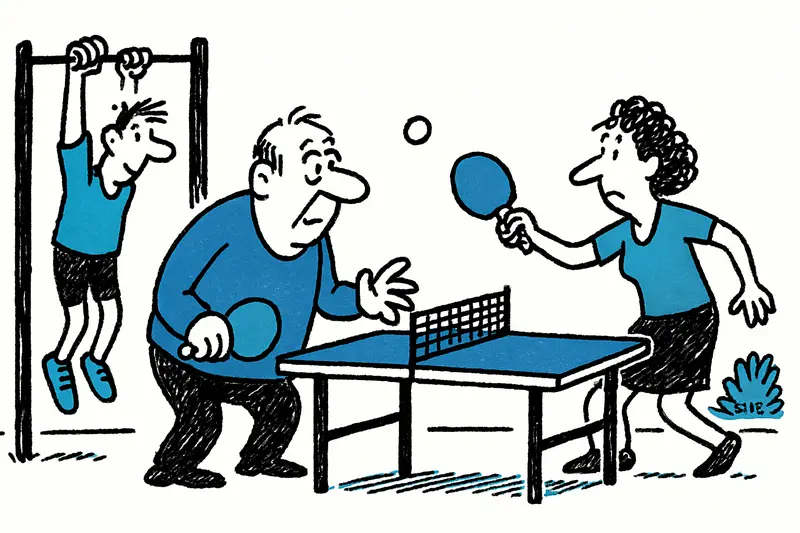
On a clear morning in Palma, when the cafés on the Avenida still give off the first scent of café con leche and dog owners make their rounds with tired eyes, a new note hangs over s'Olivera: the soft clack of table tennis paddles, the steady roll of a petanque ball, the ringing of a climbing bar under hands. La Femu park has received a refresh — a climbing bar, a fitness trail, several table tennis tables and a pétanque court, as reported in the La Femu renovation report. For local residents this is noticeably more quality of life. But the question of cost cannot be casually waved away.
Key question: €218,000 — well invested?
The city cites around €218,000 as the investment sum. At first glance the amount seems considerable for a neighborhood park. What do you get for that? New equipment, young trees, additional seating, shade planning and the prospect of a sun sail as well as an expansion of the children's playground next year. These are sensible measures. But the crucial point is not only what was built, but how sustainable and inclusive the implementation is. Similar municipal spending on sports sites is discussed in Palma renews sports facilities.
Brief analysis: The equipment targets three groups specifically — active adults, table tennis and pétanque fans, and families with small children. That is neither wrong nor surprising. Less visible are the follow-up costs: lighting, care of the new trees, cleanup after vandalism, possible repairs to the equipment and maintenance of the table tennis tables. All of that costs money and staff — and annually, not just once; this echoes concerns raised in coverage of Palma's Paseo Marítimo green space and maintenance questions.
What rarely appears in the public debate
In conversations with neighbors it quickly becomes clear: people are happy about meeting places. Marta from Calle Marina praised that her grandchildren now have a safe place to play. The seniors who play pétanque in the mornings are also pleased. But two aspects often remain unspoken:
First: accessibility. Are the paths wide enough for walkers and prams? Are the devices installed on non-slip surfaces? Second: usage data. How often is the course really used, and at what times of day? Without regular measurements it is impossible to judge whether the acquisition was the best solution for this exact location.
Concrete opportunities and approaches
The city can make more of this upgrade if it now offers a few concrete steps: first, a clear maintenance plan with a transparent budget. This will prevent the equipment from falling into disrepair and the money from evaporating. Second, neighborhood involvement: tree sponsorships or a volunteer group can reduce maintenance costs and strengthen identification with the park. Third, smart lighting with motion sensors or timers — energy efficient and safer. Fourth, regular user surveys: short digital questionnaires or counts so that future decisions are based on data rather than good intentions.
A small example: the announced expansion of the children's playground offers the chance to install inclusive play equipment — also for children with limited mobility. If the city takes this into account, the investment would pay off several times over: more use, greater satisfaction, less need for later retrofitting, a theme also present in coverage of the Luis Sitjar redevelopment plans.
Everyday reality and neighborhood spirit
On opening day you could hear a babble of voices, laughter, the dull clack of petanque balls and the "pling" of table tennis balls against the net. Such sounds are small proof that public space works when people use it. In practice it usually takes a few months for routines to form. The city administration plans better lighting and the sun sail — that helps especially on hot afternoons when the Mediterranean sun is relentless.
One practical tip: anyone visiting the course now should wear sturdy shoes; the soil around the newly planted trees is still loose. And serious players should bring their own paddles. This is not a criticism, just everyday life — and everyday life makes a park lively.
Conclusion: La Femu is a welcome step towards more communal space in s'Olivera. The investment is sensible, but its true balance depends on maintenance, inclusion and whether the city and neighborhood share responsibility. A nice upgrade — yes. A perfect project? Not yet. But it has the potential to become exactly that if the next steps are logical and transparent.
Frequently asked questions
Is Palma's new La Femu park area in s'Olivera a good use of public money?
What facilities are available at the new La Femu park area in Palma?
Is the new park area in s'Olivera suitable for children and families?
How much does Palma spend on neighbourhood park upgrades like La Femu?
What should I wear or bring when visiting the new La Femu park in Palma?
When is the best time to use the new park area in s'Olivera, Palma?
What makes a new park in Mallorca successful in the long run?
Does Palma need more small neighbourhood parks like La Femu?
Similar News
When the Wallet Becomes a Danger: Attack in Peguera and Lessons for Mallorca
In Peguera, two women are said to have stolen the wallet from a 75-year-old German couple. When the victim intervened, t...
Plata stays Plata: Young people take over, Llonguets remain
A small bar on Carrer de l'Argenteria will continue: Tolo Serra hands the place over to young Mallorcans at the end of t...
Unnoticed in the Luggage Compartment: How a Boy Traveled More Than 100 Kilometers in a Team Bus
A minor traveled in the undercarriage of a team bus for more than 100 kilometers until his cries for help were heard. A ...

Cap Vermell Grand: Second Michelin Key – a Gift for the East
The Cap Vermell Grand in Capdepera has been awarded its second Michelin key. For the region this elevates the luxury off...
Eurowings lets four aircraft carry names – a friendly idea that also reaches Mallorca
Eurowings is launching a campaign: four Airbus A320s are to carry the first names of people who help others in everyday ...
More to explore
Discover more interesting content

Can Cap de Bou

Townhouse Lleo 72
