
Son Banya before the eviction: Court confirms Palma as owner — and now?
A court has confirmed that the Son Banya site belongs to the city of Palma. Legally clear — practically complex. Who will provide alternative housing and offer prospects? A look at the problems, overlooked consequences and possible solutions.
Son Banya before the eviction: Court confirms Palma as owner — and now?
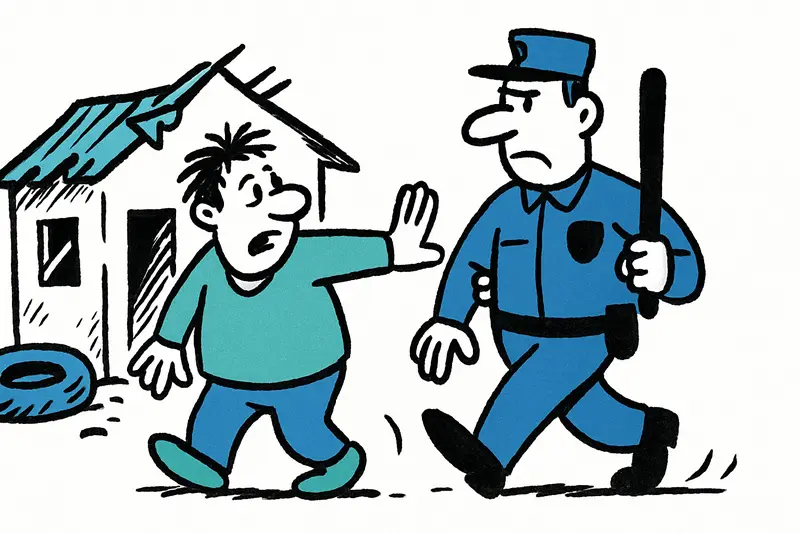
On October 15 the verdict came down: the Son Banya site lawfully belongs to the Municipality of Palma, as reported in a Mallorca Magic report on the court confirmation and eviction order. For the judges it was a clear case; for the neighborhood and many residents it becomes a new pressure point in a decades-long web of poverty, informality and law-enforcement efforts. Anyone who takes the bus toward the city center in the morning knows the vignettes: makeshift huts on Calle 3, burning tires at dusk, police sirens — but also the soft ringing of church bells over the quarter — a doubtful kaleidoscope between normality and a state of emergency.
The legal door is open, the social door remains closed
Legally, Palma now has the instrument to assert possession decisively. If there is no voluntary departure, forced eviction is threatened. But the sober term "eviction" obscures the fact that people with life stories live here: families, migrant workers, people with addictions and those stuck outside formal support networks. Demolishing the huts creates space — but often only for the next improvised camp somewhere else, as argued in a Mallorca Magic piece on why demolition alone is not enough.
The key question is: can a city like Palma organize a forced eviction without providing a viable safety net? Politics and administration face three simultaneous challenges: short-term accommodation, medium-term social care and long-term housing prospects.
What is often missing in the public debate
First: the bureaucratic hurdles for those affected. Many residents have no papers or work in precarious jobs. Without registration there is little entitlement to emergency shelters or social assistance. Second: the shadow economy that has developed over years — supply chains, stalls, informal jobs — will not disappear through a mere eviction; it will only shift. Third: the environmental consequences. Waste, improper disposal and burn sites are symptoms of missing infrastructure, not solely criminal activity.
In front of a café at the Plaça d'Espanya I heard different voices this morning: some welcomed the ruling with a relieved "Finally the city is acting", others asked sarcastically where the people should go — and who will pay for the cleanup and aftercare. Such street conversations capture the ambivalence: a legal victory can turn into social collapse if not accompanied by support measures.
Concrete ways out of the dilemma
The city must not only secure property — it must present a concept that goes beyond securing and demolition. A few proposals that are often overlooked in the debate would be:
1. Phased plan instead of a blow-up: A staged eviction with clear steps — initial placement in decentralized emergency shelters, subsequent social care, followed by placement in housing projects. Sudden full-scale actions drive people into invisibility.
2. Mobile social teams: Teams of social workers, mediators and legal advisors who work on site, enable registrations and draw up individual plans. These teams should also assist in negotiations with landlords so that affected people do not end up on the street.
3. A land-use plan: Instead of empty parking lots or luxury developments, the city could reserve parts for social housing, a workshop for labor market integration or a community space for educational offers. This would be a chance to link urban development with social responsibility.
4. Preventive measures: Registration options, healthcare and low-threshold drug services can stabilize structures and reduce acute dangers — also for the neighborhood.
A chance for new policy — if it is seized
Of course this costs money and requires political courage. But the alternative — an eviction without prospects — merely pushes the problem further away. An ambitious, socially integrated solution could make Son Banya an example of sustainable urban renewal: less police action, more case work; less media alarm, more long-term planning.
The coming week will show whether Palma supplements the legal basis with pragmatic measures or whether Son Banya remains just another episode in a recurring crisis, as suggested by coverage of a renewed major operation at Son Banya. I will stay on site and report when the city sets deadlines, emergency shelters and concrete support measures.
Between plane trees and concrete: the ruling is the beginning of a decision — for people as much as for politics.
Frequently asked questions
Why is Son Banya in Mallorca being evicted now?
What happens to people living in Son Banya if Palma carries out the eviction?
How should Palma handle Son Banya to avoid making the situation worse?
Does evicting Son Banya solve the problems in Mallorca?
What is the best time of year to visit Son Banya in Mallorca?
Why is the Son Banya area in Palma such a long-running problem?
What practical support is needed for Son Banya residents in Palma?
What does the Son Banya ruling mean for Palma’s future planning?
Similar News
Who Gets Left Out? Why Overbookings Will Hit Many Mallorca Travelers This Summer
On hot check-in days at Son Sant Joan, frustrated travelers pile up. New figures from Reclamador.es show that a large sh...
When the Handyman Came: How an Engagement Ring Disappeared in Mallorca and What It Says About Trust
During a repair in Andratx a highly personal engagement ring went missing — a case that calls not only for punishment bu...
How Burglars Test Fincas in Mallorca — and What You Can Do About It
The Spanish National Police warn of a simple but effective trick: small markings on doors reveal whether a finca is occu...
Palma doubles blue zone: What this means for residents, tourists and narrow streets
From 1 January 2027 Palma's ORA area will grow from around 12,000 to 24,000 spaces. Key question: Will the expansion bri...
Engagement ring disappears during repair: court upholds prison sentences for plumber and partner
During a heating repair in an apartment in Andratx an engraved engagement ring disappeared. After a trace to a pawnshop ...
More to explore
Discover more interesting content

Can Cap de Bou

Townhouse Lleo 72
