
Night in Palma: Waking up on the street – what does this mean for taxi safety?
A 24-year-old tourist wakes up at 6 a.m. on a street near Santa Catalina. Surveillance footage shows a taxi circling the area. UFAM is investigating. What goes wrong with night rides in Palma?
Night in Palma: Waking up on the street – what does this mean for taxi safety?
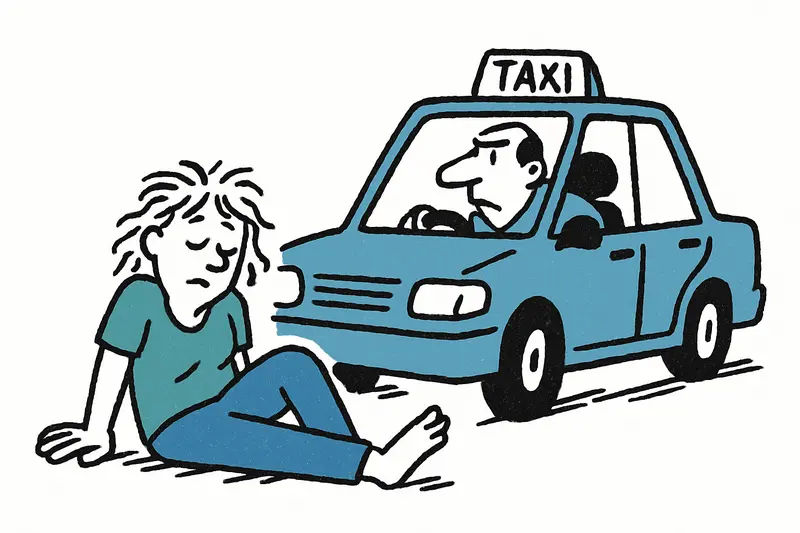
It is a morning image that stays in the mind: the street still damp from the night, the first cars not yet on the move, a lonely taxi rank, birdsong and the smell of coffee from the market, while a young woman wakes up at 6 a.m. and cannot remember how she was supposed to get home. The 24-year-old Swede says she called a taxi around 2 a.m. after celebrating with friends in Santa Catalina; the case corresponds to Palma woman woke up on street at 6 — suspected taxi assault. Hours later she found herself alone in the front passenger seat, without a phone, without a bag – and with the memory of an attempted sexual assault.
The central question
How safe are Palma's taxis at night really – and which security gaps must be closed immediately? That is the guiding question raised by this case. UFAM (Unit for Family and Women) has taken over the investigation. Surveillance cameras around the old town ring show a taxi circling the neighborhood several times, briefly stopping in a parking area and apparently making unusual maneuvers. A found phone that was returned to a friend corroborates parts of the account, a scenario echoed in Playa de Palma at night: phone tracking catches suspect.
What the footage and the suspect's silence reveal
A man born in 1987 was arrested a few days later. He remained silent before the judge. The court is now reviewing camera footage, traces in the vehicle and witness statements. Assembling such evidence takes time – time that works against memory and while traces vanish. Still important: the images show a possible pattern, not a verdict. For the affected woman, however, it is an experience that permanently alters the sounds, smells and taste of a night.
Quiet worries in Santa Catalina
On Avinguda de Jaume III and around the market one can feel unease. Waitresses, female taxi drivers, neighbors: many say they no longer go out at night so carelessly. "You get into the taxi and hope everything will be fine," said a waitress. Trust in the night economy is fragile. When the small church bells ring at dawn and the first brushstrokes of sunlight hit the façades, that feeling of safety suddenly sounds thin.
What is missing in the public debate
The incident is now being discussed publicly. Less attention is paid to structural issues: How are taxi companies controlled? What technical standards apply (logbook, GPS logs, driver IDs)? How binding are background checks? And not least: what responsibility do ride-hailing platforms and municipal supervision have when it comes to night safety concepts?
Another often overlooked aspect is economic pressure. Many drivers work long shifts, drive several nights in a row and depend on the income. That increases the risk of mistakes – and can obscure power relations between drivers and guests. Language barriers and the uncertainty of tourist passengers also play a role: a lost handbag or a missing phone can quickly be interpreted as an oversight rather than a possible indicator.
Concrete weaknesses and practical measures
So what helps in the short term and what do politics and administration need in the medium term? A few not-too-expensive proposals:
1. Better technical traceability: Mandatory recording of every journey with date, time, start/finish coordinates and driver ID. GPS logs help to reconstruct routes. Data protection concerns can be reduced by encrypted, time-limited storage and clear access rules.
2. Emergency buttons and direct connection: All taxis should have an easily accessible alarm button that sends the current position to police or dispatchers. Similar systems work on night buses and in stations.
3. Visible trip proof: Clearly displayed driver ID and a trip receipt per ride (digital or paper) make identification easier after incidents.
4. Strengthen control and reporting channels: Regular, unannounced vehicle and driver checks, mandatory training on handling assaults and clear sanctioning procedures against companies that tolerate negligence.
5. Awareness-raising: Information boards at taxi ranks, clear guidance for tourists on what to do if they feel unsafe. Reduce language barriers – information in several languages.
Legal and ethical limits
The balance between surveillance and privacy is delicate. Cameras in taxis or permanent audio recordings would be legally problematic and could damage trust. Dashcams with encrypted activation only when incidents are reported, regulated access by investigative authorities and a clear retention period would be a compromise.
An opportunity for Palma
Such incidents throw Mallorca into an uncomfortable debate, but they also offer an opportunity. The island has a lively night culture, from Santa Catalina to the Nighttime Attack on the Paseo Marítimo: How Safe Is Palma’s Party Mile Really?. With targeted measures, city administration, taxi companies and police could restore nighttime trust. Not with symbolic politics, but with pragmatic rules, technical solutions and visible presence.
What matters now
Patience is needed for the investigation. The city must act quickly. And for the people of Palma: look, report, help neighbors. Victims need support, listeners and clear procedures. UFAM calls for reports. Authorities must learn from this – and we should all ask: to whom do we hand over our trust at night, and how can those handovers be made safer?
The investigation is ongoing. This article does not aim to judge, but to provide a framework for how Palma can draw consequences from a painful incident.
Frequently asked questions
Are taxis in Palma safe at night?
What should I do if I feel unsafe in a taxi in Mallorca?
How can I check if a taxi in Palma is licensed?
What safety details should a taxi in Mallorca provide?
Is it safe to take a taxi from Santa Catalina late at night?
What should I do if I lose my phone or bag in a taxi in Mallorca?
Why are taxi safety controls important in Palma?
What can tourists in Mallorca do to stay safer when taking taxis at night?
Similar News

Caro Robens: 15 kilograms lighter — and again in the crossfire of online comments
Bodybuilder Caro Robens, who lives in Mallorca, has lost 15 kilograms. Her success on Instagram was met with applause — ...
Meager Industry in Mallorca: How the Island Can Be More Than Just Tourism
The industrial sector in Mallorca is shrinking, productivity is falling and firms remain tiny. The key question: can the...
Pre-Nit de l'Art: Galerie Mensing invites to a special evening with Tom Boston
Before the big art night, Galerie Mensing opens its doors: pop art, champagne, a DJ and a hand-signed print by Tom Bosto...

Sea view and more seats: Cappuccino Grand Café reopens in Port d'Andratx
After a long renovation, the Cappuccino Grand Café on the Port d'Andratx harbor promenade has quietly reopened. Larger t...

Enric Mas wins the Vuelta – a triumph that resonates in Mallorca
Mallorcan Enric Mas has won the 82nd Vuelta — the first Spanish overall victory since 2014. Cyclists and neighbors on Ma...
More to explore
Discover more interesting content

Can Cap de Bou

Townhouse Lleo 72
