
Panic Button at Palma Airport: A Drop in the Bucket?
Panic Button at Palma Airport: A Drop in the Bucket?
Aena installs a panic button and a dedicated security team at Palma Airport. A necessary reaction — but is it enough to protect staff and travelers over the long term?
Panic Button at Palma Airport: A Drop in the Bucket?
How sensible is the new emergency system — and what's missing from the debate?
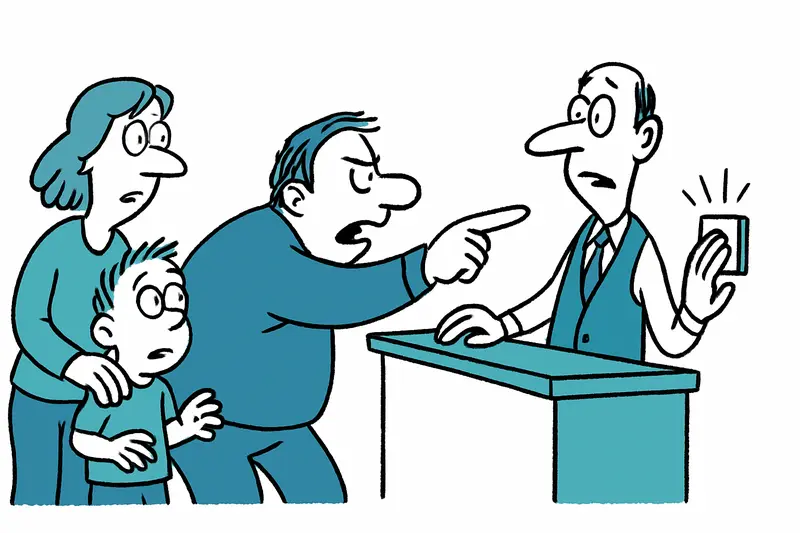
Monday morning, Departure Hall B: the smell of strong coffee mixes with the rustle of boarding passes. At a Ryanair counter it gets loud, voices sharpen, an employee holds onto the desk and a nearby couple pulls their children away. Scenes like these prompted airport management and union representatives to set up a new emergency system.
Key question: Is the new panic button, now reachable from every gate, together with a dedicated security team, enough to really stop the wave of assaults on airport staff?
The decision to install an alarm system and designate a dedicated response team was not accidental. Workers at check-in and baggage handling have been reporting verbal and physical attacks for months; the UGT union has raised the issue repeatedly and forced management to respond. That matters: visible measures signal that incidents should no longer go without consequences, a point also underscored in Storm Chaos in Palma: Why a Storm Slows the Airport So Much — and What Needs to Change.
But a button that calls for help does not answer all questions. The critical point that often disappears in public debate is: How quickly does help arrive, and what happens afterwards? An alarm is only as good as the protocol behind it — who decides whether the police are called, who documents the incident, and how are victims protected while the situation is still escalating?
In practical terms, effectiveness depends on personnel and technology: Is the alarm signal automatically linked to the local Guardia Civil control center or the airport police? Are precise location data, video recordings and witness reports secured immediately? And how many security personnel are available to respond at peak times to several locations at once? This staffing challenge is examined in Palma: Why the security checks become a test of patience.
A look at everyday life helps to understand the problem. In the late afternoon, when foreign families, business travelers and returnees converge, ambiguous information about baggage size or delays is enough to increase stress. Employees, often alone at a counter, must enforce rules and calm conflicts at the same time. This leads to a constant strain that does not only manifest in isolated incidents.
Several aspects are currently missing from the public discussion: first, transparent statistics on incidents and their consequences; second, clear rules on intervention and reporting procedures; third, preventive measures that prevent situations from escalating in the first place. Discussions end too quickly at technical solutions without examining staffing, working conditions and legal follow-up.
Concrete approaches that go beyond the panic button are achievable:
• Immediate connection: alarm messages must be sent automatically to the responsible police with precise location and at the same time secure video feeds from the relevant cameras.
• De-escalation training: regular, mandatory training for check-in, ground and security staff — with role plays and language preparation for multilingual conflict situations.
• Visible presence: temporarily increased patrols by airport police at key points during peak times, not only reactive but preventive.
• Documentation & aftercare: uniform protocols for procedural documentation, legal support for injured employees and transparent reporting channels for staff.
• Technical additions: bodycams for security personnel, automatic location tagging on alarms and expedited data release for investigations. Incidents like the one described in Drone paralyzes Palma — why a small device makes our airport vulnerable underline the need for robust technical and procedural links between systems.
• Relief through staffing: more staff at peak times, flexible counter openings and better work planning so individual employees are not permanently overburdened.
An often overlooked level is the legal one: complaints must be recorded and pursued promptly. Without tangible prosecution, any deterrent effect may evaporate. This requires close coordination between the airport operator, the judiciary and the police authorities.
In short: the panic button is a sensible building block, but not the solution. It creates a technical possibility to report an acute incident. What matters is what comes of it: fast, coordinated responses, preventive planning and real relief for the people behind the counters.
Whoever walks along the Passeig Mallorca and looks past the terminal's window front sees not only airplanes but also the nervous faces behind the counters. If we want the airport to remain safe for everyone, the answer to workplace violence must include more layers than a single button — and it must be swift, visible and sustainable.
Conclusion: Praise for the step, but a mix of technology, personnel policy, legal clarity and daily protection is needed so that the next dangerous scene is not only reported but effectively ended and followed up.
Frequently asked questions
Why has Palma Airport installed a panic button for staff?
Is the panic button at Palma Airport enough to protect airport workers?
What should passengers expect if there is an emergency at Palma Airport?
Why do conflicts happen so often at Palma Airport check-in desks?
What else is needed besides a panic button at Palma Airport?
How can airport staff at Palma be better protected from violence?
When is Palma Airport most stressful for staff and travellers?
Who is responsible for handling incidents at Palma Airport?
Similar News
When the Wallet Becomes a Danger: Attack in Peguera and Lessons for Mallorca
In Peguera, two women are said to have stolen the wallet from a 75-year-old German couple. When the victim intervened, t...
Plata stays Plata: Young people take over, Llonguets remain
A small bar on Carrer de l'Argenteria will continue: Tolo Serra hands the place over to young Mallorcans at the end of t...
Unnoticed in the Luggage Compartment: How a Boy Traveled More Than 100 Kilometers in a Team Bus
A minor traveled in the undercarriage of a team bus for more than 100 kilometers until his cries for help were heard. A ...

Cap Vermell Grand: Second Michelin Key – a Gift for the East
The Cap Vermell Grand in Capdepera has been awarded its second Michelin key. For the region this elevates the luxury off...
Eurowings lets four aircraft carry names – a friendly idea that also reaches Mallorca
Eurowings is launching a campaign: four Airbus A320s are to carry the first names of people who help others in everyday ...
More to explore
Discover more interesting content

Can Cap de Bou

Townhouse Lleo 72
