
Panic scenes at Palma airport: A reality check on security at the check-in
Panic scenes at Palma airport: A reality check on security at the check-in
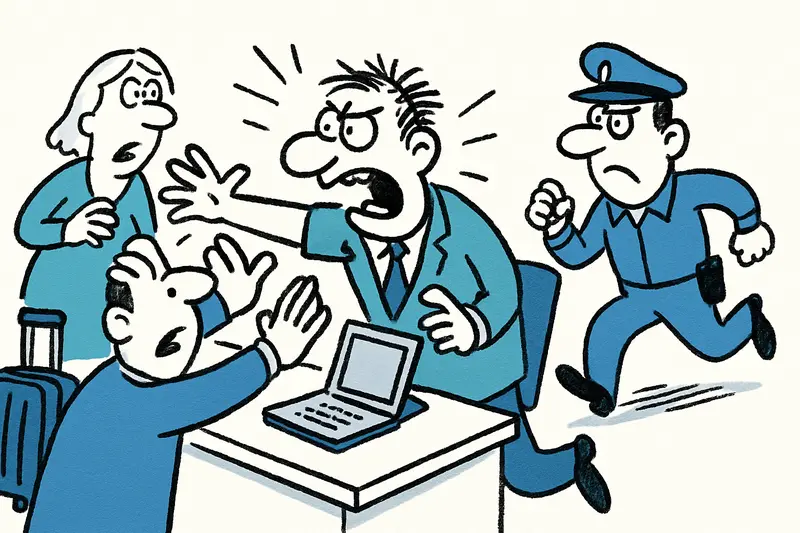
A man is arrested at Palma airport after allegedly threatening staff, smashing furniture and confronting other passengers. What does the incident reveal about security procedures, support for those affected and prevention?
Panic scenes at Palma airport: A reality check on security at the check-in
Key question: How well are staff and travelers at Palma airport actually protected when a single disruptor can escalate the situation at a check-in within minutes?
On a Thursday morning around eight o'clock, during the hour when the departure hall is just getting busy, airport security reported that a man had become aggressive at a check-in. Employees felt threatened, there were insults, and furniture was attacked. Officers from the National Police arrested the suspect on site after the man allegedly ignored instructions and tried to attack staff. Those are the facts that remain - the rest are questions that we raise here.
Anyone who has strolled through the departure hall early in the morning knows the sound: rolling suitcases, the smell of coffee, an announcer over the loudspeaker, the flutter of boarding passes. In such a place, a raised voice or a curse is enough to change the mood. Travelers push their trolleys aside, queues form, someone tries to calm things - and suddenly anger turns into aggression, as seen during Palma: Why the security checks become a test of patience. This is exactly how several eyewitnesses describe scenes at check-ins when small disputes become real incidents.
The first critical question is: How is communication between the private security service and the police handled? In the case described, the security company took action and alerted the National Police; that's good. However, it remains unclear how many minutes it actually took for the officers to arrive, and whether in the meantime evacuation measures, cordons, or de-escalation attempts took place. This gap in public information creates uncertainty - not only among passengers but also among staff.
A second area of concern is prevention: Are there structured programs to train airport staff for aggressive situations? Especially at busy counters where many flights are processed in parallel, clear procedures are needed: Who communicates with the person involved, who calls the police, who protects the remaining travelers? At busy airline desks, tensions over procedures have been highlighted in Ryanair Hand Luggage Checks: Between Efficiency and Frustration at Palma Airport. The mere presence of a security firm is not enough if measures do not work in the moment or if staff are afraid to ask for help.
Public discourse often focuses on spectacular isolated cases. What is missing is a systematic assessment: How many disturbances occur per month, at what times, which counters or airlines are particularly affected? Transparency would help to address weaknesses deliberately. Equally invisible are the consequences for the victims - the mentioned staff and passengers who were insulted or physically threatened. Besides criminal prosecution they need psychosocial support and clear internal reporting channels, as argued after similar operational stresses in Rain Chaos at Palma Airport: A Rainy Day as a Stress Test.
Concrete improvements are feasible and should be implemented quickly: First, mandatory de-escalation training for check-in staff and security with regular refreshers. Second, a graduated intervention protocol that also provides for spatial measures - for example temporary cordons behind the counters or separate waiting areas when a situation threatens to escalate. Third, a direct line to the police with documented response times as well as visible police presence during peak times, not as theater but as a preventive measure.
There is also often a missing technical component: better camera angles at critical points, direct alarm triggers for staff and a digital reporting channel for internal and police follow-up. And last but not least, there should be binding rules on how to deal with travelers in psychological crisis - sometimes aggressive outbursts are a cry for help, not just a criminal act.
What can politicians do? Airport operators, security companies and state authorities must sit down together and agree on binding minimum standards. Financially this would be an investment in safety and image: Nobody likes to stay in a place where they feel unsafe. And for employees it means protection and recognition.
Everyday picture: Mornings on the Paseo - taxis honking, delivery drivers balancing luggage crates, weary routine meets the agitated tourist who missed his flight. It is precisely in this microcosm that conflicts arise. Small barbs, missing information, language barriers - together they create stress that is discharged. This is not a Mallorcan phenomenon, but here you feel it not behind glass, but right in the hall.
Conclusion: The incident at the check-in in Palma is both a symptom and a warning sign. It shows that basic procedures work - security reports, police intervene - but that the gaps in between are dangerous. Anyone who really wants to change things must think beyond isolated cases: transparent figures, better training, technical assistance and binding protocols. In short: airport security is more than an alarm button. It is a field of work and planning worth investing in - for staff, for travelers and for confidence in our airport.
Frequently asked questions
What is the weather usually like in Mallorca in late May?
Is May a good time to swim in Mallorca?
What should I pack for Mallorca in late spring?
Are Mallorca beaches busy in late May?
Is late May a good time for outdoor activities in Mallorca?
What is Palma like in late May?
Is late May a good time to visit Alcúdia in Mallorca?
What is the weather like in Mallorca at the end of May?
Similar News
Magaluf: Watchtower Alarm – Lifeguards Pull Unconscious Beachgoer from the Water
After a drama in the late afternoon, two lifeguards at Magaluf beach rescued an unconscious 44-year-old man. He was stab...
Turquoise in the City: How dangerous is the color play of the Sa Riera?
The Sa Riera in Palma suddenly turned turquoise — a pretty motif, but behind the effect lies a discharge of saline waste...

Jeckliner at Sunnesching: Cologne spirit sets sail from Palma
In September 2027 the Mein Schiff 2 briefly becomes a floating carnival stage: four days with Cologne bands, comedy and ...
Finally Home: Mike and Leyla Heiter Buy Villa with Sea View in Mallorca
The reality TV couple Mike and Leyla Heiter have bought a house in Mallorca with a roof terrace and sea view. An Instagr...
Arrest after series in Palma: Who protects apartments from repeat offenders?
The National Police arrested a man in Palma who investigators say may have broken into several apartments. In one incide...
More to explore
Discover more interesting content

Can Cap de Bou

Townhouse Lleo 72
