
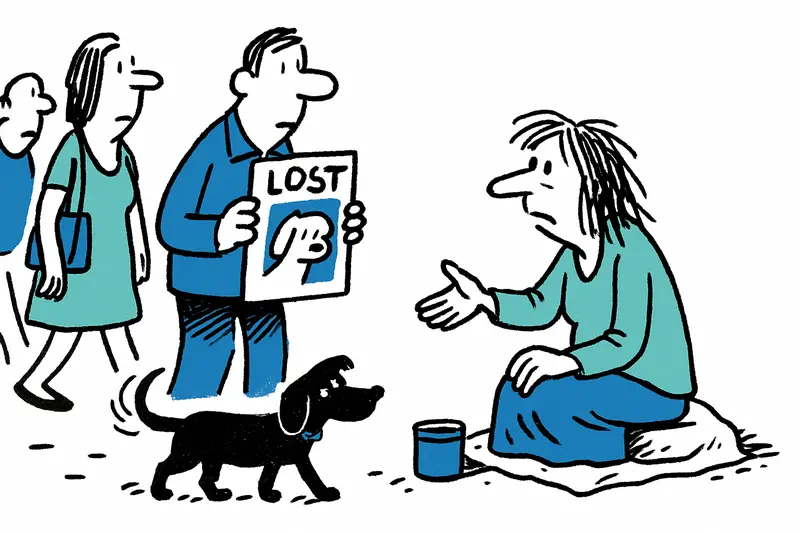
Playa de Palma: Louise Searches for Susi — A Dog, a Woman and the Gaps in Our Help
Playa de Palma: Louise Searches for Susi — A Dog, a Woman and the Gaps in Our Help
A 47-year-old German woman has been living for weeks in the riverbed of the Torrent des Jueus in Arenal. Her mini-Yorkshire, Susi, was stolen — revealing how poorly our city is prepared for people without a roof over their heads.
Playa de Palma: Louise Searches for Susi — A Dog, a Woman and the Gaps in Our Help
How can an island that lives off tourism offer people like Louise a dignified option — and bring her dog back?
At the edge of the Torrent des Jueus, where the sand still smells of the sea and the cleaning trucks wash away sounds in the early morning hours, a woman has settled. Her name is Louise, she is 47 and arrived in Mallorca a few weeks ago. She chose her sleeping spot in the riverbed because she was told her mini-Yorkshire named Susi had been seen there. Nearly a week ago she was robbed; Susi disappeared along with the theft. Since then, Louise has been attaching notes to lampposts, posting in Facebook groups and asking passersby on the beach for a few euros.
The scene is familiar: seagulls screech above the promenade, tourists pass by, and in beach bars coffee is poured into plastic cups early in the morning. Neighbors from Arenal help and allow her to shower in their apartment. That restores some dignity, but it is not a solution. Louise currently has no access to her German bank account and says she cannot return to Germany without Susi. "She is like a daughter to me," she has told several people.
Main question: Why does help stop at the promenade? The simple answer is not only lack of money. This echoes reporting on housing shortages in Mallorca: Escasez de vivienda en Mallorca se agrava: una mujer, un perro y puertas tapiadas. There is no coordinated offer for people who get stranded here temporarily, for people with pets, and for those whose papers, account access or residence are missing. The logic of emergency shelters, social services and animal welfare organizations does not automatically overlap — and that is exactly where a problem arises, which Louise is currently experiencing.
Critical analysis: The situation reveals several failures. First: access to basic services is often tied to an address or contact with authorities. Someone newly arrived on the island without a fixed residence quickly falls through the cracks. Second: many shelters do not accept animals; this pushes people to stay on the street or make risky compromises. Third: information and language barriers prevent simple steps — like reporting a theft to the police or searching in shelters and at veterinarians — from taking effect immediately. Fourth: banks and authorities require procedures that are hard to fulfill locally when travel documents, cards or phones are missing.
What is missing from public discourse: There is little discussion about how pets influence the decision to stay or to seek help. It is also overlooked how seasonal mobility (people who are only briefly on the island) complicates the provision of services. Also rarely discussed is the question of short-term, unbureaucratic financial aid for newcomers without account access.
Everyday scene from Arenal: If you walk along the avenue in the late morning, you see small groups of people reading posters. An older woman stops, strokes the photo of the dog, a delivery driver honks briefly and looks away furtively. On the beach, tables hold donation cans. In an apartment in a side alley a couple shares a warm shower with Louise; a neighbor shakes his head and says he has already called the shelter five times.
Concrete proposals: 1) Mobile teams that combine social work, translation and veterinary service: short deployments on the beach with a microchip scanner, flyers and direct mediation. 2) Temporary, pet-friendly emergency places: a few spots in hostels or apartments that allow dogs, linked to clear hygiene rules. 3) Simple financial emergency vouchers that authorities or charities can issue to pay for food, transport or a SIM card. 4) A coordinated reporting chain for stolen and found animals: police, veterinarians, shelters and social services should exchange contact points and checklists. 5) Simplify consular support: temporary access to transfers or identity confirmations when people from abroad are affected. 6) Strengthen volunteer networks: clear contact points for reports where volunteers can conduct targeted searches.
Some of these suggestions are not spectacular; they simply require coordination and the political will to close gaps. It costs time and money, but above all honesty: we must acknowledge that people with pets are particularly vulnerable and must be helped differently.
Conclusion: Louise and Susi are more than a touching story; they are a stress test for our system. If an island with many resources cannot offer a woman on sand and in the wind short-term safe options, then this remains an issue we must hear, feel and change; recent coverage of a death in El Arenal underlines the stakes: Muerte en el Balneario 2 – ¿Qué tan buena es la ayuda en Mallorca para personas en apuros?. Practically, that means better-networked aid services, pet-friendly solutions and simple ways to access identity and money. Otherwise Louise returns to a place where she never really arrived — and Susi remains missing.
Frequently asked questions
What weather can I expect in Mallorca in May?
Is May a good time to swim in Mallorca?
What should I pack for a trip to Mallorca in May?
Is May a busy month in Mallorca?
Is Palma de Mallorca worth visiting in May?
Is Alcúdia a good place to stay in Mallorca in May?
What is Port de Sóller like in May?
Can you do outdoor activities in Mallorca in May?
Similar News

Mueller continues expanding in Mallorca: Artà in 2026, Can Picafort in early summer 2027
The drugstore chain Mueller is opening two new stores in Mallorca: a 1,400 m² shop in Artà on 5 November 2026 and a bran...

The Painter Who Lived Mallorca: Franz Taussig and His Century-Old Secret
A hundred years ago a young Viennese arrived in El Terreno, sketched the island and called himself Francis Caron. Today ...

Airport dispute: Bridge, forecasts and the question of responsibility
A video by the Spanish transport minister has ignited the dispute over DORA figures, capacities and local governance pow...

The Painter Who Invented Himself: How a Young Viennese Drew Mallorca
A hundred years ago a 19-year-old draftsman arrived in El Terreno. His diary and sheets, long known under the pseudonym ...

Released with Conditions: The Plus Ultra Suspicion and a Mallorcan Finca as Residence
A Dutch entrepreneur, sought in connection with the Plus Ultra case, was extradited to Spain after his arrest in Germany...
More to explore
Discover more interesting content

Can Cap de Bou

Townhouse Lleo 72
