
Nighttime Threat at Playa de Palma: Minor Arrested with a Club
Nighttime Threat at Playa de Palma: Minor Arrested with a Club
In the early hours, a youth at Playa de Palma allegedly threatened passers-by with a heavy club and smashed a car windshield. After a chase by passers and police officers, he was taken into custody. A reality check: How safe is our night at the Playa?
Nighttime Threat at Playa de Palma: Minor Arrested with a Club
After chase by passers-by and police: Questions about prevention and night-time order
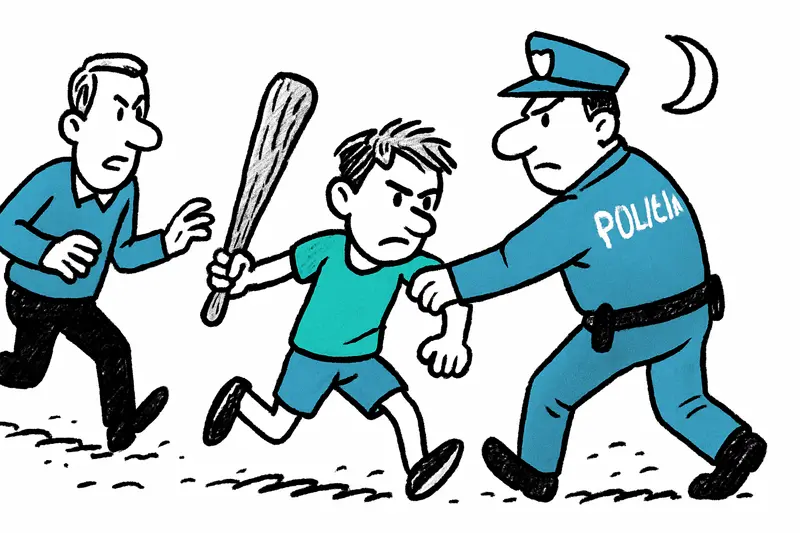
Around 2:15 a.m. on one of the last warm late-summer nights: a scene escalated at Playa de Palma that, unfortunately, makes headlines here more often than we would like. A youth, according to authorities armed with a heavy wooden club, is said to have threatened passers-by and repeatedly struck a vehicle until the windshield shattered. Several people intervened, pursued him along a stretch of the promenade and finally into the sand, until National Police officers overpowered him and took him into custody. Because the suspect is a minor, no personal data are being released.
Key question: How can it be that a minor walks armed through a busy beach area at night and is only stopped after a citizen chase leads to police intervention? This question is not a rhetorical opening; it aims directly at the interfaces of prevention, public order and social control during the evening hours. Similar concerns have been raised in reports about arrests after threats at the city beach.
Critical analysis: The immediate response – intervention by bystanders, detection by patrols, arrest – shows that acute dangers are often only averted through bystanders and reactive policing. Recent assessments of a night raid at Playa de Palma underline gaps in proactive measures. What is missing is a system that recognizes escalating situations earlier and cushions them socially and in terms of public order. Nightlife, tourism facilities and local youth services do not automatically interlock. When alcohol, possible drug use or emotional crises are added, consequences can quickly become violent. Young people in conflict situations need different responses than a night in a police station; nevertheless, crimes must be dealt with decisively, even when the offender is underage.
What is often neglected in public debate: the responsibility of bar owners and event organizers along the promenade, effective lighting and camera coverage in critical sections, and low-threshold contact points for young people in the evening hours. There is also little discussion of the long-term consequences for victims and perpetrators: a shattered car, a traumatized tourist, a young person who may face judicial measures — and the neighborhood that feels more unsettled in the days that follow. Past incidents, such as a notable brawl at Playa de Palma, illustrate how quickly situations can escalate.
An everyday scene from Palma: Anyone strolling the Avenida Joan Miró late at night knows the mix of music from the bars, the salty smell of the sea and the dull clatter of cleanup vehicles at dawn. In such places, small conflicts often seem larger under the influence of alcohol. A hostile look, loud words, a bottle — and the mood can tip. Playa de Palma is a family beach by day but a space at night where control and freedom meet, often without clear rules for young people who move around after dark.
Concrete solutions: First, more targeted patrol tactics: police presence alone is not enough; training in de-escalation, especially in dealing with minors, and the availability of short-term social intervention teams could prevent escalations from ending in violence. Second, cooperation between municipalities, hotels and club operators: shared codes of conduct, privacy-compliant camera zones at critical points and clearly regulated reporting channels for incidents. Third, expansion of low-threshold evening services — youth centers with opening hours, awareness work in schools and hotels about the risks of alcohol use and group dynamics. Fourth, preventive urban planning measures: better lighting, regular cleaning and clearly visible emergency call points along the promenade.
Legally: minors are treated differently than adults; that protects them but must not become a shield for violence. Investigations must take age and life circumstances into account while also taking the safety of those affected seriously. Public debate should therefore not only demand harsher penalties but also show ways for reparation and supportive measures for young offenders. Recent coverage of incidents and investigative methods, including the use of activated phone tracking, feeds into that discussion.
Conclusion: The incident at Playa de Palma is a wake-up call. Not every night can be solved by police action alone, but we can improve the framework so that fewer people end up in such situations. The balance lies between local prevention, clear police capacity to act and social services for young people. Those who walk along the promenade hear the waves at night, see the lights of the bars and feel the sand under their feet — and should feel as safe as possible. That requires concrete work now, not just words.
Note: The description is based on information from the responsible police and observations of typical nightly scenes at Playa de Palma. Further investigations by the authorities are ongoing.
Frequently asked questions
What is the best time to visit Mallorca for beach weather?
What should I pack for a Mallorca trip to stay comfortable?
Is it safe to swim in Mallorca's coastal waters?
Which natural areas around Mallorca are worth exploring?
How busy does Mallorca get in peak season, and how can I avoid crowds?
What family-friendly activities does Mallorca offer?
Do I need a car to get around Mallorca, or are public transport options enough?
What cultural experiences should I seek when visiting Mallorca?
Similar News
Missing Housing on Mallorca: 17,000 Units Nobody Can Just Conjure Up
The island faces a structural imbalance: population is growing much faster than housing. Why 17,000 housing units are mi...
Rental Car Quotas in Majorca: One-Year Postponement or Chaos?
The association of car rental companies is calling to delay the planned restrictions by one year. The debate centers on ...

It's Getting Rough: What the Crime Statistics for Mallorca Really Say
The official half-year figures report significantly more offences on Mallorca. Numbers, locations and types of offences ...

When the Goats Arrive: Estate in Es Capdellà Does Not Do Enough to Defend Itself
A German owner in Es Capdellà reports that up to 44 wild goats regularly visit his 30,000 m² property, drink from the po...
Being Seen: When an Exhibition Is More Than Pictures on the Wall
An artist prepares a small exhibition in Palma. Amid boxes, lighting cables and the sound of coffee service, encounters ...
More to explore
Discover more interesting content

Can Cap de Bou

Townhouse Lleo 72
