
Calm Alarm in Portocolom: Spearfish Instead of Sharks
Calm Alarm in Portocolom: Spearfish Instead of Sharks
Holidaymakers observed long, fast spearfish off the east coast near Portocolom and initially mistook them for sharks. No cause for panic: the animals are harmless and a sign of a healthy sea.
Calm Alarm in Portocolom: Spearfish Instead of Sharks
Tourists amazed on the east coast — a look at the animals and why Mallorca's coast benefits from them
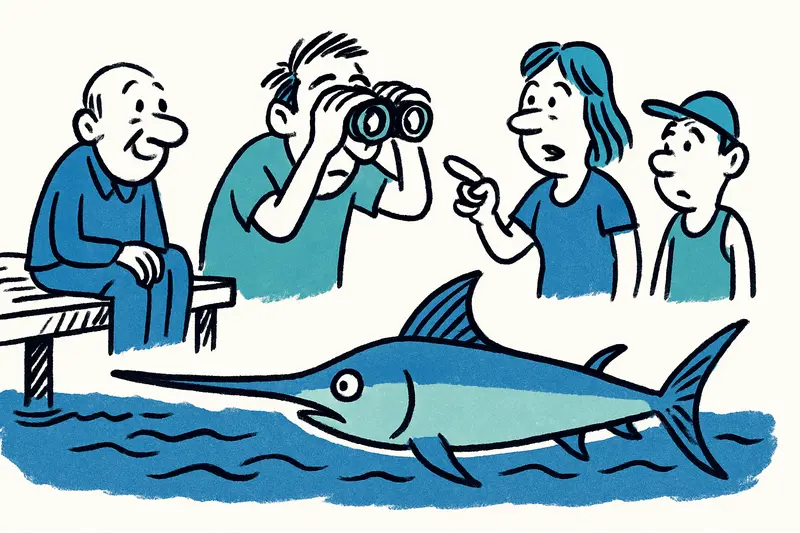
Late in the morning, when the fishing boats rock back into the harbour in Portocolom and the scent of freshly grilled sardines rises from the restaurants, several bathers at a small jetty held binoculars up to the sun. Some initially thought of sharks because suddenly long, slender animals with a high dorsal fin sliced through the blue water. The disappointment quickly faded: they were Mediterranean spearfish.
Such encounters look spectacular. The fish can reach about two metres in length, with occasional records up to 2.40 metres; the largest weight mentioned in specialist publications is around 70 kilograms, but typical weights are rather 10 to 30 kilos. Body shape and colour explain the initial alarm: an elongated, laterally compressed body, dark blue to almost black on the back and silvery white underneath. Striking is the high, rounded tip of the first dorsal fin, which enhances the impression of seeing a "large" predatory creature, as noted in Britannica's spearfish overview.
Those who look more closely notice details rarely mentioned in travel guides: the scales are elongated and often have several small tips at the edges. The single lateral line is easy to spot. Of biological interest is the vertebra count - 24 vertebrae, divided into 12 trunk and 12 tail vertebrae - a little bit of ichthyology that can be well explained over an espresso in the harbour, as shown in the FishBase species summary for Mediterranean spearfish.
Important for everyone about to pack up their swimwear: spearfish do not attack people without cause. Unprovoked attacks in the open sea are not known. They are fast, shy hunters that rush through open water with their streamlined bodies — more impressive than dangerous.
The scene that morning was typically Mallorcan: a mixture of curiosity and calm. An old fisherman who was mending his net just waved and laughed, "Did you see them? Beautiful!" Children on the quay pointed with bare fingers at the surf, while in the background the chatter of cafés and the clinking of cutlery could be heard. Moments like these are part of the island — nature right on the doorstep.
This also has a positive side for Mallorca. Sightings of larger fish show: the sea is alive. Tourists get to see nature, not just sunbeds. This opens up opportunities for responsible nature experiences, from small boat trips with local guides to careful snorkeling excursions. Those who observe respectfully learn more about marine ecosystems and appreciate the island differently.
Practical tips for anyone who discovers an unusual fish next time: keep your distance and do not harass the animal; avoid loud movements or frantic jumping into the water; take photos from a safe distance; and — very important — pay attention to the advice of local fishers or boat guides. They know the animals' habits best.
A little mindfulness helps to ensure that such encounters remain what they are for both people and animals: a small natural wonder. At the same time they are a reminder that Mallorca's coasts are not just sunbeds and bars, but also a habitat for fascinating marine life.
The next time you stroll along the harbour of Portocolom, listen carefully: gull calls, the clinking of mooring lines, and perhaps, in the distance, the brief flash of a silvery body darting over the waves. No reason to panic — rather a small reason for joy and curiosity about the sea on our doorstep.
Frequently asked questions
When is the best time to visit Mallorca for good weather?
Can you swim in Mallorca outside the summer months?
What should I pack for a trip to Mallorca in spring or autumn?
Is Mallorca still warm in October?
What is Palma de Mallorca like in the shoulder season?
Are Mallorca beaches busy in summer?
What is Sóller like for a visit outside peak season?
Is it worth visiting Mallorca in winter?
Similar News

When the Wallet Becomes a Danger: Attack in Peguera and Lessons for Mallorca
In Peguera, two women are said to have stolen the wallet from a 75-year-old German couple. When the victim intervened, t...
Plata stays Plata: Young people take over, Llonguets remain
A small bar on Carrer de l'Argenteria will continue: Tolo Serra hands the place over to young Mallorcans at the end of t...

Unnoticed in the Luggage Compartment: How a Boy Traveled More Than 100 Kilometers in a Team Bus
A minor traveled in the undercarriage of a team bus for more than 100 kilometers until his cries for help were heard. A ...

Cap Vermell Grand: Second Michelin Key – a Gift for the East
The Cap Vermell Grand in Capdepera has been awarded its second Michelin key. For the region this elevates the luxury off...
Eurowings lets four aircraft carry names – a friendly idea that also reaches Mallorca
Eurowings is launching a campaign: four Airbus A320s are to carry the first names of people who help others in everyday ...
More to explore
Discover more interesting content

Can Cap de Bou

Townhouse Lleo 72
