
Postage shock in Mallorca: Postcards get more expensive — who pays the bill?
Postage shock in Mallorca: Postcards get more expensive — who pays the bill?
From 1 January 2026 Correos raises postage: postcards to Europe will cost €2 (previously €1.85), a standard domestic letter €0.96 instead of €0.89. What does this mean for holidaymakers, retailers and everyday life on the island?
Postage shock in Mallorca: Postcards will be more expensive in 2026
From 1 January: Europe postcards €2, domestic letter €0.96
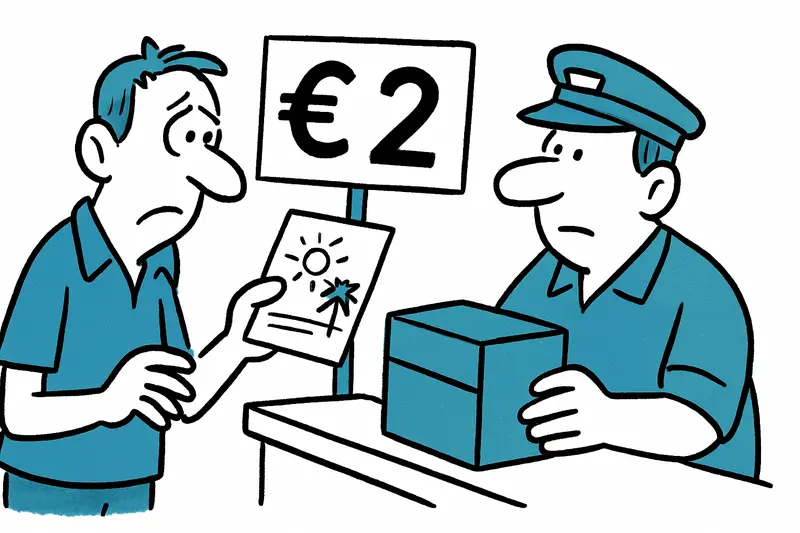
The news is short and factual: Correos is adjusting its rates. From 1 January 2026 a postcard to Europe will cost €2.00 (previously €1.85). A standard letter within Spain rises from €0.89 to €0.96. Correos cites rising costs and the need to keep delivery reliable, a trend covered in Milk, Big Mac, Postage: Why Many Prices on Mallorca Hurt. For Mallorca this first of all means: the small luxury of sending a real card from holiday becomes a bit more expensive.
Key question
Who bears the consequences of the postage increase — the holidaymakers, the small souvenir shops, or the infrastructure already creaking under staff shortages and route costs, an issue examined in Rising Cost of Living in Mallorca: Who Pays the Price??
Critical analysis
At first glance, 15 cents more per card is not a catastrophe. On the other hand, such increases add up: souvenir shops that sell hundreds of cards daily see an already slim margin shrink further. For older residents who regularly send letters to relatives, postage accumulates over months. Correos argues with general cost increases; which specific expense items are to blame remains unclear. If transparency is lacking, trust in the service will suffer — especially on an island where mail routes are often longer and more expensive than on the mainland.
What is missing so far in the public debate
The debate usually focuses on the price alone. That leaves three questions vague: What role do additional logistical costs on an island play? How are the extra costs distributed between tourist traffic and everyday deliveries? And: what measures does Correos plan to avoid further deterioration of rural delivery in sparsely populated communities? Without this information the picture remains incomplete — and ideas for relief unused.
Everyday scene from Mallorca
Late in the morning, when the sun already warms the tiles of the Plaça Major in Palma, a saleswoman at a souvenir stand slides cards into a plastic rack. Tourists from Germany flip through, laugh, choose motifs of the Tramuntana, the cathedral, Es Trenc. The yellow mailbox on the corner, marked by salt and sun, receives a card that will be stamped and leave Mallorca in a few days. The clatter of ice cream spoons and the murmur of the street cafés form the soundtrack — small everyday moments that can be felt when postage changes.
Concrete solutions
There are practical steps municipalities, retailers and Correos could consider: 1) Better signage on mailboxes and in shops so tourists can find the right postage immediately; 2) Cooperations between municipalities and souvenir sellers so hotels or tourist offices operate stamped collection boxes; 3) Tiered prices or batch stamping for shops with high postcard volumes to reduce administrative burden; 4) Transparent disclosure of cost drivers by Correos — so everyone can understand why prices are rising; 5) Pilot projects for machines with pre-stamped cards at busy beaches or markets to avoid waiting times and wrong postage.
Why this matters for Mallorca
Postcards are more than paper: they are a modest source of income for small stalls, a tradition for older residents and a tourist product that sends feelings home. On an island whose everyday logistics are more vulnerable, small price shifts go further than on the continent. A price increase may be economically justifiable — whether it is socially balanced is open to debate and echoes concerns like those of the accommodation sector in Hoteliers Expect Further Price Increases — What It Means for Mallorca.
Concise conclusion
15 cents more per postcard is not the end of the world — but it is a test case: how transparent and flexible will infrastructure operators be in response to the particular situation of islands? If mobility, tourism and village shops are further burdened, small savings help little. An open cost breakdown from Correos and pragmatic local cooperations would already help a lot. And for the moment: keep an eye on the mailbox — and if you want to send a card, be prepared to put a few extra cents in your hand.
Frequently asked questions
How much will it cost to send a postcard from Mallorca in 2026?
How much is a standard letter within Spain from Mallorca in 2026?
Why is postal delivery on Mallorca getting more expensive?
Who is affected most by the postage increase in Mallorca?
Is it still worth sending postcards from Mallorca?
What should I know before mailing a postcard from Palma?
Could higher postage affect small souvenir shops in Mallorca?
What is the postage outlook for Mallorca if prices keep rising?
Similar News

Haute Nuit in Puerto Portals: Fashion, Art and Indulgence by the Water
On October 2 the Lobster Club in Puerto Portals will be transformed into a stage for curated fashion, art and culinary e...
Magaluf: Watchtower Alarm – Lifeguards Pull Unconscious Beachgoer from the Water
After a drama in the late afternoon, two lifeguards at Magaluf beach rescued an unconscious 44-year-old man. He was stab...
Turquoise in the City: How dangerous is the color play of the Sa Riera?
The Sa Riera in Palma suddenly turned turquoise — a pretty motif, but behind the effect lies a discharge of saline waste...

Jeckliner at Sunnesching: Cologne spirit sets sail from Palma
In September 2027 the Mein Schiff 2 briefly becomes a floating carnival stage: four days with Cologne bands, comedy and ...
Finally Home: Mike and Leyla Heiter Buy Villa with Sea View in Mallorca
The reality TV couple Mike and Leyla Heiter have bought a house in Mallorca with a roof terrace and sea view. An Instagr...
More to explore
Discover more interesting content

Can Cap de Bou

Townhouse Lleo 72
